
Idea 1
The Black Church as the Soul of a People
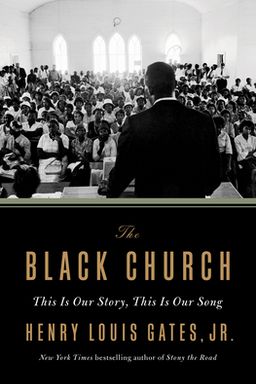
What keeps a community alive through centuries of oppression, violence, and hope deferred? In The Black Church: This Is Our Story, This Is Our Song, Henry Louis Gates Jr. argues that the answer lies in the sacred institution known simply as the Black Church—the oldest and most vital institution created and controlled by African Americans. Gates contends that more than places of worship, these churches have functioned as the spiritual, political, social, artistic, and intellectual centers of Black life, shaping both the moral conscience and cultural creativity of a people struggling to be free.
The book traces a breathtaking arc of history: from the arrival of enslaved Africans bringing rich spiritual traditions with them, to the adaptation of Christianity under bondage, through the Great Awakenings and Reconstruction, into the civil rights movement, and into today’s era of social activism and megachurches. As Gates explains, the Black Church has always been both sanctuary and engine—a refuge in times of terror and a rallying base in times of revolution.
Faith as Freedom and Protest
Gates begins by reframing Karl Marx’s famous comment that religion is the “opium of the people.” For the enslaved, Gates argues, faith was never mere sedation—it was rebellion disguised as worship. The Black Church arose as both an expression of suffering and a protest against suffering. As Nat Turner’s rebellion and endless spirituals like “Steal Away to Jesus” reveal, enslaved people seized Christian narratives of Exodus and redemption to imagine divine justice against their oppressors. This adaptation transformed Christianity itself—it became a theology of liberation long before liberation theology existed in academia.
The Cultural Heart of Black America
At the center of Gates’s argument is the idea that the Black Church is the birthplace of nearly every form of African American cultural expression. Within its walls, generations perfected the crafts of sermonizing, song, storytelling, and political organization. It is, Gates writes, the first formal site where “all the arts could be practiced together.” Through call and response, spirituals, and rhythmic oratory, the enslaved forged a cultural continuity connecting Africa to America. As musicologist Dwight Andrews and Bishop Yvette Flunder note in the book, this aesthetic lineage flowed directly into blues, jazz, soul, gospel, and eventually hip-hop.
Why the Black Church Still Matters
For Gates, the Black Church’s story isn’t just history—it’s prophecy and mirror. Even today, during seasons of racial violence and pandemic, the church remains both moral compass and political base. From Martin Luther King Jr. to contemporary leaders like William J. Barber II and Raphael Warnock, the pulpit continues to bridge faith and activism. Gates sees modern movements like Black Lives Matter as secular heirs to sacred traditions, animated by the same spirit of collective liberation that once filled the pews of Mother Emanuel and Ebenezer Baptist Church.
Across its many denominations, contradictions, and evolutions—from Methodist and Baptist origins to Pentecostal shouting and megachurch media empires—the Black Church has not only survived but defined American democracy’s moral tension. Gates’s central claim is clear: without the Black Church, there would be no Black culture as we know it—and perhaps no enduring hope for a just America. Understanding its history means understanding how a people turned pain into praise and oppression into transcendence. This summary explores the key ideas that make Gates’s study both historical and spiritual: the transformation of enslaved faiths into “Freedom’s religion,” the rise of independent Black denominations, the church’s political and artistic revolutions, its crises of faith in modern times, and its ongoing role in shaping identity and hope today.