
Idea 1
The Nature and Power of Hard Money
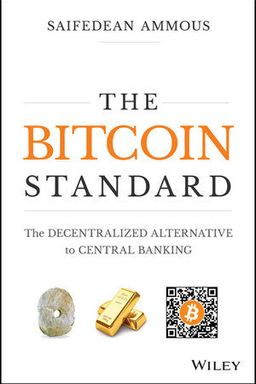
What makes money trustworthy enough to build civilizations on it? In The Bitcoin Standard, Saifedean Ammous argues that the story of money is the story of human cooperation, discipline, and technological progress. His core claim is that societies built on hard money—money that cannot be inflated at will—develop lower time preferences, create greater wealth, and achieve higher forms of culture. Conversely, easy money—money that can be cheaply expanded—erodes savings, weakens economic calculation, and distorts social priorities.
To grasp Bitcoin's significance, you must first revisit the fundamentals of what money is and how hardness shapes everything from history’s empires to your own daily decisions. Ammous builds a sweeping framework that begins with primitive exchanges, ascends through the gold standard, descends into twentieth-century fiat chaos, and culminates in Bitcoin as a digital alternative to political money.
Money as a Tool for Coordination
Money, Ammous reminds you, performs three essential functions: it’s a medium of exchange, a unit of account, and a store of value. Yet these depend on one underlying property—salability, or how easily you can sell it across scales, space, and time. Copper might buy small goods, gold travels easily across continents, but only something with enduring value can store purchasing power across generations. The harder a money is to produce, the more reliable it becomes as a store of value.
This is formalized as the stock-to-flow ratio: existing stock divided by annual new production. When the ratio is high, supply growth is slow relative to existing holdings, and holders are protected from inflation. Ammous uses gold—whose annual supply grows just about 1.5%—as the historical benchmark. Easy money, such as paper currencies or seashells when technology changes, leads savers into what he calls the easy-money trap: as soon as people try to store value in something easy to produce, producers flood the market and destroy its value.
Lessons from Primitive and Precious Moneys
From the Rai stones of Yap to West African aggry beads, Ammous shows that what counts as money shifts with technology and geography. The Rai stones—massive carved disks once used as immovable money—lost value when modern tools made quarrying them easy. Europeans mass-produced glass beads and used them to buy African slaves, demonstrating that control of money’s production can transfer vast wealth. The rule, he insists, is timeless: any monetary medium that can be cheaply increased will punish those who save in it.
Gold eventually triumphed because it remained physically and chemically scarce. Virtually all gold ever mined still exists, and newly mined supply is tiny. Its exceptional hardness allowed centuries of trust, trade, and capital accumulation. Societies built on gold-based money developed long-term planning and intergenerational projects—the Venice of the ducat or the Europe of the gold florin flourished because people could safely store value over decades.
From Gold to Fiat—and Its Costs
The nineteenth century’s classical gold standard restrained governments by tying spending to reserves. But with the outbreak of World War I, governments abandoned convertibility, financing devastation through inflation. The twentieth century evolved toward monetary nationalism: currencies managed by central banks rather than markets. Bretton Woods reanchored temporarily to the dollar, but President Nixon’s 1971 closure of gold convertibility ended that link—and with it the discipline of hard money.
Ammous argues that this political takeover transformed money from neutral measuring stick to instrument of power. Inflation became an invisible tax, rewarding debt and consumption while punishing saving. Central banks could prolong wars and fund ever-growing bureaucracies, producing what the author calls the age of perpetual war and the bezzle: economies inflated by illusionary paper gains and zombie firms sustained by easy credit.
Bitcoin as a New Standard
Bitcoin enters this history as a radical reversal. Its fixed supply of 21 million coins and predictable halving schedule recreate the hardness of gold in digital form. No central bank can increase production when prices rise. The blockchain verifies ownership without intermediaries; mining replaces state enforcement with energy-based difficulty. For Ammous, this design embodies the Austrian ideals of Ludwig von Mises and Friedrich Hayek: sound money chosen by the market, free from political manipulation.
Yet Bitcoin also introduces a moral dimension: by removing trust from governments, it transfers responsibility back to individuals. Holding bitcoin safely requires technical competence, patience, and foresight—the same virtues that underlie civilization itself. Ammous thus reframes Bitcoin not as a speculative asset, but as a civilizational technology that could restore the connection between saving, production, and liberty.
Core Message
Money is not just an economic tool—it is a social contract about time, trust, and limits. When money is sound, societies invest in the future. When it is easy, they eat the seed corn of civilization. Ammous’s argument is that Bitcoin, like gold before it, restores the hardest limit of all: the discipline of scarcity.
Across the book, you trace this logic from prehistory through modern banking to digital cryptography. The throughline is simple but profound: the form of money shapes the form of society. To choose hard money is to choose patience, freedom, and a future built on voluntary cooperation instead of coercion.