
Idea 1
The Birth of Tragedy and the Aesthetic Meaning of Life
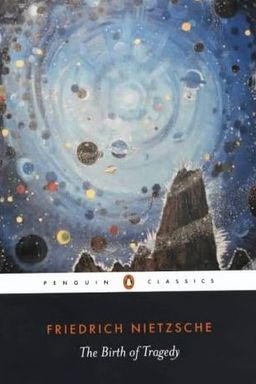
Why does Nietzsche claim that art, not morality or science, gives life its deepest justification? In The Birth of Tragedy, he invites you to see existence itself as an aesthetic phenomenon—a world that must be experienced as art in order to be redeemed. Rejecting the idea that logic or religion can justify life, he argues that art alone transforms the unbearable truth of existence into something we can affirm. Tragic art, in particular, performs this transfiguration: it reveals suffering, death, and loss not as errors to be erased but as essential features of a reality that is ultimately justified only as an artistic play of forces.
Aesthetic justification as the answer to nihilism
Nietzsche begins from the ancient wisdom of Silenus: that the best thing for humans is not to be born, and the next best is to die soon. This stark pessimism forms the ground of tragedy. Yet the Greeks, rather than deny this truth, created art that could affirm life in spite of it. For Nietzsche, this aesthetic affirmation replaces moral or scientific explanations that fail to reconcile you with existence. It is a vision where suffering is not a problem to be solved, but a texture of reality to be transfigured through beauty.
The dual forces behind all art
To understand this aesthetic salvation, Nietzsche asks you to meet two archetypal powers: Apollo and Dionysus. They are not simply mythic gods but basic forms of artistic energy. Apollo is the power of order, vision, individuation, and dream; Dionysus is the power of frenzy, oneness, and musical dissolution. These twin drives exist in all art and, when balanced, generate the highest creative achievements. Greek tragedy, for Nietzsche, embodies their union—the Apollonian giving shape to the Dionysian chaos beneath.
Art as a metaphysical act
Following Schopenhauer, Nietzsche interprets music as a direct expression of the world's inner essence—the will itself—while visual forms are mere representations. Music, because it bypasses concepts, expresses reality’s deepest rhythm. When music is combined with myth and drama, as in tragedy, it allows the terrifying truth of existence to appear in a humanly bearable form. Through this fusion, the Greeks created a metaphysical consolation: even though everything perishes, life itself is indestructibly creative.
Tragedy as reconciliation
In tragedy, spectators experience both the loss of individuality (Dionysian) and the beauty of form (Apollonian) simultaneously. The tragic hero, doomed to destruction, serves as a comforting image—an Apollonian illusion—that allows you to look into the abyss without despair. The chorus embodies Dionysian unity: it is the voice of nature and the source of the tragic mood. Together, they reconcile opposing human needs—the desire for meaning and the recognition of meaninglessness—within one aesthetic experience.
From Greece to modernity: art against decline
Nietzsche's story is not purely historical; it is also diagnostic. He argues that tragedy's death in Greece—through Socratic rationalism and Euripidean realism—foretells modern Europe's sickness. As science, morality, and Christianity suppress the Dionysian instinct, cultures lose their tragic wisdom and become sterile. Yet Nietzsche hopes for a rebirth of tragedy through music—especially in German art from Bach to Beethoven to Wagner—where Dionysian depth might reawaken. This is why he calls art a cultural medicine, capable of reviving meaning where logic alone can only explain life away.
A youthful vision and later self-critique
Written when Nietzsche was twenty-seven, the book blends philology, philosophy, and musicology into a single cultural prophecy. Later, in his self-criticism, he admitted its excesses: the romantic language, the Wagnerian enthusiasm, and the Schopenhauerian metaphysics he would later abandon. Yet the central message endures—the insight that art alone can make existence affirmable. If rational systems fail to console you, Nietzsche suggests, you must look to music, myth, and the tragic vision to reawaken life's aesthetic worth.