
Idea 1
Bird Minds and the Hidden Intelligence of Nature
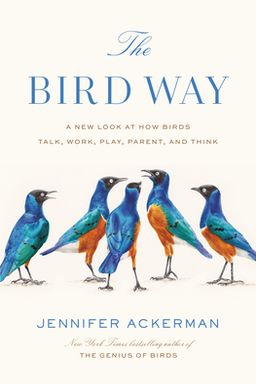
How can you measure intelligence when it wears feathers? In Jennifer Ackerman’s exploration of bird cognition and behavior, you discover that birds are not mere instinct machines—they are innovators, communicators, architects, and thinkers. Ackerman argues that understanding bird behavior forces you to rethink what intelligence means, showing that many species rival or even surpass mammals in learning, innovation, and social complexity.
Across continents and biomes—from the dawn chorus of temperate woodlands to the engineered bowers of tropical birds—the book traces how birds use sound, tools, scent, social networks, and play to solve real-world problems. Intelligence, she reveals, isn’t confined to big brains; it’s distributed across behaviors that adapt to ecological and sensory constraints.
Communication as a Cognitive Mirror
Bird communication, from the dawn chorus to referential alarm calls, demonstrates how vocal learning parallels human language acquisition. Species like canebrake wrens coordinate duets with millisecond precision, while Japanese tits and chickadees encode predator type and urgency using syntax-like call sequences. These patterns reveal semantic content and learned rules, not mere instinctive cries. Such findings dissolve the boundary between animal and human communication (Note: Toshitaka Suzuki’s experiments demonstrate real ordering effects similar to human grammar).
Tool Use and Cultural Transmission
Ackerman then turns to innovation—New Caledonian crows creating compound tools, herons baiting fish, and reports of raptors spreading fire to flush prey. These behaviors imply foresight and planning, confirmed by Lucy Aplin’s studies showing how novelties spread socially through populations. Birds do not simply mimic—they invent and transmit knowledge. This demonstrates cultural evolution independent of human language (similar to primate food innovations studied by Whiten).
Beauty, Architecture, and Choice
Courtship and construction become laboratories for cognition: bowerbirds engineer perspective illusions to manipulate female perception (Laura Kelley and John Endler’s forced-perspective findings), while hummingbirds and palm cockatoos synchronize sound, light, and rhythm in displays that function as multi-sensory performances. Female choice drives artistry—selecting not ornament alone but intelligence expressed through design and timing.
Beyond Sight and Sound: Hidden Sensory Worlds
You learn that birds’ perception expands into dimensions you rarely consider—ultraviolet vision, olfactory navigation, and infrasonic or echolocative cues. Turkey vultures use smell to locate hidden carrion; seabirds map DMS odor plumes over ocean front zones; oilbirds echolocate in caves. Mary Caswell Stoddard’s visual modeling shows how plumage apparent dullness hides vivid UV peaks, revealing communication channels invisible to human eyes.
Cognition in Everyday Life
Ant-following birds track army-ant colonies across days, exhibiting episodic-like memory. Ravens and kea play for the sheer joy of it, learning, testing fairness, and perhaps experiencing emotional contagion. Arabian babblers conceal copulations as if aware of others’ perspectives, and brood parasites wage signal wars that accelerate coevolution. These scattered examples show a mind embedded in ecology—responsive, flexible, and socially intelligent.
The Unifying Message
Birds illustrate that intelligence is not monolithic but manifold: sensory precision, communication, creativity, planning, and emotional attunement. By studying them, you uncover nature’s distributed mind—a world of social negotiation, invention, and consciousness that tests humanity’s assumptions about being unique.
Ultimately, Ackerman invites you to look and listen differently: when you hear a dawn chorus, watch a bowerbird’s display, or see a kea laugh in play, you are witnessing cognition translated into song, color, architecture, and mischief. Bird intelligence is not lesser—it’s another way nature thinks.