
Idea 1
The Brain Beyond the Mystique
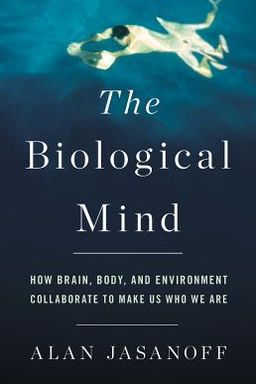
What if everything you think about your brain is too small, or too grand? In The Biological Mind, Alan Jasanoff argues that modern culture has fallen under the spell of what he calls the cerebral mystique—a conviction that the brain alone defines who you are. This belief saturates our science, media, and even our politics. We admire brain scans, idolize neuroscience explanations, and imagine a future in which minds can be uploaded, cured, and optimized as if they were apps on a machine. Jasanoff’s mission is to break that spell.
He invites you to see the brain not as a gray oracle sealed inside the skull, but as one part of a living system embedded in body, environment, and society. Every chapter in the book revises a familiar assumption: that brains are like computers, that complexity makes them incomprehensible, that neuroimaging reveals the mind, that mental illness is simply a broken brain. In each case, Jasanoff restores biology, chemistry, and context to their rightful places.
The lure and danger of the cerebral mystique
The mystique’s power lies in its simplicity. When you hear “we are our brains,” you feel both awed and comforted—it seems rational, scientific, and morally neutral. But Jasanoff shows that this fixation is a modern echo of older soul-talk, with the brain replacing the metaphysical soul as the essence of self. From Hippocrates’s idea that the brain ruled emotion to Victorian phrenology’s skull-measuring, to today’s TED talks about neural enhancement, each age has invested the brain with transcendent meaning. That habit shapes funding priorities, media coverage, and even the way we assign blame or praise.
What the book restores
Jasanoff counters neuroessentialism—the assumption that explanations stop with the brain—by putting the organ back into its web of interactions. He argues that brains depend on chemical gradients, hormones, blood flow, and environmental feedback loops. Feelings of joy or fear are not just neural firings but unfold through cortisol surges, gut microbes, and muscle tone. Cognition emerges from movement as much as from thought, a theme built on embodied cognition research by James Gibson and Antonio Damasio. Even our mental health and moral life depend on social and environmental conditions—the light we see, the people we love, the justice systems we inhabit.
The structure of argument
The book traces a logical arc. It begins by diagnosing the cerebral mystique and the computational metaphors that sustain it. It then dismantles the brain’s supposed exceptionalism—its complexity, its mystical aura in imaging, its isolation from body, world, and society. Step by step, Jasanoff replaces brain-only explanations with multi-level accounts that connect cells to culture. In the final chapters he examines how these insights apply to neurotechnology, mental illness, and transhumanism—fields that most dramatically reveal our longing to transcend biology through the brain.
Why this matters for you
If you overvalue the brain, you risk undervaluing everything else: body, history, relationships. Policies derived from brain essentialism prioritize pharmacology over environment; therapies target neurons but ignore neighborhoods; enhancement ideals treat isolation as progress. Jasanoff’s book is not anti-neuroscience—it is a call for humility and integration. Understanding the brain is vital, but only as part of understanding the organism and the world that sustains it.
Central insight
You are more than a brain in a body; you are a brain-body-environment system—a dynamic loop in which experience, chemistry, and culture continually remake each other.
By reframing the brain as just one thread in a much wider tapestry, Jasanoff preserves our sense of wonder while grounding it in reality. The result is both scientific and philosophical: a vision of mind that is richer, humbler, and more humane.