
Idea 1
The Politics of the Big Lie
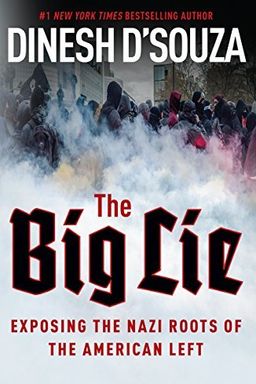
What happens when those guilty of wrongdoing convince others that they are the victims? Dinesh D’Souza’s central argument rests on this inversion, which he calls the big lie. He claims modern progressives use the same psychological and rhetorical mechanisms that totalitarian regimes once wielded—transferring blame, rewriting history, and monopolizing communication—to portray conservatives as fascists while embodying the characteristics of fascism themselves.
Drawing on Hitler’s own description of propaganda in Mein Kampf, D’Souza extends the principle of transference from the psychological to the political. Perpetrators, he notes, project their own vices onto their opponents. Hitler accused Jews of plotting world domination while organizing it himself; D’Souza argues that contemporary progressives accuse the Right of fascism while practicing ideological conformity, coercive tolerance, and censorship.
The Big Lie in Modern Politics
According to D’Souza, the Left’s control over communication infrastructures—academia, media, Hollywood—allows it to circulate the big lie until it becomes cultural common sense. Labels like “fascist,” “Nazi,” or “authoritarian” become rhetorical weapons to delegitimize political rivals. When celebrities invoke Hitler, when journalists call for resistance, when professors compare patriotic rhetoric to Mussolini’s, D’Souza sees a coordinated effort to recast political difference as moral evil. The accusation justifies extraordinary responses: impeachment drives, violence, and cultural purges presented as necessary antifascism.
Why the Analogy Fails
For D’Souza, the popular claim that conservative populism equals fascism collapses on examination. Historical fascism, he insists, arose from the Left: collectivist, statist, and socialist in its roots. Mussolini was a Marxist intellectual before leading the fascist break; Hitler’s party called itself National Socialist and adopted social welfare, nationalization, and anti-capitalist doctrines. He argues that calling these movements "right-wing" results from historical rebranding—an act of ideological transference perpetrated after World War II by progressive academics such as Richard Hofstadter, who shifted their own philosophical inheritance onto conservatives.
The Stakes of Historical Reversal
The purpose of the big lie, D’Souza argues, is control. When language is weaponized, reasoned disagreement becomes impossible. By confusing taxonomy—depicting statism as freedom and liberty as fascism—institutions can direct public sentiment, justify repression, and transform dissenters into heretics. This inversion, he believes, preserves the modern Leviathan state and inoculates progressivism from scrutiny.
The central provocation
D’Souza challenges readers to flip the accusation: measure political movements not by rhetoric or tribal identity but by doctrines—collectivism over liberty, state supremacy over individual rights, enforced conformity over pluralism. By that measure, he insists, the Left mirrors the original fascist model it condemns.
This conceptual framework anchors the book’s structure. Each subsequent section applies the logic of inversion to history, ideology, and policy—from American eugenics to Wilson’s administrative state and modern Antifa activism—arguing that fascism’s operational DNA persists today, rebranded as progressivism and justified in the name of anti-fascism itself.