
Idea 1
Genius, Madness, and the Mirror of Friendship
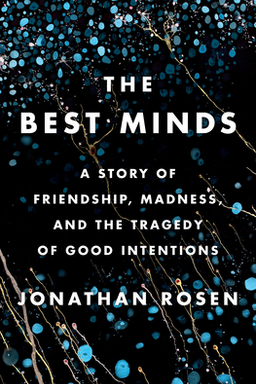
How do talent, friendship, and culture intertwine to create both brilliance and tragedy? In The Best Minds, Jonathan Rosen explores his lifelong bond with Michael Laudor—a childhood prodigy from New Rochelle whose astonishing intellect and charisma collided with schizophrenia and systemic failure. Rosen argues that to understand Michael’s fate, you must see how the personal and the political, the familial and the institutional, the cultural and the clinical all overlap within one long American story about promise, disorder, and meaning.
At its core, this is both a biographical narrative and a cultural history. It is about what happens when intelligence is mistaken for immunity, when institutions extend compassion without accountability, and when society romanticizes madness instead of learning how to live with it. Rosen’s lens moves from suburban basements and playgrounds to Yale classrooms and state psychiatric wards, tracing how the same forces that generate American ideals of merit and individualism also produce mental illness’s isolation and stigma.
Childhood as mirror and microcosm
The story begins on Mereland Road in New Rochelle—a landscape of Conservative synagogues, postwar optimism, and middle-class aspiration. Ten-year-old Jonathan meets lanky, brilliant Michael Laudor, a child who can quote Tom Lehrer, solve math jokes, and transform the suburban ordinary into performance art. Their friendship forms a living laboratory: Rosen introverted and cautious, Michael radiant and bold. This dynamic recurs throughout the book: one boy internalizes and narrates, the other dramatizes and accelerates. (Note: This friendship echoes classic literary dyads—Nick and Gatsby, Sal and Dean.)
For both, the suburb is a crucible of ambition. The 1970s New Rochelle neighborhood is shaped by the national mood—Watergate distrust, educational reform, and Jewish upward mobility. Curricula like Man: A Course of Study (MACOS) teach empathy through anthropological films, while parental choices (especially Rosen’s mother’s friendship with writer Cynthia Ozick) link domestic life to intellectual aspiration. The suburban household becomes a miniature academy where big historical changes—civil rights aftermath, Vietnam trauma, the Church Committee’s revelations of state power—filter into the minds of children learning both skepticism and idealism.
Education, contrast, and divergence
As the boys mature, their gifts take different forms. Michael races through Yale summa cum laude and joins Bain & Company, the consulting firm that converts intellect into profit. Rosen takes the slower, literary road—graduate school, fiction writing, and reflection. Each choice maps a moral geography: Michael’s acceleration seems heroic but brittle, while Rosen’s restraint preserves depth. The contrast reveals how American meritocracy rewards velocity over balance. When Michael demands to be named newspaper editor and quits in protest, the reader witnesses competition’s first fracture in their friendship.
Education becomes both privilege and peril. Elite networks (Telluride, Yale) open doors but also create unrealistic expectations of perpetual excellence. Michael’s eventual breakdown—his conviction that his parents are impostors, his brief violent episode, and his hospitalization—unfolds against this background of pressure. His psychosis isn’t only a neurological event; it’s a social one. His mind collapses amid institutions that prize cognition and self-possession above vulnerability.
From promise to collapse to representation
Rosen extends the narrative beyond private tragedy into cultural commentary. He retraces how community psychiatry’s optimistic reforms—inspired by John F. Kennedy’s Community Mental Health Act—eroded under budget cuts and ideological conflict. The promise of small neighborhood clinics gave way to the reality of revolving-door wards, overpoliced crises, and untreated homelessness. For the Laudors, this wasn’t abstraction: Michael’s recovery path through Futura House and welfare offices showed the humiliation of intellectuals funneled through a broken bureaucracy.
Rosen also examines how intellectual movements—deconstruction, anti-psychiatry, the human potential movement—romanticized madness. Thinkers from Foucault to Laing and Ginsberg reframed psychosis as resistance or revelation, shaping both academic discourse and popular misunderstanding. For gifted minds like Michael’s, such ideas made illness rhetorically glamorous but clinically dangerous. (Compare this with Huxley’s psychedelic optimism and Ken Kesey’s performative rebellion.)
Law, mentorship, and institutional compassion
When Michael enters Yale Law, the institution becomes a substitute family. Dean Guido Calabresi personally hauls furniture into Michael’s dorm and pledges, “We will be your ramp.” Professors like Joe Goldstein and Owen Fiss blend legal realism with empathy. They anchor the narrative’s question: can law humanize psychiatry? Historical cases like Durham v. United States and Lake v. Cameron reveal how sympathetic legal reforms—meant to protect the ill—often turn into new chains of confinement or neglect. Institutional mercy depends on personality, not structure.
Public storytelling and systemic failure
A 1995 New York Times profile recasts Michael as a recovered hero—“the most famous schizophrenic in America.” Book deals, film options, and Hollywood interest follow, culminating in an $800,000 advance and dreams of a Leonardo DiCaprio film adaptation. Yet fame becomes a strain that accelerates relapse. The same media that wanted to celebrate his resilience turned his illness into commodity. The proposed film and his manuscript, The Laws of Madness, raise ethical questions about narrative ownership and exploitation. (Note: Rosen compares this media frenzy with the sanitized redemption arc of A Beautiful Mind.)
In the end, tragedy returns. Michael’s deterioration leads to the murder of his fiancée, Carrie Costello, and to national debates about violence, stigma, and civil commitment laws. Rosen writes not as prosecutor or apologist but as friend and citizen who asks how compassion failed at every level—family, hospital, law, and culture. He concludes that understanding requires multiple framings: narrative art, public policy, and moral philosophy.
Core understanding
You cannot separate genius from vulnerability or policy from personal life. The story of Michael Laudor—and the narrator’s lifelong attempt to comprehend him—becomes an American parable about how intellect without systems of care can implode under its own idealism.
Through friendship, reform, and failure, you see how the “best minds” of a generation tried to reconcile reason and compassion—and how easily brilliance can turn catastrophic when societies romanticize mental struggle instead of learning to sustain it.