
Idea 1
Understanding the Behavioral Investor
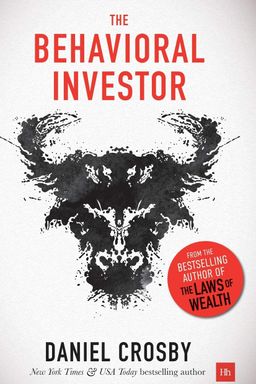
Why do you make poor decisions with your money, even when you know better? In The Behavioral Investor, psychologist and financial expert Dr. Daniel Crosby dives deep into that question, arguing that the greatest threat to your financial success isn’t the market but the person in the mirror. Drawing on psychology, neuroscience, and sociology, Crosby contends that modern investors face not a lack of information or opportunity, but a lack of self-awareness. He insists that mastering your mind is the surest way to master your portfolio.
Crosby’s central idea is powerful and unsettling: we are biologically, socially, and psychologically ill-equipped for successful long-term investing. In other words, the very traits that helped humans survive—tribal thinking, emotional reactivity, and overconfidence—are liabilities in capital markets. To thrive, you must learn to identify and neutralize these traits rather than rely on instinct. As Crosby writes, understanding your own behavior is the most vital component of understanding the market itself.
The Human Mind as the Market’s Weakest Link
Crosby begins by reframing the market not as a rational system but as a reflection of human behavior—a grand social experiment powered by fear, greed, ego, and bias. He explores how shared trust in collective fictions—like money itself—has allowed for our species’ success but also leads to irrationality in markets. As in Yuval Noah Harari’s Sapiens, this narrative-driven worldview explains why humans can cooperate at scale but also why we cling to familiar beliefs even when they’re false. The implication? Markets can only be as rational as the people who compose them, and people are rarely rational.
The Four Primary Behavioral Risks
Crosby distills more than 117 known cognitive and emotional biases into four primary behavioral risks that shape investment success and failure: Ego, Conservatism, Attention, and Emotion. Ego makes us overconfident and resistant to feedback; conservatism anchors us to familiar paths and prevents healthy risk-taking; attention bias tricks us into chasing vivid stories instead of probabilities; and emotion distorts our sense of risk and time, prompting reactive behavior during market turbulence. Each of these categories corresponds to a human survival instinct that backfires in financial contexts.
The Need for Behavioral Systems
Because our instincts are unreliable, Crosby argues for building rules-based systems that protect us from our worst tendencies. He proposes what he calls a “third way” of investing: rules-based behavioral investing, which marries the low-cost efficiency of passive investing with the adaptive awareness of active management. The goal isn’t to beat the market through intelligence but to outlast it through discipline. The behavioral investor thrives not by predicting the future but by mastering response to uncertainty.
Why This Matters Now
In an era of 24/7 financial coverage, instant online trading, and market sensationalism, controlling one’s psychology is more important—and more difficult—than ever. Crosby shows how information overload, constant connectivity, and social comparison drive impulsive decisions. He connects these trends to alarming statistics: accounts that trade less outperform those that trade more, and simply doing nothing consistently beats frequent tinkering. The behavioral investor must learn to filter noise, manage physiological reactions like stress and fear, and adhere to pre-defined investment principles that resist emotional hijacking.
A Journey from Mind to Market
Spanning four parts—human nature’s obstacles, investor psychology, behavioral mastery, and portfolio construction—Crosby builds a complete roadmap for turning self-knowledge into financial strength. By exploring sociology (how tribes shape belief), physiology (how our bodies react to risk), psychology (how biases distort thinking), and practical investing (how to design resilient portfolios), he turns personal growth into the ultimate investment advantage. The challenge he poses is profound: before you can outperform the market, you must first overcome yourself. In that sense, The Behavioral Investor isn’t just a book about finance—it’s a manual for self-mastery in an irrational world.