
Idea 1
The Immune System: Humanity’s Hidden Masterpiece
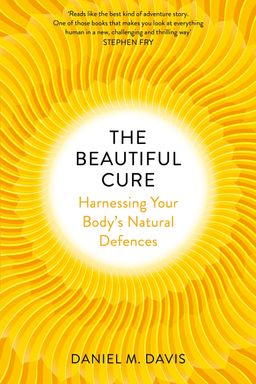
What if your body contained a living galaxy of unseen guardians, silently defending you from thousands of potential threats every second? In The Beautiful Cure, Daniel M. Davis reveals that your immune system is not a mere scrappy army of white blood cells—it’s one of nature’s most elegant and complex designs, a dynamic masterpiece connected to your mind, hormones, genes, habits, and even the time of day. The book argues that understanding this internal cosmos will spark a new revolution in medicine, mental well-being, and healthy aging.
Davis, a leading immunologist, contends that modern science has only recently begun to appreciate how environments, emotions, and everyday experiences modulate immune activity. He invites you on a journey from the discovery of key immune cells and molecules to the mind-body connection, showing how curiosity, collaboration, and serendipity drove some of the greatest breakthroughs in biology. Through vivid storytelling—spanning dusty 18th-century labs to NASA’s space missions—Davis demonstrates that our immune system is not a rigid defense line but an exquisitely balanced ecosystem, capable of healing or harming depending on how it’s tuned.
A Revolution Hidden Within
At its heart, The Beautiful Cure reveals how our understanding of immunity has transformed from a mechanical notion of defense to a symphony of interconnected systems. The immune system isn’t just about fighting infections—it talks constantly to the brain, endocrine glands, and even gut microbes. Davis calls it a “beautiful cure” because, unlike human-engineered drugs, our body’s natural system adapts, learns, and self-regulates. Its elegance lies in restraint: immune responses that are too weak lead to infections and cancer, but those that overshoot cause allergies and autoimmune disease. The central question, then, is balance—how can we harness this natural healing architecture without breaking it?
From Curiosity to Cure
Davis traces scientific progress through the very human stories behind discovery. We meet Edward Jenner, the rural doctor whose cowpox experiment invented vaccination, and Alick Isaacs and Jean Lindenmann, who discovered interferon while fumbling through viral mysteries in the 1950s. Later, visionaries like Charles Janeway, Ralph Steinman, and Bruce Beutler transformed immunology from a descriptive field into a molecular science—revealing dendritic cells, cytokines, and Toll-like receptors that explain how the body decides when to attack and when to stand down. Each finding connected a new piece of the puzzle, turning what once seemed a black box of war into a story of caution, communication, and co-evolution with the microbial world.
Why It Matters to You
For Davis, this isn’t abstract science—it’s a call to rethink your relationship with your own body. He shows how fever, stress, hormones, sleep, and emotions all influence immunity; how mindfulness and supportive relationships can bolster defense systems; and how understanding these interactions might help fend off chronic inflammation, aging, and even depression. He argues that our immune system acts as a bridge between the mind, body, and environment—our internal measure of harmony or distress.
Across the book’s chapters, you’ll explore how our immune cells detect danger (the work of Janeway’s and Hoffmann’s toll-like receptors), how drugs like penicillin and anti-TNF antibodies changed modern medicine, why fever and cortisol link immunity to emotional states, and how immune “checkpoint” therapies now cure cancers once deemed untreatable. Finally, Davis concludes by echoing Richard Feynman’s belief that science deepens rather than diminishes awe: by understanding the intricate beauty of our immune system, we no longer see just a body, but a living cosmos within.