
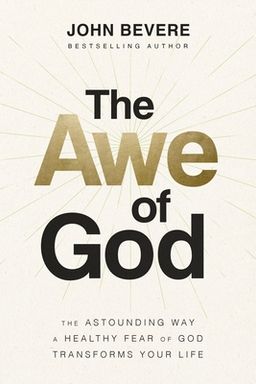
The Awe of God cover

The Awe of God

by John Bevere

The Awe of God explores how a healthy fear of God can deepen your relationship with Him, fostering reverence, humility, and wisdom. John Bevere shows how embracing holy fear inspires a fuller, more purposeful life, guiding you with a strong moral compass and enriching personal and communal connections.

The Transforming Power of a Holy Awe for God

When was the last time you felt genuine awe—an overwhelming sense of wonder that took your breath away? In his book The Awe of God: The Astounding Way a Healthy Fear of God Transforms Your Life, John Bevere argues that this kind of deep, soul-stirring awe—rooted in a healthy fear of God—is the missing key to a vibrant, fulfilling Christian life. Many people, he says, have tried to remove all fear from their lives, but in doing so they’ve stripped away the very virtue that deepens intimacy with God and anchors us in wisdom. The result? Shallow spirituality, moral compromise, and a lack of true reverence for the One we claim to follow.

Bevere contends that holy fear is not dread or terror of an angry deity, but rather intense reverence—an awe-filled recognition of God’s infinite greatness, holiness, and power. This fear, rather than pushing us away from God, draws us closer to Him by aligning our hearts with His will. It drives away destructive and enslaving fears, such as the fear of rejection, failure, or man’s opinion. On the contrary, it gives courage, clarity, and peace to those who embrace it. “The fear of God,” Bevere writes, “is the death of every other fear.”

Revealing the Forgotten Virtue

For decades, Bevere has observed churches, leaders, and believers exchange reverence for familiarity. In Western Christianity, God is often presented as a friendly counselor or a motivational life coach, rather than the consuming fire described in Scripture. Bevere traces this cultural shift to the modern desire for comfort and control. When believers lose their sense of God’s majesty, they also lose their moral compass. Holy awe, on the other hand, produces humility, obedience, and an unshakable faith. It keeps us aligned with truth when compromise looks tempting.

Drawing from passages like Proverbs 1:7—“The fear of the Lord is the beginning of wisdom”—Bevere makes the startling claim that we cannot even begin to know God intimately without holy fear. Love reveals God’s closeness and compassion; fear, His splendor and majesty. Together, they form the foundation of authentic faith. This paradox is central to his message: those who truly fear God need fear nothing else.

A Story-Driven Invitation

Bevere doesn’t merely teach abstract theology—he unfolds living stories. Early in his ministry, he recalls preaching on the fear of God only to be publicly corrected by a senior pastor who claimed that “fear” was an Old Testament concept. Later, as he wrestled in prayer, Bevere discovered hundreds of New Testament references affirming the opposite. That experience, along with decades of observing moral failures in church leadership, convinced him that the missing ingredient in modern Christianity is holy reverence. He also recounts a dramatic experience in Brazil, where after preaching repentance, a supernatural wind swept through an arena as thousands trembled and fell to their knees. It was, he says, an unmistakable manifestation of God's awe-inspiring presence.

In other memorable episodes, Bevere speaks to fallen leaders—such as a once-famous televangelist who confessed, “I loved Jesus, but I didn’t fear God.” That statement transformed Bevere’s understanding of moral collapse: people fall not because they stop loving God, but because they lose awe for Him. Holy fear, then, is the force that preserves purity when love alone grows sentimental or shallow.

Building a Life of Awe

The book unfolds across six sections, structured as a forty-two-day journey. It’s part devotional, part theological guide, and part spiritual exercise. Bevere invites readers to move through stages—from rediscovering “an awesome God,” to living “revealed as we are,” to pursuing “irresistible holiness,” responding to God’s Word, and finally entering “intimacy with God.” The journey culminates with “the treasure’s benefits”: joy, wisdom, longevity, legacy, protection, and success for those who walk in reverence. Each chapter closes with five practices—Passage, Point, Ponder, Prayer, and Profession—to help readers apply what they learn and internalize awe at a heart level.

Bevere also redefines obedience as delight, not duty. Drawing on Abraham’s willingness to sacrifice Isaac and Moses’ insistence on God’s presence over prosperity, he argues that true discipleship begins when you obey God even when it doesn’t make sense or bring immediate benefit. Holy fear, he insists, compels instant, wholehearted surrender to God’s Word—whether or not circumstances are comfortable. “Almost complete obedience,” he writes, “is not obedience at all.”

Why This Message Matters

At its heart, The Awe of God is an invitation to rediscover something ancient yet urgently needed: a reverent love that trembles before greatness. As anxiety and moral confusion spread in our culture, Bevere presents holy fear as the antidote. It’s not meant to crush us but to liberate us—to root out destructive fears, strengthen integrity, and open our eyes to the glory of God. “The fear of the Lord,” he writes, “is the treasure of our time.” When embraced, it transforms not only the way you worship, but how you treat others, view success, handle temptation, and finish your life well.

In Bevere’s words, “Fear no evil—but discover how the misunderstood virtue of fearing the Lord will cause your life to blossom into something wildly beautiful.”

The rest of this summary explores how this awe takes root: by contrasting destructive and constructive fear, by rediscovering holiness and intimacy, and by showing how godly awe births wisdom, confidence, and lasting joy. Through stories, Scripture, and prayer, Bevere calls you not merely to understand the fear of God, but to treasure it—and be changed by it.


Rediscovering Holy Fear

For many, “fear” carries negative connotations. We fear pain, loss, rejection, and danger—so when Scripture speaks of fearing God, it can feel confusing or even off-putting. John Bevere begins by unraveling this misconception. Not all fear, he explains, is destructive. Just as the fear of falling keeps you from stepping off a cliff, holy fear is a life-giving awareness of God’s greatness that guards your soul from spiritual ruin.

The Healthy Versus the Harmful

In the book’s introduction, Bevere distinguishes between destructive and constructive fear. Destructive fear drives us away from God—it’s rooted in guilt, shame, or the belief that He is harsh. Constructive fear, by contrast, keeps us safe and aligned with truth. Scripture tells us that “the fear of the Lord is clean, enduring forever” (Psalm 19:9). It’s not terror that makes us hide, but reverence that makes us draw near. Bevere illustrates this distinction through Israel’s response at Mount Sinai. When God descended in thunder and lightning, the people trembled and backed away, saying, “You speak to us, Moses, but don’t let God speak, or we’ll die.” Moses, however, approached the mountain boldly, declaring, “Do not fear, for God has come to test you, that His fear may be before you.” (See Exodus 20:19–20.)

Moses reveals that it’s possible to have two fears: being scared of God, which causes withdrawal, and the fear of God, which produces intimacy. The person who fears God, Bevere writes, “is terrified of being away from Him.” That paradox—drawing close rather than running away—defines the difference between paralyzing fear and purifying awe.

God’s Treasure and Ours

One of Bevere’s most memorable insights is that holy fear is not only our treasure but God’s. Isaiah 33:6 calls it “the fear of the Lord [that] is His treasure.” Bevere traces this truth through the story of King Solomon, who began as the wisest man on earth yet fell into cynicism and despair because he lost his awe. His story, Bevere writes, “is proof that knowledge without reverence becomes vanity.” Solomon’s final words in Ecclesiastes 12:13—“Fear God and keep His commands, for this is the whole duty of man”—summarize the lesson. Holy fear sustains wisdom; without it, even brilliance collapses.

A Virtue That Attracts Blessing

When we fear God, we also attract His presence. Bevere recounts preaching in Brazil before thousands when he noticed that the crowd showed little reverence during worship. People chatted, snacked, or looked bored. Prompted by the Spirit, he stopped the service and rebuked their casual attitude. The response was immediate: repentance swept through the arena, and God’s tangible presence filled the space like a rushing wind. Even nonbelievers outside heard the sound. “Where God is revered,” he concludes, “His presence manifests.”

This pattern echoes throughout Scripture—from Daniel trembling before the angel to Isaiah crying, “Woe is me!” and from John collapsing as though dead in Revelation. Fear and intimacy are never opposed. In fact, Bevere insists, “The friendship of the Lord is reserved for those who fear Him.” Awe doesn’t diminish love; it refines it. When you tremble at His Word and glory, reverence becomes the gateway to relationship.

In practical terms, rediscovering holy fear begins with awareness. Bevere urges readers to approach prayer, worship, and Scripture not as consumers but as worshippers. Before praying, he writes, remind yourself Whose presence you’re entering. That mindfulness—Teresa of Ávila once said the same—transforms routine devotions into sacred encounters. Over time, reverence purifies motives, deepens joy, and brings you back to the heart of everything: God Himself.


Obedience, Trust, and Trembling at His Word

At the center of holy fear is obedience—not grudging submission but eager surrender. Bevere argues that trembling at God’s Word is the truest evidence of reverence. The Bible calls those blessed who “tremble at my word” (Isaiah 66:2). For Bevere, obedience is not optional; it is the posture of a heart captivated by God’s greatness. Holy fear teaches you to obey God immediately, even when it doesn’t make sense or seem personally beneficial.

Immediate and Complete Obedience

Partial obedience, Bevere warns, is disobedience disguised. He illustrates this through King Saul, who followed most of God’s command to destroy the Amalekites but kept the best animals, claiming to offer them as a sacrifice. God’s response was devastating: “Because you have rejected my word, I have rejected you as king.” Saul’s selective obedience cost him everything. By contrast, Abraham’s willingness to sacrifice Isaac—even without understanding why—proved his friendship with God. “Now I know,” the angel said, “that you fear God.”

When Obedience Doesn’t Make Sense

Bevere points out that God’s instructions often defy human logic: build an ark on dry ground, march silently around Jericho, spit in the dirt to heal blindness. Yet in each example, wisdom hid within absurdity. Holy fear trusts the divine wisdom behind every command. One of Bevere’s favorite phrases is, “You can’t serve God and fully understand Him at the same time.” The fear of God gives courage to act first and see the reason later. Over time, this trains your instincts to trust rather than question.

The Role of Pain and Endurance

Obedience can hurt. Bevere recalls being threatened while ministering in a small town but choosing to keep his commitment despite fear. Citing Jesus in Gethsemane, who obeyed “though it cost Him blood,” Bevere describes suffering as “a good pain”—it refines trust and love. Through obedience under pressure, faith matures. The goal of holy fear is not comfort but Christlikeness, the transformation that comes from obeying until the end. “Almost complete obedience,” Bevere reminds, “is not obedience at all.”

“Every time you delay obedience,” he cautions, “you shrink your reverence.”

To tremble at God’s Word, then, is to recognize no area of life as off-limits. In your work, relationships, ambitions, and speech, genuine awe expresses itself through joyful compliance. When you respond promptly, even when uncertain, you declare that God’s Word—not convenience or consensus—is final authority. This is what distinguishes the reverent from the religious, the friend from the servant, and the wise from the foolish. Holy fear, in action, looks like immediate, uncalculated obedience grounded in trust.


The Pathway to Intimacy with God

One of Bevere’s boldest claims is that you cannot know God intimately without fearing Him. He calls holy fear “the starting line of relationship.” Just as love reveals God’s nearness, fear reveals His majesty. Together, they balance friendship and reverence—two sides of the same coin. Fear without love makes for religion; love without fear produces shallow familiarity. The combination cultivates intimacy that is both tender and transformative.

Knowing God as Friend

Bevere draws on two biblical models of friendship with God: Abraham and Moses. Abraham believed God’s promise so deeply that he obeyed even when asked to offer Isaac. In response, God revealed Himself as Jehovah Jireh—the Lord Who Provides. Moses, meanwhile, refused to enter the Promised Land without God’s presence. “If Your presence does not go with us,” he pleaded, “do not lead us up from here.” (Exodus 33:15.) In both cases, Bevere notes, friendship sprang from holy fear. These men loved God’s will more than His blessings.

Contrast: Familiarity without Reverence

Israel, by contrast, preferred distance. At Sinai, they told Moses, “You speak to us, not God.” That refusal, rooted in a lack of awe, became their undoing. They created a golden calf and called it “Yahweh.” They worshiped a different god while claiming His name—a warning, Bevere says, to modern believers who remake Jesus in their image: a cultural icon who comforts without challenging. This is why Jesus warns that many will one day say, “Lord, Lord,” only to hear, “I never knew you.” Bevere emphasizes that knowing God (from the Hebrew yada) involves experiential intimacy, not knowledge alone. “They knew His works,” he writes, “but Moses knew His ways.”

Friendship Through Obedience

Jesus clarifies the same principle to His disciples: “You are My friends if you do whatever I command you.” (John 15:14.) Bevere observes that trust, not sentiment, defines divine friendship. God shares His secrets with those who tremble at His Word. “The secret of the Lord,” Psalm 25:14 says, “is with those who fear Him.” In practical terms, this means that those who walk in holy fear gain spiritual insight. Like Abraham learning of God’s plan for Sodom or Moses receiving His glory, they are invited behind the veil. Bevere reflects that this intimacy is not automatic; just as he learned not to share private matters with employees until they proved trustworthy, God withholds His counsel until we mature in reverence.

When awe deepens, so does relationship. To fear God is to guard His presence, treasure His words, and prioritize His desires. It’s what transforms duty into delight—the moment when obedience becomes friendship. This is intimacy not of sentiment but of shared purpose: seeing as God sees, loving what He loves, and hating what He hates. “He confides,” Bevere concludes, “in those who fear Him.”


Irresistible Holiness and True Freedom

Holiness, in Bevere’s view, is not a moral prison but a privilege—a gift of closeness to God that brings liberation. “True holiness,” he writes, “is to be completely God’s.” Yet in modern Christianity, holiness has become an unpopular concept, often confused with rule-keeping or moral superiority. But Bevere restores its beauty. Holiness isn’t bondage; it’s the evidence of freedom. It begins when we separate ourselves unto God, not away from joy.

The Fear That Frees

Central to holiness is holy fear. Bevere retells a conversation with a disgraced evangelist who said, “I didn’t fall out of love with Jesus—I just didn’t fear God.” That confession pierced him. Love alone couldn’t restrain sin; only reverence could. “The love of God draws us to Him; the fear of God keeps us from departing from Him.” Fear protects intimacy, erecting moral boundaries that preserve freedom rather than restrict it. Without it, believers drift into lawlessness, convincing themselves that grace excuses, rather than empowers, holiness.

Empowered Grace

Bevere critiques modern “cheap grace”—the idea that God’s forgiveness removes the need for obedience. True grace, he insists, is empowerment. It gives both the desire and the ability to live like Jesus. Drawing from Titus 2:11–12 (“Grace teaches us to say no to ungodliness”), Bevere shows how holy fear and grace work hand in hand. Grace empowers; fear motivates. Together they form the engine of transformation. To confuse them is to short-circuit spiritual growth.

Freedom from the Fear of Man

In a world obsessed with approval, holy fear liberates us from the fear of people. Bevere recounts how even Peter, under pressure from Jewish leaders, compromised truth until Paul rebuked him publicly. “You will serve whom you fear,” Bevere writes. “If you fear man, you obey man; if you fear God, you obey God.” This insight reframes courage: reverence for God replaces dependence on human affirmation. When God’s opinion matters most, compromise dies and integrity thrives.

Bevere’s vision of holiness is compelling because it is radiant, not rigid. Holiness makes life more alive, not less. It fills days with purpose and peace. As C. S. Lewis once noted, “How little people know who think holiness is dull. When one meets the real thing, it is irresistible.” Bevere’s holy fear is the doorway to such irresistible living—a freedom that burns brighter because it’s fueled by awe.


Wisdom, Confidence, and Legacy

As holy fear matures, it yields practical fruit: wisdom, peace, protection, and generational legacy. Bevere calls these “the treasure’s benefits.” They are not mystical rewards but natural outflows of alignment with God. Proverbs declares, “The fear of the Lord is the beginning of wisdom.” This wisdom, Bevere says, cannot be achieved through intellect alone. It’s a divine instinct that discerns right from wrong—and it begins where pride ends.

Wisdom That Guards

Bevere illustrates this with the story of Abimelech, a pagan king whom God stopped from sinning with Abraham’s wife. “I kept you from sinning,” God told him, “because you acted in integrity.” The fear of the Lord becomes a fountain of continual counsel, steering us away from hidden traps. By contrast, when people lose awe, they call evil good, just as modern culture glamorizes pride, greed, and lust. Holy fear exposes deception and guards judgment. It becomes, as Isaiah 33:6 says, “the key to this treasure.”

The Fear That Eliminates All Fears

One of the paradoxes Bevere celebrates is that fearing God makes you fearless of everything else. “Men who fear God face life fearlessly,” he quotes, “but men who don’t fear God fear everything.” He shares stories of people protected through supernatural peace—from a pastor’s wife who prayed down armed attackers to martyrs who stood unshaken before death. Holy fear, anchored in trust, becomes the antidote to anxiety. It anchors faith in the unshakeable character of God.

Leaving a Legacy

Perhaps most moving is Bevere’s vision of generational blessing. “The mercy of the Lord,” Scripture says, “is on those who fear Him from generation to generation.” The author contrasts two lineages: Max Jukes, whose descendants were criminals and addicts, and Jonathan Edwards, whose godly fear produced pastors, judges, and leaders. Awe shapes inheritance. “When you walk in holy fear,” Bevere writes, “something significant is transmitted to your descendants.” Legacy isn’t formed by wealth or acclaim but by fidelity—families grounded in reverence endure.

In the end, Bevere circles back to his book’s heartbeat: awe is not optional—it’s foundational. The fear of God doesn’t make life smaller; it enlarges it. It transforms obedience into wisdom, weakness into courage, and mortality into legacy. “If you find the treasure of holy fear,” he concludes, “you will finish well—and live with joy that endures forever.”

Dig Deeper

Get personalized prompts to apply these lessons to your life and deepen your understanding.

Go Deeper

Get the Full Experience

Download Insight Books for AI-powered reflections, quizzes, and more.