
Idea 1
The Science of Spiritual Awakening
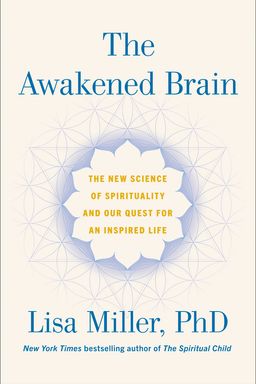
When was the last time you felt deeply connected—to another person, to nature, or to something greater than yourself? In The Awakened Brain, clinical psychologist and neuroscientist Lisa Miller, Ph.D. argues that this very sense of connection isn’t just mystical poetry—it’s biology. Through decades of research at Columbia University and beyond, Miller reveals that we are literally wired for spirituality: our brains contain neural circuits designed for awareness of love, meaning, and guidance. When we engage them, we thrive. When we neglect them, we suffer.
Miller contends that spiritual awareness is not a belief system but a natural endowment—an inborn capacity to perceive our interconnectedness with others and with life itself. She defines this capacity as the awakened brain: a way of perceiving reality that moves us from isolation to belonging, from despair to hope, and from control to surrender. Her studies have shown that people who nurture their spirituality are 80 percent more protected against depression and 40 to 80 percent less likely to develop substance abuse. Spiritual awareness, in other words, is a built-in defense against the mental health crisis of our time.
From the Lab to Life
The book begins in the halls of Columbia University, where Miller and her research team use MRI scans to compare the brains of people high and low in spiritual life. The results astound even the skeptics: participants who reported spirituality as central to their lives showed thicker, healthier cortexes in regions that typically erode in depression. These same patterns, she later confirms through other studies, are intergenerational—shared between mothers and children who maintain a spiritual connection. Spiritual life, it turns out, doesn’t just change feelings; it reshapes the brain itself.
Miller’s discovery evolved through two decades of inquiry: from clinical wards filled with patients whose pain couldn’t be reached through medication or analysis alone, to imaging studies confirming that when the mind awakens spiritually, the brain shows measurable transformation. Over time, her concept of the awakened brain expands from pure neuroscience into a new paradigm for living—one that unites science, spirituality, psychology, and purpose.
A Crisis of Connection
The book opens against the backdrop of a global mental health emergency. Depression, anxiety, and alienation—what Miller calls “unawakened awareness”—now affect millions, from college students to corporate executives. Our culture, she argues, has overdeveloped what she calls the achieving brain—the part of us that organizes, controls, and competes—while neglecting the awakened brain, which perceives meaning and connection. The result is burnout, loneliness, and a feeling of hollowness even amid material success. Our brains, she suggests, are starved of their natural spiritual nourishment.
Miller’s central claim is both scientific and moral: the root of our crisis isn’t biochemical imbalance alone, but a collective narrowing of perception. We see ourselves as separate, struggling objects in a meaningless world. Between brain scans, clinical stories, and her personal journey through infertility, motherhood, and research, she demonstrates that true mental flourishing comes from turning toward life as a living, guiding field of love.
Two Modes of Awareness
At the heart of Miller’s work lies a crucial distinction: achieving awareness versus awakened awareness. Achieving awareness views life as a series of goals to control—it’s grounded in the insula and striatum, the brain’s reward and craving circuits. Awakened awareness, by contrast, engages the ventral attention network, frontotemporal attachment circuits, and the parietal lobes, opening perception to love, unity, and meaning. When you inhabit this awakened mode, your sense of self relaxes, your attention widens, and you see life as a guidance-filled partnership rather than a battlefield.
Miller demonstrates this shift through moving stories: a teenage girl who overcomes grief by sensing her deceased father’s presence, a woman at midlife who transforms marital betrayal into spiritual renewal, and even her own experience of synchronicities—a duck tapping at her door during her struggle with infertility—that guided her toward adoption and motherhood. In each case, awakening isn’t escape from suffering; it’s its transformation.
Why This Matters
The implications of Miller’s findings stretch beyond psychology. By showing that spirituality has measurable neural, genetic, and behavioral benefits, she offers a biological foundation for what mystics and philosophers have long intuited: consciousness is relational, and love is a force of evolution. In education, leadership, medicine, and politics, she envisions an “awakened society” guided not by competition but by compassion, purpose, and service. Like Viktor Frankl’s Man’s Search for Meaning or Andrew Newberg’s How God Changes Your Brain, Miller’s research bridges ancient wisdom and modern neuroscience to show that awakening is both science and soul work.
Key Idea
Every human being is born with the capacity for spiritual awareness encoded in their neural circuitry. When we engage it—through relationships, compassion, nature, meditation, or awe—the brain strengthens in the very areas that protect against depression and enable wisdom, joy, and resilience.
Across its 16 chapters, The Awakened Brain moves from clinical stories to brain scans to global implications, teaching you how to cultivate awakened attention, connection, and heart. It reveals a new science of spirituality—one that doesn’t just describe faith but measures its power to heal minds, strengthen communities, and transform lives. Ultimately, Miller’s message is profoundly hopeful: the solution to our suffering doesn’t lie only in pills or progress—it lies in the awakening already built into each of us.