
Idea 1
The Making of Malcolm X: Struggle, Awakening, and Transformation
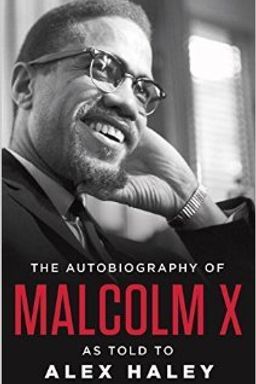
How does a child of racial terror become a voice of global liberation? In his autobiography, Malcolm X—guided by collaborator Alex Haley—unfolds a journey from trauma, rage, and hustling toward intellectual, moral, and political awakening. The narrative brings you through the layered worlds of America’s racial hierarchy while chronicling one man’s relentless reconstruction of self. More than memoir, it’s a social document that pairs private transformation with collective insight.
Family roots and racial violence
You begin in an America that criminalizes Black pride. Reverend Earl Little and Louise Little, Garveyite activists, raise their family within the Universal Negro Improvement Association’s ideals of racial independence and dignity. White vigilante groups—the Ku Klux Klan in Omaha and the Black Legion in Michigan—respond with repeated assaults, culminating in Earl Little’s death under suspicious circumstances. The incident, deemed suicide by insurers, collapses family finances and trust in state systems. Louise’s institutionalization and the state’s removal of her children fragment the household. By the time Malcolm enters foster care, you sense he’s internalized how institutions reproduce racial abuse rather than justice.
Education, colorism, and early humiliation
Malcolm’s early intelligence meets the walls of racial expectation. At Mason Junior High, after excelling as class president, he’s told by his teacher Mr. Ostrowski that law dreams are “not realistic for a nigger.” That moment shuts down his academic hope. Reinforced by a skin-tone hierarchy within his own home—where lighter skin receives mixed favor—he learns to navigate color prejudice alongside class-based mockery. When mocked and expelled, he turns from school respectability to self-protection through performance and later street life. The process mirrors how systemic barriers turn gifted youths into cynics, not by lack of talent but by social betrayal.
Urban survival and moral descent
The Great Migration deposits him into Boston and Harlem’s parallel economies. As a shoeshine boy at Roseland Ballroom, he absorbs urban codes. At train stations and clubs, he meets hustlers who thrive where the formal economy locks them out. Under Shorty’s mentorship, he conks his hair—a literal burning to approximate whiteness—and enters the complex moral space of hustling: numbers running, drug sales, and burglary. His life resembles a fast track down social margins, yet every hustle teaches him observation, persuasion, and politics—skills he will later weaponize for reform. His 1946 arrest, and the harsh ten-year sentence compared to his white girlfriends’ minor penalties, inaugurates the crucible of prison rebirth.
Prison rebirth and disciplined awakening
Prison strips Malcolm’s freedoms but restores his mind. Copying the dictionary word by word, reading Will Durant and Du Bois, debating fellow inmates, and corresponding with Nation of Islam members transform a self-taught hustler into an articulate student. Under Bimbi’s guidance and Elijah Muhammad’s letters, he links racial history with theology and develops a moral code rooted in discipline—no drugs, no gambling, no pork. Education and submission intersect: by subduing past addictions to vice and pride, he reclaims agency through order. The Nation’s message gives him both an explanation for historical wounds and a method for recovering dignity.
Nationhood, discipline, and public mission
As Malcolm X, he enters organized faith. The Nation of Islam’s rituals—weekly Temple training, strict diets, uniform discipline—offer psychological therapy for shattered communities. He contributes organizational energy: preaching, recruiting through “fishing,” and founding temples from Boston to Harlem. He adopts “X” to signify lost African names, replacing ownership by white masters with a symbol of reclaimed identity. His sermons blend theology with sociology, teaching black people to see themselves as the world’s original people deprived by systemic theft. The movement’s ascent makes him both minister and national lightning rod, amplified by television and newspapers that translate his moral militancy into headlines.
Conflict, evolution, and global vision
The 1960s bring both fame and fracture. Internal disputes, especially over Elijah Muhammad’s moral scandals, test his loyalty. His criticism of national violence (“chickens coming home to roost”) triggers suspension and isolation. Yet exile becomes liberation. Malcolm reenters the wider world through the Hajj to Mecca, witnessing interracial equality that reorients his philosophy. He reframes the black struggle from nationalism to human rights, grounding it in global solidarity. His OAAU aims to internationalize the American racial problem, align black Americans with anticolonial movements, and create institutions for self-reliance. His leadership fuses political precision with prophetic empathy.
Martyrdom and memory
His 1965 assassination at the Audubon Ballroom closes a life but opens a global dialogue. Funerals attended by thousands and Ossie Davis’s eulogy enshrine him as a prince of dignity. Governments across Africa honor him as part of their decolonization narrative. Over time, his image transforms—from a forbidden militant to a U.S. postal stamp and cultural icon. The book invites you to witness how family trauma, systemic oppression, moral discipline, and spiritual search converge into modern revolutionary consciousness. Malcolm’s journey argues that transformation, once rooted in truth and structure, remains possible even for those society aims to erase.