
Idea 1
Reclaiming Hope in a Divided America
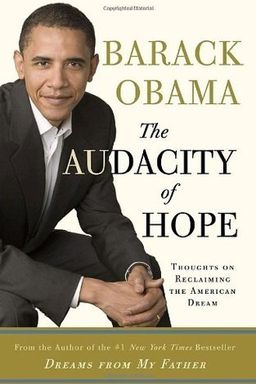
How can you rebuild the American ideal when politics seems broken? In The Audacity of Hope, Barack Obama argues that renewal begins with moral imagination and practical action. He believes that Americans still share common values—dignity, responsibility, fairness—but that a politics obsessed with division and spectacle has corroded trust. The book weaves memoir, policy reflection, and moral argument into a single thread: you can restore democratic possibility by reconnecting values to governance and conversation to power.
The Moral Core: Shared Values and Empathy
Obama roots his politics in empathy—the ability to see the world through others’ eyes. From his childhood lessons with his mother (“How would that make you feel?”) to his community organizing work in Chicago, he frames policy as an expression of shared moral understanding. Americans, he insists, possess a dual moral grammar: individual aspiration and collective responsibility. The country succeeds when these forces operate in tension, not opposition—when opportunity depends on effort, and community ensures that effort is rewarded rather than squandered by circumstance.
He demonstrates this moral synthesis through examples such as the videotaping of police interrogations in Illinois—a reform balancing justice for suspects and accountability for law enforcement—and educational investments that blend personal drive with public support. For Obama, values guide policy when empathy guides leadership.
The Structural Challenge: Polarized and Spectacular Politics
The book’s narrative begins amid disillusionment. Voters at Chicago block clubs and Illinois county fairs asked him, “Why go into something dirty like politics?” That cynicism, he argues, is both symptom and cause of a democracy that rewards outrage over deliberation. The rise of partisan media, negative campaigning, and base mobilization has replaced coalition-building with tribal combat. From Newt Gingrich’s procedural warfare in the House to the 2004 “Swift Boat” attacks, he traces how noise drowns nuance and citizens retreat into camps.
Yet Obama resists despair. He urges you to see politics not as a war to be won but as a conversation to be advanced. Civic life, he says, must be reclaimed through listening—a small act that allows shared hopes (good jobs, decent schools, safe neighborhoods) to regain political traction.
The Operating Framework: The Constitution as a Living Conversation
Behind the moral argument lies institutional faith. The U.S. Constitution, Obama reminds you, is not a static manual but a design for deliberation. Its checks, balances, and separations slow down impulse and force negotiation. Visiting Senator Robert Byrd in the early days of his Senate service, Obama learns to value the rules that compel humility. But he also warns: when procedure becomes weapon—as in the threatened “nuclear option” over judicial nominations or the post-9/11 stretching of executive power—the conversation collapses and the Constitution frays.
Drawing on Lincoln, he finds a balance between patience and conviction: deliberate where possible, act decisively where conversation fails on moral grounds (as with slavery). That tension defines responsible leadership.
The Lived Arena: Money, Media, and Modern Campaigns
From his own campaigns, Obama offers an insider’s anatomy of political culture. Fundraising pulls candidates toward the wealthy; organized interests impose rigid questionnaires; media branding distorts complexity into caricature. The lesson isn’t cynicism but vigilance: elections cost money, but you must not let money redefine your world. To stay grounded, he advises keeping in direct contact with ordinary citizens—the voters with kitchen-table questions, not cocktail-party opinions.
In this sense, the book doubles as a self-discipline manual for public servants: remember the people you serve, question the comfort of donor circles, and keep the humility of the town-hall conversation alive.
The Vision Forward: Practical, Hopeful Governance
Every subsequent chapter—economic opportunity, health care, race, religion, and foreign policy—translates this ethos into policy. Obama’s hope is not naïve optimism; it’s the audacity of believing that civic empathy and constitutional deliberation can still produce workable solutions. He argues that America’s greatness has always depended on combining moral conviction with pragmatic compromise—Lincoln’s temperance and FDR’s experimentation, Kennedy’s rhetoric and Reagan’s conviction that values matter in policy.
In the end, The Audacity of Hope is less about one man’s ambition than about a citizens’ discipline: the everyday work of listening, reasoning, and building institutions that reflect the moral generosity Americans still possess. Its final invitation is clear—you cannot wait for hope to appear; you must construct it, policy by policy, conversation by conversation.