
Idea 1
Mastering the Art of Stopping Time
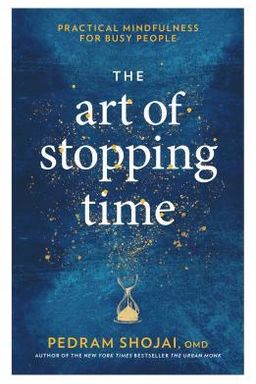
Have you ever felt like you’re racing through your days—always busy but rarely present? That unsettling sense of being out of sync with time is what Pedram Shojai, a Taoist monk and integrative healer, tackles in The Art of Stopping Time. He argues that we’ve become slaves to the clock, living in a constant state of hurry, stress, and distraction. Shojai contends that by learning to ‘stop time,’ we can reclaim our attention, deepen our presence, and experience what he calls time prosperity—a life in which time feels abundant rather than scarce.
Shojai draws from Taoist philosophy and modern life optimization strategies to show how mindfulness, rhythm, and conscious living allow us to reshape our relationship with time itself. The book builds around a powerful practice called the 100-Day Gong, an ancient Chinese discipline of repeating a chosen ritual daily for 100 days. Each short ‘day’ exercise in the book invites you to slow down, notice life, and realign with natural rhythms—the sunrise and sunset, breath and heartbeat, rest and motion.
Why Time Feels Scarce
Shojai begins by reminding us that time is not our enemy but our currency. We exchange time for money, attention, and experience. Yet the modern world’s obsession with multitasking, screens, and nonstop productivity has stolen our ability to feel time’s flow. The result is what he calls time compression—a sense of being squeezed between past regrets and future worries, leaving no space to live in the now. Our impatience, insomnia, and anxiety are symptoms of this warped relationship with time.
To heal that relationship, we must first slow our internal clock. Shojai weaves practices like mindful breathing, gratitude, and reflection through everyday activities—eating, walking, talking, sleeping—to reestablish harmony between internal and external rhythms. He reminds us that humans once lived by light, seasons, and cycles. Our ancestors rose with the sun, rested with the moon, and understood that the world had seasons of both action and rest. Today, artificial light, caffeine, and digital chatter keep us permanently in ‘summer’ mode: fast, bright, and burning out.
The 100-Day Gong: A Path to Time Mastery
The structure of Shojai’s book is as important as its message. By engaging you in a 100-day series of small, focused rituals—each lasting only a few minutes—it mirrors the cycles of change he describes. You don’t add more to your schedule; you replace habitual distractions with moments of presence. For example, one day’s exercise may ask you to notice the quality of morning light; another to chew your food slowly; another to turn off all screens for an hour. It’s a form of spiritual strength training: micro-adjustments that build awareness through repetition.
Shojai contrasts this with Western approaches that promise instant transformation. Real change, he reminds us, comes from consistency, not intensity. The gong is a sacred container of accountability and reflection—a way to track progress and honor each day’s lesson. Over time, these accumulated moments expand your perception of time itself. You begin to feel that hours stretch longer, tasks flow easier, and life regains a sense of spaciousness.
Living in Natural Time
Shojai blends physiology and spirituality to show that time is inseparable from biology. Our circadian rhythms, heartbeats, breath, and hormonal cycles all create patterns of time within the body. When we defy those patterns—by working late, skipping rest, or ignoring nature—we experience stress and disease. Reconnecting with those natural rhythms, by synchronizing with daylight, observing the seasons, or taking mindful walks, restores what he calls biological harmony. In this view, mastery of time isn’t about optimizing your calendar—it’s about syncing your consciousness to the clockwork of the universe.
He calls this the essence of the Taoist way: the ability to perceive the flow of life and move with it, not against it. The more we harmonize with the ebb and flow of the world—the light shifting through the day, the breath moving through our bodies—the more we feel anchored in eternal time rather than trapped in the rush of linear time. He connects these practices to modern findings on mindfulness, neuroplasticity, and stress reduction, echoing insights from Jon Kabat-Zinn, Thich Nhat Hanh, and other wisdom teachers.
From Time Scarcity to Time Prosperity
Ultimately, Shojai’s goal is not to give you more hours in the day, but to help you experience time as abundant. He distinguishes between time poverty—feeling rushed, anxious, and behind—and time prosperity—feeling calm, purposeful, and present. The paradox is that when you slow down, you actually accomplish more. The quality of your time deepens, and tasks stop feeling like a race. In this state, restful mornings, meaningful conversations, and mindful work feel rich, not rare. You begin to see that eternal time—the infinite now—is always available beneath the surface of your rushing mind.
“The only way to have more time is to be present for the time you already have.”
As with his earlier work The Urban Monk, Shojai blends ancient wisdom with modern practicality. His promise is not mystical escapism but an actionable life art: by mastering presence, you master time. The art of stopping time is, at its heart, the art of being fully alive—moment by moment, heartbeat by heartbeat.