
Idea 1
Money as a Tool for Freedom and Contentment
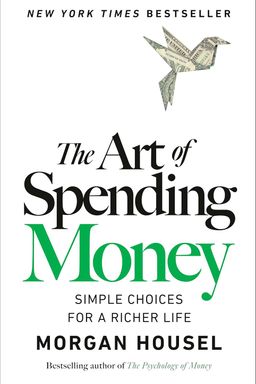
What if the smartest way to spend your money isn’t about buying more, but about thinking differently? In The Art of Spending Money, Morgan Housel argues that money decisions are less about math and more about psychology. He contends that spending is an art—messy, emotional, and deeply personal—where your past, your social world, and your expectations shape what feels worth it. His core claim: the best use of money is to buy independence and durable contentment—not status—and to align spending with your values rather than other people’s opinions.
Housel’s thesis matters because so many people master making money but struggle to get happiness out of it. He’s seen poor families extract huge joy from little money and rich families tormented by wealth. In a world that rewards optimization and performance, this book invites you to define wealth as control over your time and your desires. If The Psychology of Money taught you where wealth comes from, this book teaches you how to use it without letting it use you.
The Heart of the Argument
Housel draws a sharp line between two uses of money: as a tool to live a better life versus a yardstick to compare yourself with others. The first leads to independence, peace of mind, and relationships that deepen. The second tends to spiral into envy, lifestyle inflation, and fragile happiness. He warns that status-driven spending provides quick hits of attention (junk food) but little durable respect (nutrition). The antidote is to pursue “quiet compounding”—slow, unglamorous choices that add up to freedom, purpose, and contentment.
What You’ll Learn
You’ll see how “personal finance is more personal than finance” through a tour of stories: a foster-care social worker explaining why some families can’t think beyond 24 hours; a rich hotel guest who bought a $21,000 chair because he thought he was “supposed to”; and two solo sailors—Donald Crowhurst and Bernard Moitessier—who show what happens when you live for external status versus internal peace. You’ll explore how expectations drive happiness; why contentment beats fleeting buzz; how envy, FOMO, and the “Inner Ring” (C. S. Lewis) distort your desires; and why independence—doing what you want, when you want, with whom you want—is the highest ROI money can buy.
Why This Matters Now
Modern life places status on display. Social media turns neighbors into a global leaderboard, and markets reward short-term attention over long-term wisdom. Against this backdrop, Housel shows how money can either magnify your identity in healthy ways—like Chuck Feeney, who gave away his billions and lived simply—or entrap you in someone else’s script, like the Vanderbilts, who vaporized a dynasty chasing social games they could never win. He argues that the freedom money promises only shows up when you buy time, reduce dependence on strangers and bosses, and resist the compulsion to impress—especially strangers.
How the Book is Structured
The chapters move from foundational psychology (all behavior makes sense with enough information) to practical re-frames (utility vs. status), then to risk and regret (deciding how much to spend today vs. save for tomorrow), and finally to identity, family, and the daily practice of living within your values. Along the way, Housel blends behavioral science (Lisa Feldman Barrett, Kahneman) with vivid narrative—Nixon’s warning that leisure can feel empty, Franklin’s line about buying pleasures that enslave us, athletes who go broke, and a lottery winner who lost her privacy.
A central shift
“The best measure of wealth is what you have minus what you want.” When you reduce wants, you get richer without earning a dollar.
The Promise of a Simpler Life
Housel resurrects William Dawson’s “Quest of the Simple Life”: not a vow of poverty, but a commitment to be served by money rather than serving it. That can mean flying coach like Jeff Bezos did for years, showing off the inside of your house (to your people) rather than the outside (to strangers), or saving because unspent money buys tomorrow’s options—what Housel calls “claim checks on the future.” You don’t need a universal formula. You need a working philosophy: buy independence, minimize future regret, cultivate contentment, and let money amplify who you are—not define you.
This summary will walk you through: why personal history shapes every dollar you spend; how admiration is earned by who you are, not what you own; why contentment beats the dopamine chase; how independence is built stepwise; how to avoid status traps and social debt; how to balance today’s joy with tomorrow’s security; and how to keep money out of your identity while using it to create memories and meaning. If you want your money to make your life bigger on the inside, not just shinier on the outside, this book is a masterclass.