
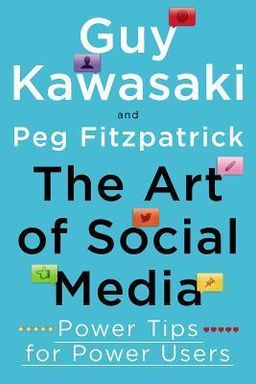
The Art of Social Media cover

The Art of Social Media

by Guy Kawasaki and Peg Fitzpatrick

Discover how to become a social media powerhouse with insights from Guy Kawasaki and Peg Fitzpatrick. Learn to professionally promote your brand, craft engaging content, and leverage innovative platforms for maximum impact across dominant social media channels.

Mastering the Art and Science of Social Media

Have you ever wondered why some people seem to effortlessly dominate social media while others struggle to gain even a trickle of attention? In The Art of Social Media: Power Tips for Power Users, Guy Kawasaki and Peg Fitzpatrick argue that success on social platforms isn’t about luck, virality, or trendy dances—it’s about mastering a structured, creative, and disciplined system. Their core claim is simple but powerful: anyone can master social media if they treat it not as idle pastime but as a craft—an art form sharpened by smart tools, strategic curation, and authentic interaction.

At its heart, the book teaches that social media is a modern-day equalizer: it allows you, whether an entrepreneur, artist, or brand, to connect directly with audiences without intermediaries. But with that freedom comes the challenge of “feeding the content monster,” handling trolls, staying organized, and avoiding the clueless mistakes that sink credibility. Kawasaki and Fitzpatrick guide readers through these challenges with over a hundred practical lessons, combining the creativity of an artist with the precision of an engineer.

The Philosophy Behind the Art

From the opening Emerson quote—“Do not follow where the path may lead; go instead where there is no path and leave a trail”—the authors signal their stance: real social media mastery comes from experimentation, not imitation. They write as practitioners, not theorists, distilling insights from experiments with platforms like Google+, Twitter, and Pinterest. Their premise is not that there’s one formula for success, but that consistency, curiosity, and generosity will always outperform hacks or gimmicks.

They call their method a mix of art and science: the art lies in storytelling, visuals, and tone; the science lies in timing, analytics, and tools. The combination helps creators “earn the right” to promote themselves—a delicate balance between giving and asking. As they put it, if you provide value like NPR, you’ll earn permission to run your “pledge drives.”

From Profiles to Presence

The journey starts with your profile, your digital résumé to the world. Kawasaki compares it to a global first impression—if you have five seconds to convince a stranger you’re worth following, what story do you tell? The optimization process involves clean screen names, professional avatars, and clear mantras that express your purpose in under four words. The authors insist that every element—from your cover photo to your tagline—should radiate coherence across platforms. The mantra “I empower people” encapsulates how brevity can be both memorable and meaningful.

For them, a profile isn’t decoration; it’s strategy. A messy or incomplete one signals indifference, and indifference is the death of trust online. Like a good résumé, your profile should build likability, trust, and competence—all in seconds.

Feeding the Content Monster

The authors label content creation and curation as the biggest daily struggle of online life. “Feeding the Content Monster” requires a balance between what you create and what you borrow. Content curation—finding and sharing high-quality material from others—is a “win-win-win” because it serves audiences, drives traffic to creators, and positions you as a trusted filter in an overwhelming digital flood. Tools like Alltop, Feedly, SmartBrief, TED Talks, and Reddit help sustain your discovery pipeline.

Yet Kawasaki warns that curation should pass the “reshare test”: would others risk their reputation to repost it? If not, skip it. This principle transforms your mindset from quantity-obsessed to quality-driven. Resharing is, in his words, “the sincerest form of flattery on social media.”

The Anatomy of a Perfect Post

Once you have great content, presentation matters. The authors dissect posts like an architect studying blueprints. Every post—every single one—should contain a visual element, a clear title, and a link to its source. Optimal length? Two to three sentences per post, or 100 characters on Twitter. Add 2–3 relevant hashtags to help it travel further, but never spam. They compare good posting rhythm to NPR programming: provide great segments every day so that when you finally promote yourself, the audience feels you’ve earned your airtime.

Being bold, organized, visual, and grateful transforms posts from noise into narrative. And their data-driven doctrine—“Would you rather have 1,300 clicks or 7,600?”—reminds you that persistence and repetition, not perfectionism, drive outcomes.

Engagement Over Ego

Responding to comments is the heartbeat of relationship building. Kawasaki advises treating it like “hand-to-hand marketing.” Assume the best in people, stay positive, and know when to walk away from trolls. His three-round rule for online debates (“share–respond–respond again, then stop”) captures the balance between engagement and energy management—wisdom echoed by thinkers like Don Miguel Ruiz, whose principle “Don’t take anything personally” opens this chapter.

From Blog to Ecosystem

Social media and blogging, once distinct, must now feed each other. Kawasaki’s coauthor Peg Fitzpatrick even coined a verb for it: to “Peg” your post—meaning to integrate your content across blog, Facebook, Pinterest, Twitter, and LinkedIn with tailored images and titles for each. This holistic approach multiplies visibility and engagement. Blogging provides depth; social media provides reach. Together they create a virtuous cycle of discovery and trust.

Avoiding the Clueless Zone

The authors also include a delightful but scathing guide on “how not to look clueless.” From over-tagging hashtags to buying followers, every common sin gets humorously dissected. His golden rule: “Don’t be an orifice.” In short, act like a professional adult online. Authenticity isn’t about oversharing or cursing—it’s about credibility, respect, and consistency.

Why It Matters

Ultimately, The Art of Social Media isn’t just about growing numbers; it’s about building reputation, community, and impact. Social media, Kawasaki and Fitzpatrick insist, democratizes communication and gives everyone a voice—but those who learn to wield it thoughtfully will shape not just attention but influence. As the authors conclude with a spiritual nod to Ruiz’s Toltec wisdom, the true art of social media is not just technical mastery—it’s personal integrity expressed publicly. When you speak impeccably, don’t take attacks personally, and always do your best, you’ll not only grow followers—you’ll earn respect.


Crafting Magnetic Profiles

Guy Kawasaki insists that your social media profile is your business card, résumé, and handshake all rolled into one. It determines whether people follow, engage, or scroll past you. Optimizing your profile means thinking like a recruiter: people make snap judgments in less than five seconds. To win that window, you must be recognizable, credible, and memorable.

Show Your Face, Not Your Logo

Your avatar—the small profile image—must focus on your face. Kawasaki warns against family portraits, pets, or logos unless your account represents a company. Why? Because faces trigger trust. He even offers photography advice: use asymmetry for visual interest, light your face from the front, and upload images at least 600 pixels wide. Think of it as visual SEO—your mini-logo in every interaction.

Keep It Consistent

Just as companies standardize logos, you should use the same photo across platforms. This builds instant recognition across Facebook, LinkedIn, and Twitter. In personal branding, repetition equals reassurance. It’s one of those subtle cues that turn strangers into followers because they subconsciously connect your identity from place to place.

Mantras Beat Mission Statements

Kawasaki redefines the “tagline” idea with a twist: drop the corporate language and craft a mantra—a two- to four-word expression of purpose. Instead of verbose mission statements like “Delivering innovative, customer-focused solutions,” go with memorable phrases like “Democratizing design” (Canva) or “Peace of mind” (FedEx). It’s short, emotional, and sticky—and signals clarity of vision to potential followers.

Tell a Visual Story

The cover or header image gives you extra visual real estate to express identity. Where the avatar says “who I am,” the cover says “what I care about.” Guy uses public-speaking images, while others might show their team, product, or personal passions. The key is avoiding the default graphics—because leaving a blank banner screams, “I don’t get this platform.”

Get a Vanity URL and Go Pro

A custom URL (like plus.google.com/+GuyKawasaki) signals that you take your presence seriously. Kawasaki jokes that lacking one “impugns your intellectual prowess.” Likewise, if you’re using social media for business, upgrade to a Page rather than a personal account. Pages allow analytics, multiple admins, and advertising—basic tools for professional engagement.

Finally, view your profile “incognito”—literally, open it in a private browser window to see what strangers see. This “anonymous view” test often exposes embarrassing oversights like outdated bios or broken links. In the art of social perception, how you look through others’ eyes determines how far your influence travels.


Feeding the Content Monster

The toughest challenge of social media, Kawasaki declares, is not launching—it’s feeding the Content Monster. You need a constant flow of engaging material, but no one can create endlessly. Thankfully, curation—finding and sharing others’ great work—is the antidote.

Creation vs. Curation

There are two ways to feed the beast: by creating original material or curating existing gems. Creation (writing, filming, designing) builds authority but burns energy fast. Curation leverages other creators’ brilliance and positions you as a reliable filter of quality. Shared properly, curation is a triple win—you get valuable content, sources get traffic, and audiences get discovery without overload.

Tools of the Trade

Kawasaki and Fitzpatrick list powerful platforms for consistent discovery: Alltop (their own RSS aggregator), Feedly, Flipboard, and SmartBrief for industry digests. Add academic credibility via Google Scholar or futuristic innovations from Futurity, a repository of university research press releases. When you curate, always credit—use hat tips (h/t) to acknowledge your sources and strengthen relationships with content creators.

Focus on the Reshare Test

Likes are good; comments are nice. But the ultimate compliment is a reshare. Each time you consider posting something, ask: “Would someone stake their reputation on sharing this?” If not, skip it. This forces you to maintain editorial quality control. Like recommending a restaurant to a friend, every share reflects your taste.

Plan Without Paralysis

Kawasaki is not a fan of six-month strategy decks. He prefers agile, minimal planning focused on one goal: attracting the right audience to generate income or impact. Still, Fitzpatrick adds structure with editorial calendars using tools like Google Docs, HubSpot templates, and schedulers such as Buffer and Hootsuite. Their collaboration shows that art and organization can ally beautifully.

Leverage Trends and Communities

Discover what’s already hot using tools like Reddit, StumbleUpon (before its closure), or Google Trends. Don’t fear sharing viral content just because “everyone has seen it”—billions haven’t. Add your own perspective to keep it human. You can also mine evergreen enthusiasm for topics like NASA, coffee, or Star Wars—subjects with perpetual fan energy.

Finally, Kawasaki suggests collaborating closely—create shared Pinterest boards or Tumblr blogs to collect sharable material with trusted peers. Information gathering is more sustainable when collective. Feeding the monster is not about quantity, he reminds us—it’s about never running out of meaningful things to say.


The Secrets of Perfect Posts

A good post doesn’t simply appear—it’s engineered. Kawasaki and Fitzpatrick reverse-engineer virality into repeatable craft. They reveal forty micro-strategies to make posts compelling, readable, and reshared. If curation is the pantry, great posts are the perfect meal.

Start With Value

All worthwhile content fits one of four “value buckets”: information, analysis, assistance, or entertainment. Like NPR’s mix of news and culture, your stream should constantly inform or delight. Only after consistently adding value can you run promotions or “pledge drives.” Kawasaki repeatedly warns—be NPR, not QVC.

Be Visual and Organized

Every post needs “eye candy”—a high-quality image, infographic, or video. He cites data showing a 94% boost in engagement with relevant photos. Canva, his own design platform, offers templates that democratize good design. For longer posts, structure with numbered lists or bullet points to prevent the dreaded “tl;dr” (too long; didn’t read) reaction. Visual order fosters cognitive comfort.

Be Bold and Brief

Courage matters as much as craft. Some followers will complain you share too much or too broadly—ignore them. As Kawasaki jokes, “If you’re not pissing people off on social media, you’re not using it right.” Pair bold opinions with brevity: 2–3 sentences for Facebook, ~100 characters for Twitter. Readers skim; make every word pull weight.

Be Curious and Analytical

The book pushes experimentation. Test everything—timing, format, platform. Use analytics tools like LikeAlyzer for Facebook and SocialBro for Twitter to find patterns. Kawasaki debunks “SEO mysticism,” advocating SMO (social-media optimization) instead. Translation: focus on people, not algorithms. Algorithms follow engagement, not vice versa.

In the end, a perfect post isn’t artistic luck; it’s crafted empathy. It merges psychology, design, and timing into one harmonious scroll-stopper.


The Power of Meaningful Engagement

Social media rewards generosity, not monologues. Responding to comments transforms followers into community. Yet, as Kawasaki points out, “there’s nothing easy about it.” You’ll meet both wisdom and idiocy online, and your grace under pressure defines your longevity.

Listen Before You Leap

Start with monitoring tools—TweetDeck, Hootsuite, Sprout Social, or Google Alerts—to track where and when conversations happen. Every @mention or +mention is an opportunity. But avoid hashtag overload; if you’re speaking to someone, use direct mentions instead of public grandstanding.

Assume Good Intent

Text lacks tone, so misinterpretation is inevitable. Kawasaki advises assuming positive intent until proven otherwise. Many critics aren’t trolls—they’re curious or clumsy. Calm curiosity disarms flame wars, while defensiveness ignites them.

Set Emotional Boundaries

Use Kawasaki’s “three rounds” rule: a commenter comments—you respond—they reply back—and you stop. Exit gracefully before banter devolves into battle. And when confronted with genuine abuse, delete, block, and report without guilt. “Life is too short to deal with orifices,” he quips—a humorous reminder to protect your energy.

Engagement done right builds credibility faster than advertising. In every reply, picture an audience of silent observers judging your tone. Respond for them, not just the critic. Win reputation, not arguments.


Merging Blogging and Social Media

Once viewed as rivals, blogs and social media now form a powerful alliance. Kawasaki originally abandoned blogging for Google+ but later reversed course when LinkedIn’s long-form articles revived serious readership. Together, blogs and social platforms create a feedback loop of authority and amplification.

Curate Yourself First

Your own posts deserve as much visibility as the articles you share. If your blog isn’t worth tweeting, it isn’t worth writing. Kawasaki and Fitzpatrick teach readers to “share themselves” thoughtfully—embed social posts within blog content to drive interest both ways. Your blog becomes your intellectual home; social media, your front porch.

Leverage Visual Channels

Pinterest is a surprising star here. Fitzpatrick recommends designing a unique image for every blog post and pinning it, effectively immortalizing your content. Unlike a tweet’s fleeting life, a pin can resurface for years, reincarnating visibility. Use tools like Canva and install “Pin-it-later” buttons to encourage asynchronous reading.

Expand Through Outreach

Guest posts on platforms like Huffington Post or HubSpot expose you to fresh audiences. Kawasaki’s pitching advice is blunt: Don’t use PR firms, don’t send mass emails, and don’t make the editor work hard. Pitch personally and attach a ready-to-publish draft. Respect time; earn placements.

Integrate Email and Slides

E-mail newsletters remain unbeatable for retention. Short subject lines and striking graphics outperform long narratives. Pair that with SlideShare, the unsung hero of visual storytelling. Turning your best blogs into attractive slides can earn thousands of new views. Together, these tactics turn a one-time post into an omnichannel conversation.

As Peg Fitzpatrick says, the goal is to “Peg” your post: tailor it for each platform until your message feels native everywhere. The blog is the brain; social media is the nervous system. Both must fire together.


Growing and Guarding Your Following

Guy Kawasaki doesn’t mince words: “There are only two kinds of people on social media—those who want more followers and those who are lying.” To gain them, focus not on vanity but on value and timeliness. Two strategies dominate—consistent goodness and early adoption.

Consistency Beats Virality

Followers are earned through reliable, daily excellence. Kawasaki compares this to compound interest—one valuable share a day accumulates influence faster than occasional “viral” bursts. Platforms reward engagement consistency, not one-hit wonders. Share good stuff 90% of the time, promote yourself the other 10%.

Be an Early Settler

Adopt new platforms early—before the crowd and the noise arrive. That’s how Kawasaki amassed 6 million followers on Google+. Being an early adopter grants algorithmic favor, visibility, and community ownership. Every new platform—from TikTok to Threads today—creates its own new class of “stars.”

Don’t Be Clueless

But size means little without smarts. His “Cluelessness Manifesto” lists what to avoid: buying followers (cheating), begging for shares (desperation), swearing for attention (immaturity), calling yourself a guru (delusion), or handing your accounts to interns or agencies (abdication). Credibility is currency. Guard it fiercely.

Finally, Kawasaki concludes that growth is less about manipulation and more about magnetism. When your authenticity aligns with audience passion, numbers follow naturally—and they stay.


Turning Engagement into Events

Social doesn’t stop at the keyboard—it powers real-world connection. In their “Moto X roadshow” across six Latin American countries, Kawasaki and Fitzpatrick learned firsthand how to transform live events into online explosions of visibility. Their playbook applies to conferences, launches, and any in-person gathering.

Give Your Event an Evergreen Hashtag

Instead of localized, disposable tags like #MotoXMexico2013, they used #MotoX—short, memorable, and reusable. The goal is not to describe the event but stitch every moment into a long-term narrative. An evergreen hashtag builds brand recall and connects global conversations.

Integrate It Everywhere

Print it on programs, slides, and signage. Use it in every speech. Ask the audience to live-tweet photos and comments with it. If possible, display incoming tweets live during the event using tools like Twubs or Tchat. Seeing their names on-screen thrills participants and fuels more sharing.

Stream, Capture, and Share

For major announcements, live-stream video to reach global viewers who can’t attend. If bandwidth limits you, tweet blow-by-blow updates instead. After the event, post highlight photos and videos across Google+, Facebook, and Instagram. A backdrop with your brand logo transforms every selfie into organic marketing.

Empower Your Executives

Forget VIP opacity—have executives mingle and pose with guests. Every photo becomes an endorsement. As Guy humorously writes, 100% of these pictures will be shared. Add wireless access for attendees (seriously—no Wi-Fi, no buzz) and hire photographers instead of handing out useless swag.

When physical experiences sync with digital storytelling, your brand stops hosting events—and starts hosting movements.


Bringing It All Together

The book’s final chapter walks you through a case study: a nonfiction book launch. It’s a masterclass in synthesis—how to weave everything into one structured campaign. The checklist spans foundation-building, asset creation, and coordinated promotion across every medium.

Step 1: Build a Solid Core

Update every profile, avatar, and signature to reflect one coherent identity. Create author pages on Amazon and Goodreads and ensure bios match across all platforms. Set Google Alerts to track mentions. Consistency equals professionalism.

Step 2: Gather Digital Assets

Produce small building blocks—a three-second intro video, two-minute chapter videos, blog posts per chapter, LinkedIn summaries, and quote graphics. Each piece should stand alone yet connect back to the main offering. This “content atomization” technique multiplies reach.

Step 3: Go to Market

Schedule curated posts daily, prewrite tweets, share videos twice weekly, and orchestrate live interactions: Twitter chats, Hangouts on Air, or Reddit AMAs. The combination of automation and authenticity builds viral rhythm. It’s logistical choreography masking effortless flow.

This finale exemplifies Kawasaki’s mantra-driven pragmatism: if two people (he and Peg) can execute this scale of campaign, so can you. With curiosity, consistency, and kindness as your creative compass, the art of social media turns from chaos into clarity.

Dig Deeper

Get personalized prompts to apply these lessons to your life and deepen your understanding.

Go Deeper

Get the Full Experience

Download Insight Books for AI-powered reflections, quizzes, and more.