
Idea 1
Intimacy, Rivalry, and the Making of Modernism
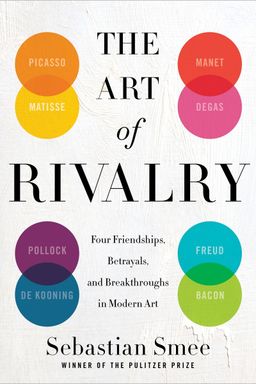
Modern art, this book argues, is born not from isolated genius but from intense human collisions—friendship tangled with rivalry, desire mixed with ambition, innovation provoked by jealousy. You see how modernism becomes a social, psychological, and aesthetic network in which artists discover themselves through others. The book journeys from Paris to London to New York, tracing how Degas and Manet, Matisse and Picasso, Freud and Bacon, Pollock and de Kooning redefine art through relationships that oscillate between intimacy and competition.
Rivalry as creative intimacy
Rivalry is usually imagined as combat—a fight for dominance. But here, rivalry functions as intimate chemistry. When Degas paints Manet and Suzanne in their domestic setting or Freud places Bacon knee-to-knee in his studio, you witness a private pact of exchange and exposure. These are encounters that collapse social boundaries and condense years of potential influence into explosive creative episodes. Rivalry validates risk: artists need peers to legitimize what they abandon in tradition.
Modernism's fragile social fabric
Modernism redefined greatness around rupture rather than mastery. That left artists without fixed standards or institutional safety nets. Peer groups and patrons—the Steins, the Watsons, Peggy Guggenheim—become the new courthouses of value. Recognition now depends on persuasion, salons, and social risk. This explains why Picasso visits Matisse’s studio and why Freud attends Bacon’s gambles: artistic innovation needed social proof before it could survive.
Portraits as tests of connection and control
Portraiture unfolds as more than depiction; it is an emotional negotiation. Manet’s deletion of Suzanne from Degas’s double portrait wounds their friendship. Freud insists on sitters enduring months of contact; Bacon rejects live models entirely, preferring memory and photography. Each approach reflects how presence or absence can shape power. Portraits become living documents—evidence of intimacy, betrayal, and symbolic possession.
Erotic entanglement and the cost of creativity
Desire fuels creation but corrodes stability. Bacon’s affair with Peter Lacy births his most violent works; Freud’s marital and sexual collapses drive his obsessive studies of flesh and distance. In these stories, erotic risk mirrors artistic risk—each lover and rival becomes muse, tormentor, and catalyst. Emotional danger sharpens experimentation and gives art its moral tension.
Ambivalence and mutual influence
Influence runs two ways. Degas borrows Manet's surface ease even as he resists it; Bacon absorbs Freud’s devotion to presence while Freud learns Bacon’s audacious chance. Matisse and Picasso oscillate between admiration and threat, shaping each other’s breakthroughs. This ambivalence—love alongside envy, debt beside rebellion—is what drives artists toward invention. The result is not imitation but metamorphosis.
Core insight
Modernism thrives on intimate rivalry: artists become both mirrors and provocateurs to one another, validating risk, shaping reputation, and transforming personal crises into collective innovation.
Loss, theft, and mythmaking
Absence enters as metaphor. Manet’s slashed canvas and Freud’s stolen portrait embody emotional wounds that refuse closure. Missing works reconfigure memory; they become mythic emblems of unrecoverable truth. Even theft and refusal to lend act as silent statements of control and mourning—proof that relationships, like art, sometimes survive only through what’s lost.
Legacy and validation
Across chapters, you see how social networks stabilize innovation. Freud’s Hirshhorn show, Picasso’s Steins, Pollock’s Guggenheim patrons—these are lifelines that transform private courage into public success. Recognition does not emerge automatically; peers confer legitimacy by accepting new rules. Rivalry is the engine, but validation is the finish line. You learn that art history’s turning points are rarely solitary—they are the product of friction, friendship, and the courage to contest power inside intimacy.