
Idea 1
Stoic Sports Science and the Art of Endurance
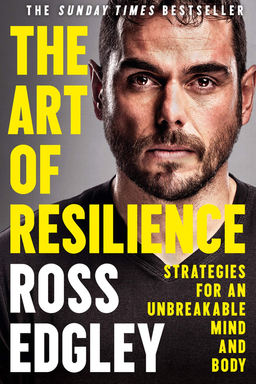
What truly determines whether you endure or break? In The Art of Resilience, Ross Edgley argues that endurance is not purely a matter of muscle or mentality but the integration of both — a system he calls Stoic Sports Science. The book blends ancient Stoic philosophy with modern sports science, revealing how you can train mind, body and spirit together to survive and excel in prolonged, unpredictable hardship.
Across his 1,780-mile swim around Britain, Edgley transforms the ocean into a floating laboratory to test how philosophy, physiology and psychology interact. The result is an operating manual for resilience: a disciplined body, a calm mind, and a structured plan that together form a feedback loop of control and acceptance.
Two Disciplines, One Operating System
Stoicism teaches you to distinguish between what you can control and what you can’t — preparing your mind to interpret external chaos rationally. Sports science gives you the physiological tools to improve recovery, pacing, and energy management. Edgley unites the two under one principle: philosophy must be lived somatically. Mental resilience alone won’t protect torn tendons; physical strength without composure will collapse in crisis. Both must be trained as one cohesive system.
Resilience as Psychobiological
At the book’s scientific core lies the Psychobiological Model of Fatigue: your brain decides when to stop based not just on physiological strain but on its perception of safety and possibility. Through training and mental framing, you can negotiate with this internal “safety manager,” teaching it that certain signals — salt burn, fatigue, jellyfish stings — are survivable. You then unlock more of your dormant capacity. (This contrasts with outdated fatigue models that blamed lactic acid alone.)
When Ross endured hypothermic conditions or jellyfish paralysis, his mind’s ability to interpret danger — structured by Stoic practice — allowed continued output long after physiological models predicted collapse. The lesson: perception sets performance ceilings.
The Living Laboratory of the Great British Swim
The book unfolds as both philosophical meditation and field report. It tests resilience principles in real weather, not laboratories. Storms, wounds and jellyfish become experiments: how does the brain reframe pain? How can logistics and humor maintain group morale? Each chapter reveals an interaction between principle and practice — from the improvised “sea scarf” (a duct-tape wound shield) to the nightly journaling that turned Stoicism into muscle memory.
Edgley’s methods—like the Great British Sleep-Nutrition protocol, tactical pacing, and spiritual motivation structures—translate easily into everyday crises: leadership fatigue, chronic stress or long-term work goals. His argument: treat life like an ultra-endurance event. Build habits that make resilience predictable, not heroic.
The Evolution of the Athlete-Philosopher
Through the integration of Stoic and scientific traditions, Edgley resurrects an older philosophical archetype—the athlete as scholar and the scholar as athlete. Like Epictetus training mind through daily notes or Marcus Aurelius examining character, Edgley journals through storms and exhaustion. Each diary entry serves as feedback between moral philosophy and biomechanics.
In essence, The Art of Resilience contends that extreme endurance is the ultimate synthesis of philosophy and physiology. You adapt muscles and mind simultaneously, research the nature of your pain instead of fleeing it, and align all effort to a higher intrinsic purpose. The Great British Swim becomes an allegory for survival in modern life: test ideas under real waves, and let tough conditions forge both moral and muscular clarity.