
Idea 1
The Art of Possibility: Redefining Reality and Creative Living
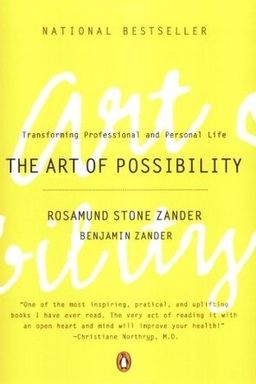
When was the last time you looked at an obstacle and wondered, “What if this isn’t a problem at all—but a possibility waiting to unfold?” In The Art of Possibility, conductor Benjamin Zander and psychotherapist Rosamund Stone Zander invite you to change the lens through which you see the world—from one of scarcity, competition, and fear, to a universe of infinite possibility. Together, they propose twelve “practices in possibility,” tools designed not to fix your life but to transform the framework of how you experience it.
At its core, the book argues that the world we perceive is not objective; it’s invented by our assumptions and stories. Once we recognize that “it’s all invented,” we can step into what the Zanders call a “universe of possibility”—a reality defined not by scarcity but by creativity, connection, and contribution. They extend this philosophy across domains—education, business, art, relationships—using vivid stories from Zander’s experiences as a conductor and teacher, and Rosamund’s work in therapy. Their compelling idea: change the story, and you change the world.
From Measurement to Possibility
The authors contrast two worlds—the world of measurement and the universe of possibility. The world of measurement is the familiar one: ruled by hierarchies, grades, rankings, successes, and failures. It’s where we live when we ask, “Am I good enough? Am I getting ahead?” In contrast, the universe of possibility invites openness, abundance, and engagement. Here, life is not about survival or comparison but about creation and contribution. You can begin to feel the difference; in one, you’re keeping score, while in the other, you’re making music.
Benjamin and Rosamund Zander explore how reframing our everyday experiences can release us from the constraints of measurement. An interaction becomes not a test of worth but an opportunity to express humanity. For example, in the story of Benjamin’s conservatory classes, students paralyzed by fear of judgment came alive when he told them that they’d all receive A’s—but first, they had to write a letter from the future explaining why they earned it. The act of envisioning themselves as successful dissolved their anxiety and ignited creative freedom. Through stories like this, you see how a simple shift in perspective can profoundly alter behavior and emotional tone.
Partnership, Leadership, and Passion
The Zanders embody possibility through their partnership: Benjamin’s public, musical energy complements Rosamund’s introspective work in personal transformation. Their collaboration mirrors the “WE” story that closes the book—a shift from individualism toward collective flourishing. To live in possibility is not only to transform your own perspective but to invite others into the same space of creation and compassion.
For leaders, parents, teachers, and creators, this is a revolutionary message. The Zanders argue that real leadership does not depend on authority or hierarchy; it depends on how much greatness you’re willing to grant others. A conductor’s power, Benjamin realizes, comes not from control but from his ability to make other musicians powerful. In that sense, everyone can “lead from any chair”—because leadership is not position, but relationship. Similarly, passion—a recurring motif—shifts from the fiery intensity of ego to the generous energy of contribution. To give way to passion, they say, is to surrender your boundaries and channel life’s vitality into creation.
Practices that Transform Perception
Over twelve chapters, each practice offers a lens for seeing differently: recognizing that “it’s all invented,” learning to dwell in possibility, giving others and yourself an A, leading from any chair, remembering Rule Number 6 (“Don’t take yourself so seriously”), and telling the WE story that transcends divisions. The structure itself reflects a steady deepening—from simple mindset shifts toward collective transformation.
The book’s brilliance lies in its accessibility: profound philosophical ideas are conveyed through anecdotes—students, orchestras, classrooms, couples, and even fraught political scenes. Each demonstrates how reframing creates freedom. Instead of diagnosing flaws or strategizing success, the Zanders invite you to invent frameworks that release energy and unlock creativity.
Why It Matters
In a world that often celebrates control, judgment, and achievement, The Art of Possibility reminds you that transformation begins not with changing circumstances but with changing the lens through which you see them. It asks: what if life isn’t a chessboard of winners and losers, but a canvas for invention? What if your relationships, work, and daily frustrations could be redesigned from the inside out by shifting your assumptions?
Ultimately, the Zanders propose that possibility is not something you find—it’s something you practice. Like a musician mastering tone, you cultivate the art of seeing abundance where others see scarcity. Whether you’re conducting an orchestra, parenting a child, managing a team, or simply navigating your own inner life, these twelve practices serve as your instruments. Together, they orchestrate a symphony of transformation—from the “I” to the “WE,” from the world of measurement to the universe of possibility.