
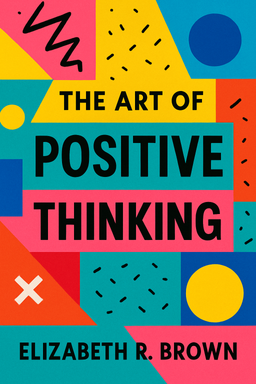
The Art of Positive Thinking cover

The Art of Positive Thinking

by Elizabeth R Brown

The Art of Positive Thinking by Elizabeth R. Brown is your guide to transforming your life through positivity. Discover practical exercises and strategies to rewire your brain, enrich your relationships, and navigate challenges with resilience and optimism. Cultivate a happier, more fulfilling life.

The Art of Positive Thinking: Building a Mind of Resilience and Growth

Have you ever wondered why some people seem to remain calm, optimistic, and resilient even when life feels chaotic? Elizabeth R. Brown’s The Art of Positive Thinking: Emotional Intelligence | Affirmation | Eliminate Negative Thinking offers both an answer and a roadmap. Brown argues that positivity isn’t simply about forced cheerfulness—it’s about cultivating awareness, emotional intelligence, and intentional habits that shift the way you interpret the world. Instead of trying to suppress your struggles, she invites you to understand them, respond mindfully, and gradually rewire your thought patterns for long-term well-being.

A Science of Mental Fitness

From the very first chapters, Brown grounds her ideas in psychology and neuroscience. Studies from Johns Hopkins and leading psychologists show that a positive outlook not only lengthens lifespan but also supports heart health, immune function, and emotional stability. However, Brown emphasizes that you don’t have to be a natural optimist to benefit from positive thinking. Instead, positive thinking is a skill—a form of mental fitness anyone can learn through daily practice, much like exercising a muscle.

To get there, she introduces a holistic model based on interrelated disciplines: mindfulness, emotional intelligence (EQ), gratitude, compassion, and self-awareness. This framework builds a foundation for practical change and offers small, sustainable exercises rather than quick fixes. Through relatable stories—like reorganizing your reactions after a bad day or learning from failure—Brown reminds us that positivity grows through patience, not denial.

From Awareness to Action

Many of us live on autopilot, Brown notes. Between deadlines, devices, and everyday stressors, we let our minds spiral into loops of negative self-talk. Her chapters on mindfulness show you how to step back from this autopilot mode through simple activities—breathing exercises, meditative journaling, or even mindful chores like cooking and walking. These practices make you more aware of distorted thoughts and help shift the mental lens from “What’s wrong?” to “What’s working?”

But awareness alone isn’t enough. By weaving in emotional intelligence, Brown teaches readers how to interpret emotions—both their own and others’—without being consumed by them. EQ becomes a bridge between mindfulness and relationships, allowing you to react with empathy instead of reactivity. She references Daniel Goleman’s work on emotional intelligence, showing how self-awareness, self-regulation, empathy, and relationship management form the four pillars of genuine positivity.

Mindset Rewiring and Daily Habits

After laying this foundation, Brown dives into the mechanics of habit formation. She borrows from cognitive behavioral therapy (CBT) principles—teaching readers how to identify harmful thought patterns, challenge them, and replace them with constructive alternatives. Techniques like daily affirmations, gratitude journaling, “three positives before bed,” and visualizing best-case scenarios are presented not as platitudes but as forms of cognitive restructuring. These simple acts, when repeated, slowly remodel the neural links that support pessimism.

Each exercise is short, flexible, and designed for real life. For example, when a work project triggers stress, instead of spiraling into self-criticism, you’re encouraged to pause, breathe, and identify three positive steps or outcomes. This gentle reprogramming breaks the mind’s fixation on failure and reestablishes a sense of agency. Over time, as Brown writes, “Your thoughts stop being what happens to you and become what you choose.”

Positivity as a Social Force

Brown doesn’t limit positivity to internal growth. Later chapters explore how our mindset radiates into relationships—family, romantic, professional, and community life. Just as negativity spreads through gossip and complaint, positivity spreads through small gestures: genuine compliments, smiles, understanding, and empathy. The book’s discussion of “energetic exchange” parallels Barbara Fredrickson’s broaden-and-build theory of positive emotions (American psychologist, 2001), which suggests positivity expands creative capacity and deepens social bonds. Brown highlights that practicing kindness or gratitude has neurochemical effects—triggering serotonin, dopamine, and oxytocin, the body’s natural “connection chemicals.”

Whether it’s helping a colleague without being asked, practicing compassion toward a moody teenager, or posting uplifting content online, every small act becomes an investment in collective optimism. Brown argues that fostering positivity in social spaces can transform environments plagued by cynicism, one conversation at a time.

Enduring Positivity in Difficult Times

No credible approach to happiness would ignore struggle, and Brown doesn’t shy away from suffering. Her later chapters deal frankly with loss, burnout, and uncertainty. The solution isn’t forced cheerfulness but radical acceptance—giving yourself permission to feel sadness while refusing to let pain define your mindset. Through mindfulness, grounded self-talk, and human connection, she teaches readers how to “bend without breaking.” Positivity here becomes resilience—an ongoing choice rather than a fantasy of constant joy.

“Positivity is not about denying the storm,” Brown concludes, “but learning to dance in the rain.”

This closing idea reframes positive thinking as an “everlasting journey.” It’s not a fixed destination but an evolving mindset you nurture across changing seasons. The more you practice self-awareness, gratitude, and compassion, the faster you recover from life’s inevitable downturns. By integrating the disciplines of mindfulness and emotional intelligence into your daily life, Brown assures that positivity becomes not an act—but your way of being.


Harnessing Mindfulness to Reclaim the Present

Mindfulness, Brown explains, isn’t reserved for monks or yogis—it’s a practical discipline for anyone overwhelmed by modern life. If you’ve ever driven home and realized you don’t remember the trip, you’ve experienced what she calls the “autopilot effect.” Mindfulness is the antidote: the practice of living consciously and engaging with each moment.

From Autopilot to Awareness

In adulthood, our cognitive routines become predictable: getting ready for work, checking notifications, running errands. Each habit creates invisible blind spots that disconnect us from experience. Brown draws from Jon Kabat-Zinn’s Full Catastrophe Living to explain how mindfulness reawakens curiosity. By observing sensations without judging them—the taste of coffee, the pattern of your breath—you learn to relate differently to your thoughts.

Barriers and Everyday Practice

In our hyperconnected culture, three common barriers hinder mindfulness: digital distraction, skepticism, and life stress. Brown recommends practical antidotes. A “digital detox”—turning off devices for brief, scheduled intervals—can reset attention. Integrating awareness into mundane actions, like washing dishes or brushing teeth, normalizes mindfulness as a lifestyle. Even mini-meditations of five minutes, focusing only on breathing, serve as daily brain refreshers.

Benefits for Mind and Emotion

Research supports what Brown describes: mindfulness enhances clarity, focus, and emotional balance. It grounds you in the present, reducing mental overreactions to stress. Self-awareness fostered by mindfulness becomes the foundation of emotional intelligence (a theme she expands on in the next chapter). When we observe rather than judge, we disrupt destructive cycles of rumination and anxiety, creating space for self-compassion.

“Mindfulness doesn’t erase chaos—it makes you calm enough to walk through it.”

Beyond meditation cushions, mindfulness infuses ordinary tasks: gardening, mindful walks, or cooking attentively become meditative experiences. Brown even links artistic creativity to mindfulness—painting, writing, or listening to music can anchor you in the present and dismantle negative loops. In reframing mindfulness as accessible rather than exotic, she provides a gateway habit for the entire positive thinking journey.


Emotional Intelligence: The Foundation of Positivity

Brown treats emotional intelligence, or EQ, as the linchpin of positive thinking. People with high IQs may fail under stress, she says, because their emotions outrun logic. EQ allows you to interpret, manage, and channel emotions productively—helping you turn reactive moments into reflective ones.

The Four Pillars of EQ

Drawing on Daniel Goleman’s framework, Brown defines four interlocking attributes:

  • Self-awareness – recognizing your own emotions and their triggers.
  • Self-management – regulating impulses and maintaining integrity.
  • Social awareness – empathizing with others’ emotions and picking up nonverbal cues.
  • Relationship management – communicating constructively and resolving conflict through compassion.

Through these capacities, EQ transforms your interactions from defensive to compassionate. At work, for instance, high-EQ leaders reduce conflict by reading emotional undercurrents early. In personal life, parents use EQ to respond to a child’s tantrum with empathy instead of anger.

From Emotion to Reason

Emotions serve as internal signals, Brown reminds us. Fear can alert you to danger, while grief testifies to love. But when emotions dominate behavior unchecked, they distort judgment. By observing these feelings and labeling them (“I feel anxious because...”), you slow down impulsive reactions. This moment of awareness becomes a rational gap—the difference between exploding in anger and expressing boundaries calmly.

When extended to communities, EQ fosters empathy, diversity, and authenticity. Brown illustrates how emotionally intelligent workplaces thrive on transparent communication and support rather than competition. Likewise, emotionally aware families cultivate resilience by validating each member’s feelings. EQ doesn’t just manage moods—it restructures relationships into safe spaces for growth.


Understanding Your Mindset and Mental Patterns

Before you can change the way you think, you have to first understand how you think. Brown introduces this stage as mapping your “mental baseline.” She explains that much of our internal dialogue operates through repetitive thought patterns formed by years of habit and environment. Recognizing these default modes is the first step to reclaiming mental autonomy.

Tracking Repetitive Thinking

Through journaling exercises, you are asked to notice how often thoughts loop around similar themes—self-doubt, frustration, worry, comparison. Like a scientist recording data, you observe your mental habits without judgment. This awareness converts unconscious negativity into conscious choice. Powell’s concept recalls Carol Dweck’s growth mindset: by realizing thoughts can change, you replace “fixed” pessimism with adaptive optimism.

Helpful vs. Limiting Thoughts

Brown suggests dividing your thoughts into two columns: helpful and limiting. Helpful thoughts motivate and calm; limiting thoughts drain or distort reality. By categorizing them, you weaken the mental attachment to toxicity. Over time, patterns emerge—perhaps criticism from youth echoes in self-talk, or perfectionism fuels chronic dissatisfaction. Seeing these structures helps you remodel them from the ground up.

“Your thoughts are seeds,” Brown writes. “Whether they bloom or choke depends on how often you water them.”

By reframing thoughts as temporary phenomena rather than identity, Brown empowers readers to relate to their own minds with curiosity instead of fear. A thought loses its grip once you see it as just passing weather—and that clarity opens space for positivity to grow.


Practical Habits to Strengthen Positivity

To turn optimism into a habit, Brown introduces a toolkit of daily actions. Each activity—affirmations, meditation, journaling—functions as mental exercise to reinforce positive neural pathways. She insists these aren’t motivational clichés; neuroscience shows that repeated positive self-dialogue rewires the brain’s default responses, a process known as neuroplasticity.

Daily Affirmations and Cognitive Reframing

Affirmations work because they shift inner language. Instead of abstract mantras (“I am happy”), Brown advocates personal, emotionally charged statements relevant to your goals: “I am capable of handling today’s challenges calmly.” By repeating such affirmations in the morning or evening, you engage cognitive restructuring—the principle used in CBT—to challenge automatic negative beliefs.

Positive Thought Journaling

Perhaps the book’s most accessible tool, journaling merges self-awareness with gratitude. Whenever you notice negative thoughts, immediately counter them by identifying three positives—events, qualities, or intentions. Over time, the ratio of negative to positive thinking inverts, aligning with Barbara Fredrickson’s research that it takes approximately three positive emotions to offset one negative one.

Visualization and Growth Mindset

Brown further introduces visualization: imagining realistic best-case outcomes. Neuroscience shows that the brain activates similar pathways whether you imagine success or experience it physically. By repeatedly envisioning positive scenarios, you prime confidence and proactive behavior—transforming fear-driven avoidance into motivation.

Ultimately, these simple rituals serve as cognitive armor. In stressful moments—traffic jams, conflicts, setbacks—they help you pivot from reaction to reflection, keeping your emotions aligned with your intentions. Through repetition, positivity becomes an automatic reflex rather than a forced effort.


Spreading Positivity Through Connection

True positivity expands outward. Brown dedicates several chapters to showing how smiles, compliments, and kindness ripple through our social and digital ecosystems. These chapters bridge personal well-being with community uplift, proving that happiness multiplies when shared.

Micro-Gestures of Joy

One of the simplest tools: smile more. Far from superficial, smiling triggers a feedback loop of endorphins and reduces stress hormones. Brown cites research verifying that smiling—even when prompted—can elevate mood (“the facial feedback hypothesis”). Add small compliments or acts of help, and you’ll catalyze positivity in strangers and loved ones alike. Every kind word activates what psychologists call emotional contagion—others unconsciously mirror the positivity around them.

Empathy in Action

Helping doesn’t have to be grandiose. Holding a door, listening without interrupting, offering your time—each are quiet revolutions of empathy. Brown advises balancing enthusiasm with tact, respecting personal boundaries. It’s not about pushing positivity, but modeling it. The chapters on communication and social intelligence show how empathy deepens trust, whether in families, friendships, or leadership roles.

Digital Positivity

Perhaps most timely is her discussion of social media. Instead of amplifying outrage, use online spaces to circulate humor, gratitude, and hope. Share stories that make others smile, support small successes, or highlight everyday kindness. The result: your online presence becomes an “oasis of optimism” in a desert of cynicism.

Spreading positivity, Brown concludes, isn’t about perfection—it’s about consistency. You don’t need to shine all the time; even modest light brightens darkness. Every authentic act of care reshapes collective morale, proving that individual mindset and cultural transformation begin with the same spark: a single positive thought shared aloud.


Gratitude as a Daily Compass

If optimism is a muscle, gratitude is its heartbeat. Brown highlights gratitude not as courtesy but as an intentional lens for perceiving abundance. Gratitude grounds you in awareness: noticing simple blessings like health, friendship, and the morning air transforms routine moments into sources of joy.

The Science of Thanks

Drawing on studies from Emmons and McCullough, she notes that writing down three unique things you’re grateful for each day correlates with higher happiness scores and lower depression. Gratitude journaling redirects attention from scarcity to sufficiency. When you celebrate what’s working, your brain stores those experiences as emotional reference points—making it easier to access contentment later.

Creative Gratitude

Yet Brown expands beyond lists. She encourages integrating appreciation into action: cooking mindful meals, expressing thanks during conversations, or even writing letters to oneself. Artistic expression—painting, music, dance—becomes another channel for honoring life’s gifts. This creative gratitude merges mindfulness and joy, deepening personal meaning.

Over time, gratitude becomes second nature, the compass that orients thought toward balance rather than longing. In Brown’s words, “Gratitude teaches us that we were rich all along; we just had to notice.”


Transforming Negativity and Emotional Setbacks

Every journey through positivity passes through shadow. Brown’s chapters on managing negative thinking are perhaps her most compassionate. Instead of suppressing painful emotions, she teaches awareness, acceptance, and reframing. Negative thinking, she explains, once served evolutionary survival—it keeps us alert—but when habitual, it erodes resilience.

Recognize Distortions

Distorted thinking patterns—catastrophizing, black-and-white reasoning, personalization—are subtle saboteurs. Brown’s exercises mirror CBT methods: write the worry, evaluate evidence, and propose balanced alternatives. If your default thought is “I always fail,” evaluate true frequency and recall exceptions. The goal isn’t to erase negativity but to moderate it with realism and self-compassion.

Self-Compassion and Rescue Gap

Most of us offer kindness to friends but rarely to ourselves. Brown reframes mistakes as learning feedback. “Failure,” she writes, “isn’t a verdict—it’s a voicemail from growth.” By treating yourself as you would a loved one, you disrupt cycles of shame and foster patience for change. Compassion becomes the bridge between imperfection and progress.

Over time, this emotional agility fortifies resilience. No mindset, however positive, removes pain—but emotional intelligence helps you suffer wisely and recover quickly. True positivity, Brown concludes, is less about feeling good all the time and more about knowing you’ll find your way back when you don’t.


Positivity in Relationships and Community

Brown shows that positive thinking isn’t a solitary practice—it evolves through connection. Relationships, from family to friendship and work, shape our mindset mirrors. They amplify what we project. If negativity spreads through complaint, positivity expands through openness and empathy.

Family and Friendship

Positive family dynamics thrive on empathy and communication. Brown promotes small rituals—having shared meals, listening without judgment, expressing appreciation. In friendships, she suggests curating your circle: spend more time with those who uplift and challenge you constructively. Relationship positivity doesn’t mean avoiding conflict; it means reframing disagreements as opportunities for understanding.

Romance and Work Harmony

Mindfulness strengthens romantic bonds by making you more present; emotional awareness prevents miscommunication. In workplaces, optimism translates into collaboration instead of competition. By modeling positivity, you become a catalyst for psychological safety—a concept echoed by Amy Edmondson’s research at Harvard—where teams innovate because they trust one another.

Healing the Past

Brown even addresses past relationships. Reflecting on lost connections helps identify patterns, release resentment, and transform pain into wisdom. As she writes, “Each person who wounded you taught you where you still needed to heal.” Through forgiveness—of others and self—you free energy once trapped in bitterness to reinvest in growth.

By applying positivity relationally, Brown expands self-help into social transformation. The better we treat one another, the more collective optimism becomes our shared culture.


Sustaining Positivity Through Life’s Chaos

What happens when optimism meets adversity? In her penultimate sections, Brown delivers an honest message: positivity doesn’t immunize you from difficulty—it prepares you to meet it with grace. She compares maintaining a positive mindset to exercising during bad weather: you might slow down, but you don’t stop.

Permission to Feel

The first rule of resilience, Brown insists, is allowing negative emotions space. Suppression multiplies suffering. Giving yourself permission to experience grief, anger, or exhaustion validates humanity. Once acknowledged, emotions lose destructive power. What matters is returning deliberately to healing activities: journaling, movement, shared laughter.

Support Systems and Self-Care

Leaning on others isn’t weakness but emotional intelligence in action. Accepting help—through friendship, therapy, or community—restores perspective. Simultaneously, physical mindfulness practices like yoga or nature walks build biological calm through endorphin release. Even digital hygiene—curating uplifting media—helps protect mental balance amid chaos.

Brown’s core advice for rough times could summarize her philosophy: Feel fully, rest intentionally, and reengage gently. Positivity isn’t denial, but the courage to look forward again after every storm.


Positivity as a Lifelong Practice

In her conclusion, Brown frames positive thinking as a lifelong art form, not a destination. It’s a continuous recalibration—an evolving commitment to perceive life through the lens of possibility. Each chapter builds toward this truth: optimism is less an emotion and more a discipline powered by awareness, compassion, and persistence.

Crafting a Vision for Tomorrow

Brown asks readers to imagine their future selves embodying positivity: how do you walk, speak, decide, and create differently? Holding this vision activates motivation. Life’s highs and lows will still come, but your mental stance becomes more balanced. Gratitude greets success; resilience meets sorrow.

Commitment and Self-renewal

She emphasizes commitment over perfection. Some days optimism will falter; that’s part of the practice. The real victory lies in recommitment. Through daily rituals—affirmations, mindful breathing, or one intentional act of kindness—you nourish what she calls the “everlasting journey of positive thought.”

“Every sunrise is a chance to start again,” Brown reminds readers, transforming positivity from a goal into a lifelong rhythm.

Ultimately, The Art of Positive Thinking shows that optimism is not naive—it's strategic. It transforms how you perceive, relate, and grow. The tools may be simple, but their practice offers an extraordinary result: a compassionate, resilient, and peaceful self prepared to build a brighter world, one thought at a time.

Dig Deeper

Get personalized prompts to apply these lessons to your life and deepen your understanding.

Go Deeper

Get the Full Experience

Download Insight Books for AI-powered reflections, quizzes, and more.