
Idea 1
Living Life on Your Own Terms: The Art of Non-Conformity
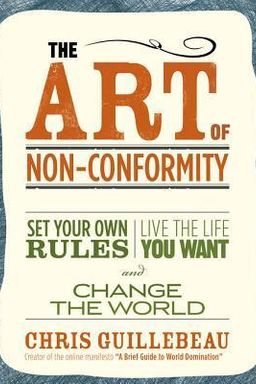
Have you ever felt that life was quietly pushing you toward paths that didn’t quite feel like your own? In The Art of Non-Conformity, Chris Guillebeau issues a bold challenge to those tired of simply following the script. He argues that real success and fulfillment come only when you refuse to live your life the way other people expect you to. That means questioning authority, rejecting false choices, and designing a life based on freedom, creativity, and purpose.
Guillebeau’s core claim is straightforward yet revolutionary: fulfillment isn’t found in conformity to society’s expectations—it’s found in creating your own path and helping others along the way. The “sleepwalkers” among us drift through life jumping through hoops of convention, while those who join the “living world” wake up to the possibility that the rules don’t have to apply. The book serves as a manifesto for those ready to stop waiting for permission and start building their own version of freedom.
Breaking Free from the Status Quo
The earliest chapters compare modern life to a cage of monkeys—each one too afraid to climb the ladder for the bananas above because they’ve learned that “it’s not done.” Guillebeau urges you to become the monkey who climbs anyway, smashing routine expectations to seek more. He outlines four principles that form the foundation for non-conformity: be open to new ideas, be dissatisfied with mediocrity, take personal responsibility for your choices, and work hard toward meaningful goals. These principles, he argues, separate the living from the sleepwalking.
Each principle reshapes how you engage with the world. Openness to new ideas unlocks creativity; dissatisfaction fuels change; responsibility turns obstacles into agency; and hard work on worthwhile goals builds momentum and legacy. Without these, you’ll settle into the “real world” of comfort, which Guillebeau insists is an illusion—there’s nothing real about wasting your potential.
Designing a Life Instead of Falling Into One
As the book unfolds, Guillebeau teaches readers how to break from passive living by actively designing life based on personal values. He contrasts the idea of deferred gratification—sacrificing your best years for a distant, uncertain reward—with the choice to live intentionally right now. Through vivid examples like Bernard Lopez’s cross-country bike trip and Sloane Berrent’s humanitarian work in Manila, Guillebeau shows ordinary people redefining risk, success, and meaning. The point isn’t rebellion for its own sake—it’s to reclaim the right to live a life that feels fully alive.
He then delves deeply into “life planning,” helping readers articulate personal goals through exercises like defining the ideal day, setting radical goals, and balancing adventure with service. (Readers of Barbara Sher’s Wishcraft or Tim Ferriss’s 4-Hour Workweek will recognize similar threads.) Guillebeau’s brilliance lies in connecting self-centered ambition with altruistic action: you can change your own life and make the world better at the same time.
Freedom, Fear, and Responsibility
Freedom isn’t merely doing whatever you want—it’s a deliberate choice to act despite fear. Guillebeau devotes an entire section to smashing through the “brick wall of fear,” arguing that courage isn’t the absence of fear but the mastery of it. From Sean Ogle quitting his high-paying but soulless finance job to move abroad, to Tim DeChristopher disrupting oil auctions in Utah, the book is filled with portraits of ordinary people who decided to act when it mattered most. According to Guillebeau, fear is a compass that points toward worthwhile action.
And with freedom comes responsibility. In contrast to cultural myths of security, Guillebeau insists that competence is your true protection. Relying on companies or institutions for safety is riskier than trusting yourself. Entrepreneurship, creative work, and meaningful self-employment become spiritual pursuits of independence—less about money and more about reclaiming control over your destiny.
From Personal Growth to Global Impact
What makes The Art of Non-Conformity powerful is its seamless fusion of inner transformation with outward contribution. Guillebeau argues that doing what you love is not selfish—it can actually be a service to others. This convergence of self-expression and global citizenship becomes his idea of “world domination,” where each person uses their unique talents to make meaningful change. He even models this through his own work: donating royalties from his book to Charity: Water projects in Ethiopia.
Finally, he asks readers to consider their legacy. Your “glory days,” he writes, shouldn’t stay in the past—they should inspire the next act of your life. Legacy work means focusing on activities that matter, tracking creative output, and rejecting busywork. By committing to create something that outlasts you, Guillebeau argues, you transform non-conformity into art—the art of living deliberately and leaving something meaningful behind.
“You don’t have to live your life the way other people expect you to.” That, Guillebeau says, is the most dangerous—and liberating—idea of all.