
Idea 1
Vipassana and the Art of Living
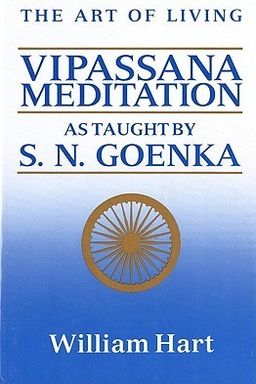
What if true happiness didn’t come from acquiring more, praying harder, or escaping reality, but from learning to see it clearly—moment by moment? In The Art of Living, William Hart (with foreword by S.N. Goenka) presents the ancient discipline of Vipassana meditation as a practical path to self-understanding and liberation from suffering. Drawing from the Buddha’s original teachings and Goenka’s modern interpretation, Hart argues that real peace emerges not from belief but from direct experience—the kind you develop by observing your own mind and body.
The book’s central claim is simple yet radical: The key to happiness lies in seeing things as they are. Hart contends that liberation comes when you perceive the constant rise and fall of sensations, thoughts, and emotions without reacting to them. This is not religion, philosophy, or ritual—it’s a technique for living consciously. Vipassana, or “insight meditation,” trains you to observe the impermanent and interconnected nature of reality through your own direct experience.
From Suffering to Self-Discovery
The book opens with an invitation to pause—a ten-day journey inside your own mind, free from outside distractions. Goenka and Hart describe this as a mental operation, a surgical removal of ignorance and emotional toxins. At its heart is the question every person eventually asks: Why do we suffer? By observing how sensations in the body trigger mental reactions like craving and aversion, you discover firsthand how misery perpetuates itself. The problem is not the outside world but your blind inner habits.
A Practical Path, Not a Religion
Hart insists that Vipassana is not Buddhism but Dhamma—the law of nature, something anyone can experience regardless of faith. Goenka, born a Hindu businessman in Burma, himself transcended sectarian boundaries through this practice. Vipassana does not require dogma, belief, or worship; it demands honest observation, discipline, and self-responsibility. The Buddha’s teaching becomes practical psychology: Every emotion arises and passes, and understanding this directly dissolves suffering.
The Threefold Training
Hart organizes the path into three universal disciplines—moral conduct (sīla), concentration (samādhi), and wisdom (paññā). The first teaches you not to harm yourself or others; the second trains you to focus the mind; the third allows direct insight into reality. These stages mirror the progression from ethical awareness to meditative clarity and finally to experiential wisdom. Each stage builds the foundation for the next and collectively offers a method of personal transformation rather than theological conversion.
Why These Ideas Matter
In an age of stress, distraction, and division, this book reminds us that peace cannot be imported—it must be cultivated within. Vipassana is not escapism but engagement with reality in its purest form. Hart’s prose makes the ancient technique accessible to modern readers, explaining how body sensations serve as bridges between mind and matter. As Goenka says, “Be happy,” not as sentimental advice, but as an outcome of inner clarity. By freeing yourself from the chain of reactions, you cease generating suffering for both yourself and others. In short, The Art of Living is a manual for inner freedom—a timeless exploration of how understanding impermanence can transform not only how you meditate but how you live.