
Idea 1
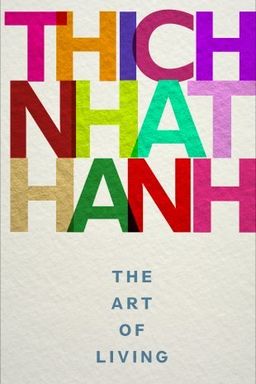
The Art of Living: Awakening to True Freedom and Presence
Have you ever felt that even though your days are full, life somehow passes you by? That despite all your striving, there’s a quiet voice inside asking if you’re truly living? In The Art of Living, Zen master Thich Nhat Hanh invites you to rediscover what it means to be alive—not merely to exist or to function, but to live deeply and freely in each moment.
Hanh’s core argument is simple yet profound: happiness, peace, and freedom are available to you right now—not in a distant heaven, in wealth, or even in enlightenment someday—but in the stillness of your breath, the steps you take, and the love you cultivate. The book is built on the insight that our deepest suffering comes from wrong views—the illusions that we are separate from the world, that we are bound to perish utterly, and that happiness lies elsewhere. Through mindfulness, concentration, and insight, we can release these illusions and master what he calls the true “art of living.”
This practice, according to Hanh, is both spiritual and scientific. Like science, it invites investigation, evidence, and direct experience. You don’t have to believe anything on faith—you have to look deeply. Through meditations on seven “concentrations” or doors of liberation—emptiness, signlessness, aimlessness, impermanence, non-craving, letting go, and nirvana—Hanh guides you to experience life’s transience and interconnection, freeing you from fear of death and from craving for permanence.
The Roots of Suffering
Hanh begins with an insight common to both ancient Buddhist and modern existential traditions: much of human suffering arises because we mistake ourselves for something solid, fixed, or separate. We believe we are isolated beings born at one moment and destined to die at another. This illusion of a separate self leads to greed, competition, alienation, and violence—both inward and outward.
He explains that the “three wrong views” at the root of suffering are the idea of separateness, the denial of continuation after death, and the belief that happiness lies outside of us or in the future. Once we question these assumptions, an entirely new vision unfolds. We begin to see that “to be” is really “to inter-be”—to exist together with all beings, as part of one living web of reality. We are the rain and the clouds, our parents and our ancestors, our teachers and our children. Therefore, to harm another being or the Earth is to harm ourselves.
Mindfulness as a Living Science
Unlike dogmatic religion, Thich Nhat Hanh’s spirituality is experimental. He likens mindfulness to a scientist’s microscope: a clear, still mind is an instrument for investigating reality. By quietly observing your breath, feelings, and perceptions, you begin to discern the hidden continuity beneath change. You discover, through direct experience, that no cloud ever dies—its essence transforms into rain, mist, or snow. The same is true for you. Death, he emphasizes, is not annihilation but transformation.
This way of seeing is both liberating and ecological. When you realize that the rivers, trees, and atmosphere are inside you, you naturally develop compassion and a sense of responsibility for all life. Hanh calls this realization “the insight of interbeing,” and he believes it could define a new humanity—one characterized not by consumption and individualism, but by solidarity, peace, and ecological awareness.
The Practice of Presence
The door to this transformative insight is paying attention to the present moment. In beautifully simple practices—mindful breathing, walking, and smiling—Hanh teaches that when body and mind unite in awareness, you touch nirvana right where you stand. “The art of living,” he says, “is to create a happy moment.” You don’t need retreats or theological knowledge. You only need to breathe and know that you are alive.
For instance, in his chapter “The Art of Breathing,” even a single mindful breath becomes a miracle. “Breathing in, I know I am breathing in. Breathing out, I smile.” These deceptively simple lines distill a profound truth: by resting in awareness, you can experience harmony, relaxation, and joy with each breath. Such practices are not escapism but radical acts of freedom in a restless, distracted world.
Living Between Science, Spirit, and Humanity
Throughout the book Hanh bridges Buddhist insight, Western science, and humanism. He references the law of thermodynamics to affirm that nothing is destroyed—energy merely transforms—and ties this to the Buddhist teaching of no-self and impermanence. In the same way that Antoine Lavoisier observed “nothing is lost, everything transforms,” Hanh reminds us: you are not separate from the cosmos but a continuation of it.
He reflects on astronauts who, having seen Earth from space, return not as technicians but as humanitarians. Their awe at the interdependence of all life echoes the Buddha’s awakening. It’s this combination of profound humility and scientific realism that makes his approach so universally accessible: mindfulness is not mystical detachment but the most grounded way to relate to the world.
From Individual Meditation to Collective Awakening
Ultimately, Hanh’s message is collective: the insight of interbeing is not only personal healing—it’s our species’ hope for survival. The 20th century was the age of individualism and consumption. The 21st, he says, can be the century of interconnection and togetherness. If we awaken, we can transform not only our own suffering but the consciousness of humanity. The art of living thus becomes the art of building a new civilization—one rooted in compassion, ecological awareness, and mindful presence.
Through poetic stories, personal reflections, and the calm authority of a lifelong practitioner, The Art of Living shows that mastery is not perfection but intimacy with life as it is. When you see that nothing is lost, nothing is separate, and everything inter-is, you understand that peace, happiness, and freedom are not distant goals—they are the essence of your being, waiting to be noticed in this very breath.