
Idea 1
The Courage to Defy and Think Freely
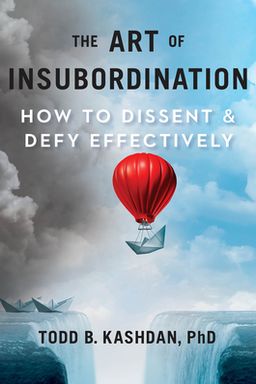
When was the last time you stood up for an idea that challenged everything around you—the kind of idea that made people stare, laugh, or even recoil? In The Art of Insubordination, psychologist Todd Kashdan urges you to rediscover that kind of bravery. He argues that principled rebellion—the disciplined defiance that seeks to improve society while minimizing harm—is one of humanity’s most underappreciated forces for progress. Kashdan contends that dissent isn’t just heroic or disruptive; it’s vital to our evolution as communities, workplaces, and cultures.
We’re wired to conform—to value acceptance more than truth, and stability more than innovation. Yet, as Kashdan reminds us, the audacity to challenge the status quo has shaped nearly every major breakthrough in science, social justice, and art. The book opens with stories of risk-takers—from Charles Darwin to courageous rebels like Elizabeth Jennings, Malala Yousafzai, and Rick Barry—who faced ridicule, punishment, or worse for refusing to bow to convention. What separates those whose dissent creates progress from those whose rebellion fizzles or backfires? Kashdan’s answer lies in understanding the psychology of principled insubordination.
Why Rebellion Matters
Kashdan makes a case that dissent, when guided by principle, acts as society’s immune system. Conformity keeps groups cohesive but can also trap them in complacency and error (as seen in the sluggish reaction of 19th-century physicians to Ignaz Semmelweis’s discovery about handwashing). Insubordination, when rooted in authenticity and contribution, exposes weaknesses in old systems and drives forward what Darwin’s thirty predecessors attempted to do—advance new truths despite public resistance.
Principled vs. Reckless Rebellion
Not all defiance is created equal. Kashdan outlines a simple but profound formula for moral rebellion: Deviance × Authenticity × Contribution ÷ Social Pressure. It starts with a conscious choice to swim against the current—deviance—but only succeeds when it comes from deeply held values (authenticity) and aims at social good (contribution). The denominator, social pressure, defines the difficulty. If you rebel when the stakes are high and conformity is prized, your act carries more moral weight. In short, it’s not rebellion for ego’s sake; it’s rebellion as service.
Kashdan also stresses the impact of deliberate patience and discipline. Darwin waited fifteen years to publish On the Origin of Species, preparing society through others’ work before unveiling his own. This calculated timing—the opposite of impulsive defiance—transformed what might have been another heretical whisper into one of science’s most enduring revolutions.
Understanding the Psychology of Conformity
To rebel effectively, Kashdan explains, you first need to understand the psychological traps that make obedience feel safe. In Chapter 2, he dissects how social, emotional, and neurological instincts hardwire us to blend in. From basketball players avoiding the underhanded shot because it looks “uncool” to oppressed groups rationalizing unfair systems, humans consistently favor familiarity over improvement. We cling to what’s old—even harmful—because the alternative feels uncertain. Psychologists call this the status quo bias and system justification. Recognizing these forces within yourself is the first step toward freeing your mind.
How Courageous Dissent Creates Progress
When you defy convention, you’re not just risking rejection—you’re creating the raw friction that sparks innovation. Chapter 3 shows how dissent neutralizes cognitive bias, boosts creativity, and—even when ignored—spreads courage throughout a system. Psychologist Charlan Nemeth found that merely witnessing disagreement makes groups more curious and open-minded, even if the rebel appears wrong. Insubordination is contagious: a single act of questioning shifts what others perceive as possible. That insight alone reframes your next uncomfortable conversation—not as conflict but as progress in motion.
The Rebel’s Toolkit
Later chapters transform rebellion from metaphor into method. Kashdan offers a “non-conformist’s cookbook,” teaching you how to communicate so skeptics will listen (Talk Persuasively), recruit allies who help you bear the weight of defiance (Attract People Who’ve Got Your Back), and master internal resilience through psychological flexibility (Build Mental Fortitude). He shows how even mainstream institutions—from Google’s innovation teams to military training programs—can learn to harness insubordination responsibly.
Finally, Kashdan examines the moral paradox of victory. Rebels who win, he warns, often morph into the very oppressors they once fought. When power shifts, empathy must follow—or progress will collapse under new dogma. Whether he’s describing Evo Morales’s descent into authoritarianism or the hypersensitive censorship of modern “cancel culture,” Kashdan argues that principled rebellion doesn’t end at success—it demands responsible leadership thereafter.
Why This Matters to You
You don’t have to lead a revolution or rewrite the laws of biology to benefit from these lessons. Whether you’re challenging a policy at work, questioning a tradition in your religion, or simply teaching a child to ask “why,” Kashdan’s message is personal. He calls for courage tempered by strategy—cartwheeling through the library of life with wit, patience, and purpose. Insubordination is more than protest. It’s an art that demands emotional intelligence, compassion, and grit. Practiced wisely, it can make both you and your world freer, fairer, and infinitely more alive.