
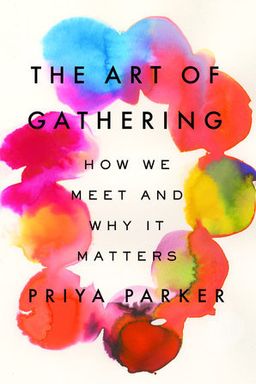
The Art of Gathering cover

The Art of Gathering

by Priya Parker

The Art of Gathering by Priya Parker reinvents the way we meet and connect. By focusing on purpose and human interaction, Parker offers a transformative guide to turning mundane meetings into memorable experiences. Learn to invigorate gatherings with simple, actionable steps that inspire connection and meaning.

The Art of Gathering: Creating Meaningful Human Connection

When was the last time you left a meeting, dinner, or celebration feeling truly moved, changed, or connected? In The Art of Gathering: How We Meet and Why It Matters, facilitator and conflict resolution expert Priya Parker asks a deceptively simple question: what if we reimagined every meeting, party, or family dinner as an opportunity for transformation? Parker argues that most gatherings fail because we follow stale, habitual formats rather than designing them with clarity, courage, and care. The core of her message is that gatherings succeed when they are purposeful—not because of perfect logistics, expensive decorations, or elaborate menus—but because someone has thought deeply about why people are coming together and how they will engage once there.

Parker opens with a powerful claim: gathering is a human act of meaning-making. From the courtroom to the dinner table, gatherings structure how we live, work, and relate. Yet, she notes, we’ve fallen into what she calls a crisis of gathering—we host meetings that could have been emails, dinners where small talk reigns, and conferences filled with performative networking. The problem isn’t that we don’t gather enough; it’s that we gather poorly because we forget that people—not things, not food—are the living core of every event.

Gathering with Purpose

The foundation of Parker’s work is the notion of purpose. A gathering, she insists, must be about something. Too many events are built on categories—“a networking mixer,” “a baby shower,” “a board meeting”—but categories are not purposes. A category tells you what kind of event it is; purpose tells you why it exists and what change it seeks to create among the people gathered. Parker’s alternative is “purposeful design”: make your event specific, unique, and disputable. The more vivid and daring the purpose, the more energy it generates. She illustrates this through real-world examples: an experimental courthouse in Red Hook, Brooklyn, redesigned for collaboration between offenders and judges; or a revamped New York Times editorial meeting that scrapped decades-old traditions to focus on digital storytelling. These stories, scattered through the book, show that gathering purposefully can transform not only events but also cultures.

The Courage to Exclude and the Power to Host

Once purpose is clear, Parker turns to the art of who and how. In a provocative statement—“If everyone is invited, no one is invited”—she reframes exclusion as generosity. Inclusion, she warns, can water down meaning. The thoughtful host has to define who the gathering is for, and, just as importantly, who it’s not. When everyone is welcome without purpose, guests feel lost. Parker’s own workout group and a graduate school weekend retreat illustrate that limiting participants to those who share the event’s essence can actually deepen bonds and unlock honesty. Similarly, the host’s job is not to abdicate control or be “chill”—a quality she calls “selfishness disguised as kindness.” Hosting, she reminds us, is an act of leadership. The best gatherings require a strong, “generous authority”—a host who protects, equalizes, and connects guests with care.

Designing Worlds Through Rules and Rituals

Rules, Parker says, can be surprisingly liberating. Borrowing from immersive theater, global dinner rituals, and even BDSM’s use of boundaries, she shows how temporary rules can create what she calls a “temporary alternative world.” At the Dîner en Blanc, where thousands in white dine in secret locations, or in her own 15 Toasts format born at the World Economic Forum, constraints free people to play, take risks, and connect honestly. Far from being stuffy, rules democratize gatherings by making expectations explicit. They replace elitist “etiquette” with simple, inclusive frameworks—like the I Am Here days she designed with friends to disconnect from technology and rediscover presence through shared exploration of New York City. Each event, Parker insists, is an experiment: a designed moment with its own constitution that begins and ends within defined boundaries.

Authenticity, Conflict, and the Gift of Endings

As the book moves forward, Parker shows how gatherings deepen when they welcome honesty, emotion, and even friction. The famous 15 Toasts dinners she co-created began as an experiment to make elite conferences more human. By asking guests to toast topics like “a good life” with personal stories rather than big ideas, she discovered that realness can be designed. Vulnerability spreads through modeling, structure, and trust. Even “heat” or controversy, when guided well, leads to transformation. Ultimately, gatherings must also end well. Too many events “close without closing,” fizzling out instead of crystallizing memory and meaning. Parker argues for thoughtful endings that help guests reflect, part with intention, and carry the experience back into the world. Borrowing lessons from Zen monks and summer camps for peace, she reminds us that what ends consciously can live on internally.

Why It Matters

By blending design thinking, anthropology, and storytelling, Priya Parker gives us more than tips for better parties—she presents a philosophy of human connection. In a world saturated with “content” but hungry for community, her work feels both revolutionary and deeply practical. Gathering, she concludes, is a power available to everyone. Whether you’re leading a team meeting or saying goodbye at a funeral, you have the ability to shape how people experience one another. And when gatherings are crafted with purpose, courage, and generosity, they become catalysts for change—not just in groups, but in the way we live together every day.


Decide Why You’re Really Gathering

According to Parker, the most common mistake hosts make is assuming the purpose of a gathering is self-evident. In fact, she argues, most gatherings are born without a true reason. We default to tradition or convenience—hosting weddings, offsites, or book clubs because that's what people do—rather than asking the essential question: What is this gathering for?

From Category to Purpose

A “category” of gathering (like a town hall or networking event) is not the same as its purpose. The magic begins when you move from what you’re doing to why you’re doing it. A Red Hook courthouse redesigned as a “community problem-solving space” instead of a punitive courtroom is an early example. By reimagining the setting and intent—lowering the judge’s bench to eye level, integrating social workers—the gathering served justice through healing, not punishment. Likewise, The New York Times transformed its legendary daily meeting from a print-obsessed ritual into a live dialogue about digital storytelling, shifting focus from product to impact. Both stories reveal Parker’s core insight: purpose drives design.

Raise a Disputable Purpose

A strong purpose, Parker says, should be specific, unique, and disputable. It stakes a claim someone could argue with. A wedding to “repay parents for their sacrifices” is very different from one to “fuse two chosen tribes together.” Vagueness is the death of energy. Drawing on Japanese tea ceremonies—guided by the principle of ichi-go ichi-e (“one meeting, one moment in your life that will never happen again”)—Parker reminds readers that no gathering can be repeated. This consciousness turns even the routine into the meaningful. (This echoes mindfulness teacher Thích Nhất Hạnh’s call to “wash the dishes to wash the dishes.”)

Clarity through Exclusion and Courage

When you know your purpose, choices align. In one example, a woman named S. hosts a dinner hoping to reconnect meaningfully with new people. Initially, she piles on multiple objectives—repaying a social debt, networking for her husband, entertaining friends—creating confusion. Only when she commits to novelty and openness as the central goal does the evening sing. Parker calls this process “taking a stand.” It may unsettle some guests, but clarity always beats blandness. “Gatherings that please everyone rarely dazzle,” she insists.

Purpose as a Decision Filter

Once defined, purpose becomes a “bouncer” for every design decision: who’s invited, where it’s held, what happens first. Companies like Meeteor use a similar logic: every meeting must have a “desired outcome.” If not, cancel it. Purpose is a moral and creative compass. As Parker writes, “Make purpose your bouncer—let it decide what goes in and what stays out.” (This principle parallels Simon Sinek’s Start With Why, which urges leaders to define meaning before action.)

Ultimately, Parker’s invitation is to treat every gathering as an act of imagination. By asking “Why now, and why these people?” you transform any occasion—from a baby shower to a board retreat—into an experience that matters. Purpose clarifies not just logistics, but life itself.


Close Doors to Open Possibility

After purpose comes boundary. Parker’s second principle is that meaningful gatherings require purposeful exclusion. Inclusion, she claims, can actually destroy intimacy. As one of her mentors told her, “If everyone is family, no one is family.” Gathering is an act of identity-making—defining who belongs, for what reason, and to what end.

The Kindness of Exclusion

Parker learned this lesson firsthand through small stories: a morning workout group that refused substitutes to preserve trust; a beach weekend where a friend’s girlfriend was uninvited so that one member could be fully himself; and a student-led forum at Harvard that flourished only when participants committed to honesty in small, closed sessions. In each case, what seemed like exclusion was, paradoxically, inclusion of a deeper kind. It protected the inner purpose and those who belonged within.

Specificity Creates Energy

Gatherings thrive when their boundaries are specific—like Judson Manor in Ohio, where a nursing home invited music students to live with seniors in exchange for performances and companionship. That dual population, tightly defined yet contrasting, created joyful intergenerational exchange. Inclusion wasn’t the goal; activation of difference was. Similarly, student dialogues at the University of Virginia achieved breakthroughs only when each group centered on one fault line—Black-white, Jewish-Arab, or conservative-LGBT—so participants could face real heat rather than polite multiculturalism.

Size and Thresholds

Parker also provides practical wisdom about size. The chemistry of connection changes at predictable thresholds: six for intimacy, a dozen for shared conversation, thirty for party energy, 150 for tribal scale (the famed “Dunbar number”). As groups grow, intimacy must be designed in subgroups—circles within the crowd. Growth without boundaries dilutes meaning. Even physical space matters: she cites the “Château Principle,” where a merger negotiation in a lavish French estate failed simply because the grandeur inflated one side’s ego. In gatherings, where you meet determines who people become.

In short, boundaries are not barriers but gifts. They create shape, safety, and focus—the conditions where creativity and authenticity can flourish. As Parker remarks, “By closing the door, you create the room.”


The Power of Generous Authority

What happens after the doors close? Someone must lead. Yet most modern hosts, Parker observes, are allergic to authority. We’ve confused strong hosting with ego. Her term for the alternative is generous authority—firm but selfless leadership that protects and connects guests. Without it, gatherings descend into chaos, awkwardness, or domination by the loudest voice.

Rejecting “Chill” Hosting

“Being chill,” Parker declares, “is selfishness disguised as kindness.” When hosts hang back to appear relaxed, they abandon guests to uncertainty. She recounts a Harvard professor who begins his leadership class by sitting silently, forcing students to realize how paralyzing absent authority feels. Similarly, at a dinner game where the host left mid-course, one guest hijacked conversation. Power left unclaimed doesn’t vanish; it simply shifts—to the most assertive, not the most caring.

Protect, Equalize, Connect

Generous authority, Parker says, serves three functions: protect guests from harm or dominance (as the Alamo Drafthouse cinema does by ejecting talkers to preserve movie magic); equalize status (Thomas Jefferson’s “pell-mell” dinners abolished rank-based seating); and connect participants into a group (as Amy Schumer, cutting down a heckler, or host Nora Abousteit, enforcing table rules, do with humor and grace). Authority used well turns strangers into collaborators. It’s leadership as hospitality.

Ungenerous Authority vs. Selfless Leadership

Parker warns of the opposite pitfall: control for control’s sake. Corporate events or government ceremonies often prioritize optics over connection—a contrast she experienced firsthand while organizing overly scripted White House events. True authority, she reminds us, is accountable to purpose. The host’s role is not to dominate but to choreograph meaning. Hosting, then, is not performance—it’s service. The strongest hosts are those willing to risk discomfort for the group’s transformation.


Creating Temporary Alternative Worlds

If purpose gives direction and authority gives shape, rules give body. Parker’s idea of the temporary alternative world captures gatherings that feel magical precisely because they suspend normal reality. Within defined boundaries—physical or social—participants can explore new sides of themselves.

From Etiquette to Pop-Up Rules

Traditional etiquette, drawn from aristocratic codes, was static and exclusionary. Pop-up rules, by contrast, are flexible, inclusive, and short-lived. They democratize experience by making expectations explicit. Parker explores gatherings that thrive on invented rules: “Influencer Salons” where last names are banned to de-emphasize status; Jeffersonian dinners allowing only table-wide conversation; or weddings where phones are forbidden. Temporary constraints, she shows, can paradoxically unleash freedom—because everyone knows the game, everyone can play.

Examples of Designed Worlds

The most striking example is Dîner en Blanc: thousands dressed in white dine al fresco at a secret Paris location. Bring your own table, obey every rule, leave no trace. What could sound oppressive becomes sublime unity—a spectacle of equality and artistry. Japan’s adaptation, led by Kumi Ishihara, shows how importing structure into new contexts can generate shared wonder. Other formats—like Parker’s I Am Here days in New York—translate the principle into intimacy. Their rules? Stay the whole day, turn off phones, and be present. These simple guidelines suspend distraction and deepen connection.

Rules as Tools for Transformation

Rules don’t constrain; they focus energy. Thai consultants breaking a “no-tardiness” rule with push-ups, or conference participants empowered by the “Law of Two Feet” to leave sessions that bore them, discover freedom within structure. By setting pop-up boundaries, hosts free guests from invisible norms—fear of offending, polite pretense. As Parker writes, “In a world of infinite choices, choosing one thing is the revolutionary act.”

Ultimately, every gathering is a brief experiment in how the world could be: more daring, honest, equal, or compassionate. Within a temporary alternative world, people glimpse versions of themselves that ordinary life rarely permits.


Never Start a Funeral with Logistics

Beginnings, Parker says, are destiny. Yet most hosts squander them with cluttered announcements or logistical chatter—the “white Camaro in the parking lot” syndrome. She implores us to start with presence and meaning, not parking details. Her rule: Never start a funeral with logistics.

Priming and Ushering

Gathering begins not when people walk in, but from the moment of discovery—the first email, the first invitation. You can prime guests with thoughtfully designed pregame communication: a question, a story, or a playful challenge. Felix Barrett’s elaborate “kidnapping” bachelor party immersed him in mystery long before it began. Each touchpoint builds anticipation and activates curiosity or trust.

Equally vital is ushering: guiding guests across a psychological threshold. Marina Abramović’s art performances and immersive theater companies like Punchdrunk model this beautifully—they prepare participants to leave one world and enter another. A host can do the same with greetings at the door, a meditative pause, or a ritual moment that marks entry. Attention is everything; beginnings should awe and orient, not bore.

Honor and Awe

A compelling opening both honors and awes. Cecchini, the Tuscan butcher, raises bloody steaks and shouts, “To beef or not to beef!”—simultaneously lifting the mundane into theater and his guests into belonging. Even a simple gesture, like setting a table lovingly for one visitor, can transform hospitality into reverence. “Make your guests feel flattered and unworthy,” Parker writes. Awe makes gatherings memorable; honor makes them humane.

Fuse the Group

Finally, beginnings must fuse strangers into a temporary tribe. Parker loves opening rituals—from Jill Soloway’s “Box” circle on film sets, where crews voice emotions before filming, to the Tough Mudder pledge that redefines endurance races around teamwork. Recognizing each guest, like comedian Baratunde Thurston introducing every attendee with humor, signals: you belong. As in Zulu greetings—“I see you; I am here”—attention equals identity. When beginnings seize attention, everything after flows.


Keep Your Best Self Out of My Gathering

Once the event begins, Parker turns to what she calls “the quest for realness.” People instinctively bring their best selves—polished, professional, safe—and as a result, connection often dies at the surface. Her antidote is bold and methodical: design for authenticity.

Designing for Vulnerability

Authenticity doesn’t just happen; it must be engineered, like intimacy. At the World Economic Forum, Parker and Tim Leberecht created a dinner format called 15 Toasts. Each guest offered a toast to “a good life,” beginning with a personal story. The last person had to sing. That playful threat, combined with visible vulnerability (Parker shared an intimate childhood story), opened floodgates of emotion. Over time, similar dinners around the world confirmed a thesis: realness can be designed through structure, theme, and host modeling.

Tools for Truth

Parker identifies several practical levers. Encourage “sprout speeches” (unpolished ideas) instead of “stump speeches.” Ask for stories rather than abstract ideas—like The Moth’s storytelling events, which thrive on lived moments, not theories. Don’t fear dark themes: emotions like fear, death, or loss often yield the deepest honesty. And invite the stranger spirit—sometimes, people share more easily when not trapped in familiar roles. Families, too, can rediscover one another through prompts like “Tell a story no one here knows.” Each tactic makes the invisible visible.

Host Vulnerably, Manage Risk

Authenticity flows from leadership. A host sets the tone by revealing first—“Host, reveal thyself.” Yet she also cautions: risk must be managed. Not everyone wants to plunge into the deep end. Offer choice; let guests choose their level of disclosure, as facilitator Leng Lim’s “swimming pool” metaphor suggests. Intimacy must be invited, never coerced. Done well, such design transforms gatherings from sterile to sacred—places where people rediscover not their best selves, but their whole selves.


Cause Good Controversy

Harmony, Parker argues, is overrated. Beneath polite conversation lies energy waiting to be released. “Good controversy,” she says, isn’t chaos; it’s structured heat. It helps groups face what matters most—values, priorities, and identity—without combustion.

From Shallow Peace to Generative Heat

Drawing from a firm’s cage-match brainstorming session, Parker shows how ritual conflict can clarify truth. When architects fought playfully—literally assigned as the “Brain” versus the “Body”—they unearthed real tensions about the firm’s future. Similarly, cultures that ritualize conflict (like Peru’s Takanakuy festival or South Africa’s Musangwe fights) release energy safely through acknowledged structure. The lesson: controversy is inevitable; only the unstructured kind is dangerous.

Mapping the Heat

Not all issues deserve battle. Parker advises hosts to make a heat map: identify where tension helps growth versus where it only wounds. Before facilitating conflict dialogues in the U.K., she prepared participants by asking, “What’s not being said? What’s taboo?” She structured the day around those points, beginning with anonymous “taboo” statements. When the group finally aired hidden resentments, relief replaced tension. Honest confrontation, framed by rules and empathy, becomes cleansing.

Gifts and Risks

Every heated conversation, Parker notes, balances a gift and a risk. Conflict consultant Ida Benedetto’s motto—“No true gift is free of risk”—applies perfectly. The host’s role is to decide whether the benefit of truth outweighs potential harm, and to create a container strong enough to hold discomfort. When executed with care, controversy doesn’t divide; it deepens. It reminds us why we gather at all: to face what’s real, together.


Accept That There Is an End

Parker insists: every gathering must end before it’s ready. Too many events “close without closing,” fading into awkward silence or logistical chatter. A thoughtful farewell, she says, is not an afterthought—it’s the final act of transformation.

Facing Impermanence

Hosts avoid endings for the same reason people fear death: denial of impermanence. Parker cites Zen monks who train students to face endings directly, naming it a kind of spiritual practice. “Everything ends,” they remind their classes—so why not do it well? Acceptance allows you to honor what was instead of clinging to what’s gone. Even the bar’s “last call” ritual, she notes, serves this purpose: preparing patrons for separation with grace.

Meaningful Closings

Strong endings have two tasks: looking inward and turning outward. “Looking inward” gathers reflection and gratitude—like Renaissance Weekend’s farewell session, “If These Were My Last Remarks,” where leaders share brief, heartfelt statements about what matters most. “Turning outward” helps guests reenter the world changed, as in the Seeds of Peace camp, where teenagers from warring nations reenact reentry through symbolic color games before returning home. Each closing, Parker notes, should answer the question: “What of this world will we take into the next?”

Marking the Exit

Finally, every gathering deserves an exit line—a visible, audible marker that it’s over. It might be a chant, a ritual, or even the host’s final clap, declaring “This lab is closed.” Leaving intentionally transforms endings into meaning, not melancholy. As Parker learned from funeral director Amy Cunningham, the walk back from the gravesite can itself be healing when guided by ritual. “A good ending,” she concludes, “distinguishes a gathering from all others.”

Dig Deeper

Get personalized prompts to apply these lessons to your life and deepen your understanding.

Go Deeper

Get the Full Experience

Download Insight Books for AI-powered reflections, quizzes, and more.