
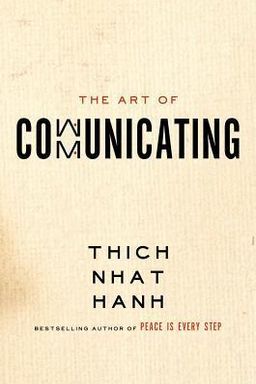
The Art of Communicating cover

The Art of Communicating

by Thich Nhat Hanh

The Art of Communicating by Thich Nhat Hanh reveals how mindfulness can transform your communication skills. By becoming a mindful listener and speaker, you can cultivate healthier relationships and promote understanding. This insightful guide combines Buddhist wisdom with practical advice to enhance your interactions and bring compassion into everyday conversations.

The Art of Communicating: Transforming Relationships Through Mindfulness

When was the last time you truly felt heard—or truly listened? In The Art of Communicating, Zen master Thich Nhat Hanh asks this very question, inviting us to look at our conversations not just as exchanges of words but as exchanges of energy. He argues that communication is far more than speech; it is a flow of mindfulness, compassion, and presence that nourishes, heals, and connects. According to Nhat Hanh, the way we speak, listen, and even think shapes our relationships, our communities, and ultimately, our world.

We live in a time when we are surrounded by communication tools—emails, texts, social media—and yet, as Nhat Hanh says, we are lonelier than ever. The paradox isn’t in the lack of communication but in its quality. We communicate endlessly but rarely deeply. Much of what we consume and share can be toxic to our spirit, like junk food for the mind. This book, therefore, isn’t just about learning better conversational skills—it’s about learning to communicate mindfully, beginning with ourselves, so we can bring nourishment rather than harm to our relationships.

Communication as Nourishment

Imagine communication as food. We all consume words, media, and thoughts daily—through conversations with others and even the voices inside our heads. Nhat Hanh introduces the radical idea that our communications are a form of nourishment. Every conversation can feed love and compassion or fuel anger and suffering. Just as we choose what kinds of food to eat, we must learn to choose what kinds of communication to consume and produce. Mindful communication is a spiritual diet, one that keeps our hearts and minds healthy. He asks us to tune our awareness toward what we listen to, read, or say, so we strengthen compassion instead of toxicity.

Communicating with Yourself

All communication begins internally. Most people suffer from disconnection from their own bodies, minds, and emotions. Nhat Hanh writes that loneliness—the great modern disease—comes from the inability to come home to ourselves. We think connecting with others will heal this feeling, but technology and social contact cannot fill an inner void. True connection comes when we listen deeply to our own suffering and show love to ourselves through mindfulness. When you can breathe, sit, and walk with awareness, your mind and body reunite. From there, the communication with others naturally improves. The path home starts with the breath: “Breathing in, I know I’m breathing in; breathing out, I know I’m breathing out.”

Deep Listening and Loving Speech

Compassionate communication, Nhat Hanh teaches, requires two elements: deep listening and loving speech. These are what he calls the two keys to true connection. Deep listening means hearing another person with only one purpose—to help them suffer less. It requires suspending judgment and keeping compassion alive, even if you disagree or feel wronged. Loving speech, in turn, means speaking truth without cruelty, using words that reveal understanding and promote healing. When we combine these two, we create the conditions for real connection and reconciliation. Nhat Hanh emphasizes that love is born from understanding; without understanding suffering—your own and others’—true love cannot exist.

The Six Mantras of Loving Speech

To make this practice tangible, Nhat Hanh offers six “mantras” or phrases, each designed to express presence and compassion. These include simple but profound sentences like “I am here for you,” “I know you suffer,” and “This is a happy moment.” They act as spiritual formulas that open hearts and reduce pain immediately. When said mindfully—with a calm breath—they can transform the quality of relationships. These mantras are not religious; they are universal tools for making love visible in everyday language. They remind us that communication isn’t about being clever or persuasive—it’s about being present.

Healing, Work, and Community

The author broadens communication beyond personal relationships, extending it into workplaces and society. At work, we can nurture mindfulness in meetings, calls, and emails. Each phone ring becomes a “bell of mindfulness,” reminding us to breathe before responding. In community, compassionate communication can be the foundation for building trust and reducing division. Nhat Hanh imagines societies that operate through deep listening and loving speech—a global ethic that transcends culture and religion. He even uses ecological metaphors: just as a tree gives oxygen and sustains life silently, a mindful communicator radiates compassion that sustains others.

Communication as Continuation

Every thought, word, and action, Nhat Hanh says, is a seed we plant into the universe. This is his Buddhist understanding of karma—not destiny, but continuity. Even when our bodies are gone, our communication continues through those it touched. Words spoken with love ripple through generations; words of anger linger as suffering. By practicing mindful communication today, we heal the past and shape a peaceful future. Talking to ancestors, reconciling with lost loved ones, or changing how we speak now—all are acts of liberation from the toxicity of unskillful communication.

Why It Matters

In a world that feels increasingly divisive, The Art of Communicating shows that peace begins with dialogue—but not just any dialogue. It must be rooted in mindfulness, self-understanding, and compassion. Nhat Hanh’s gentle wisdom transforms communication from a mere skill into a spiritual practice. Through breathing, listening, and speaking mindfully, we don’t just talk—we connect, nourish, and heal ourselves and others. Every conversation becomes an opportunity to practice love in action. As Nhat Hanh writes, “We communicate to be understood and to understand others.” In this simplicity lies the profound art of living together.


Essential Food: Communication as Nourishment

Thich Nhat Hanh begins with a startling yet simple idea: everything we consume is food. This doesn’t just mean what we eat. The conversations we engage in, the words we hear, and even the media we scroll through are all nourishment for our minds and hearts. Just like the body needs healthy food, our relationships need mindful communication to thrive. When our words are toxic, we feed suffering; when they are compassionate, we feed love.

Mindful Consumption

To communicate mindfully, you first need to examine what you consume. Words, emotions, and stories pass through your senses like meals. If you spend hours on social media, absorbing negativity, comparison, and anger, those toxins will manifest as suffering in your life. Nhat Hanh suggests we treat our eyes, ears, and hearts like sacred gates, letting in only what nourishes. When we listen to anger or gossip without awareness, we are eating pain. But if we listen with compassion and mindfulness, we transform toxic communication into understanding.

Relationships Need Proper Food

A relationship, whether romantic, familial, or professional, can only survive if it receives proper nourishment. When couples feed anger and suspicion, love starves. When parents and children feed connection and gratitude, love grows. Nhat Hanh uses an image from his Plum Village monastery—a man reminded by his teacher that “his flower needs watering.” Just one hour of mindful, loving speech transformed an unhappy marriage. The lesson: mindful communication is the water that keeps relationships alive.

“Everything—including love, hate, and suffering—needs food to continue.”

When suffering continues, it’s because we keep feeding it. Starve anger with compassion, and it will fade.

Applied Mindfulness

Nhat Hanh’s message is practical. Communication isn’t just about avoiding cruelty; it’s about cultivating understanding moment by moment. Before sending an email or replying in anger, take three mindful breaths. Before listening to someone vent, remind yourself: “I am here to help this person suffer less.” These small acts of awareness create space between reaction and response. In that space, compassion can flourish.

As modern psychologist Marshall Rosenberg, creator of Nonviolent Communication, also emphasizes, the language we use shapes our experience of empathy. Nhat Hanh’s mindful approach deepens Rosenberg’s work by adding spiritual presence—breath, body, and silence—to the art of speaking kindly. When we consume and offer communication mindfully, we nourish both ourselves and the world around us.


Communicating with Yourself: Coming Home

The foundation of all external communication is internal communication. Thich Nhat Hanh’s central insight is this: before you can truly listen to another person, you must learn to listen to yourself. Loneliness, he says, is not a lack of connections—it is a lack of presence with oneself. Technology keeps us busy connecting outward, but the heart remains untouched.

Listening to the Inner Child

Each of us carries inside a wounded child—memories of pain and rejection. But we often run away from that child because we fear reliving the suffering. Nhat Hanh invites you to stop running. Sit down, breathe, and say, “Dear one, I am here for you now.” By acknowledging and embracing your wounded inner self with compassion, you begin healing generations of inherited pain. This act of internal listening cultivates gentleness, breaking cycles of trauma passed down from parents and ancestors.

Breathing and Mindful Walking

Mindful breathing reconnects body and mind—he calls this “coming home.” Breathing allows you to return from distractions, stress, and regret into the present moment, where peace is always available. Pair this with mindful walking, where every step becomes an arrival: “I have arrived, I am home.” Each breath and step brings wholeness; it transforms ordinary movement into meditation.

“Freedom is the most precious thing there is.”

Real freedom is not political; it is the ability to release suffering and come home to yourself.

Suffering as a Teacher

Through mindfulness, suffering becomes a doorway to compassion. When you understand your own pain deeply, you stop blaming others and start empathizing. Nhat Hanh recounts the story of a woman who planned suicide until she listened to his teachings on deep listening and loving speech. Through mindfulness, she realized her suffering was partly her own misunderstanding. She then reconciled with her husband using the words: “I know you have suffered; please help me understand.” Understanding dissolved years of resentment.

Communicating with yourself—by breathing, walking, and listening—allows you to transform suffering into wisdom, just as mud gives rise to a lotus. Once you understand yourself, you can understand others. Love, Nhat Hanh reminds us, begins not with romance but with self-understanding. Only then can you speak and listen with true compassion.


The Keys to Communicating with Others

Once we can hear ourselves, we can begin truly hearing others. Thich Nhat Hanh outlines two essential keys to compassionate connection: deep listening and loving speech. Together, they are the instruments that reopen broken relationships, reduce suffering, and create peace.

Deep Listening

Deep listening is a gift. It asks that you set aside judgment and listen only to help the other suffer less. You’re not listening to reply or prove a point; you’re listening to understand. Thich Nhat Hanh tells us to listen with the energy of compassion alive in the heart. Even if the other speaks with anger or misunderstanding, remain anchored in mindfulness. If you’re tempted to correct, pause and breathe instead. The purpose of listening is not to fix but to witness. Thirty minutes of true listening can relieve years of pain.

Loving Speech

The partner practice to listening is loving speech—the art of expressing truth so that others can hear it. This is not about flattery or politeness but honesty delivered through compassion. Nhat Hanh frames it as Right Speech, echoing the Buddhist Eightfold Path. He identifies four elements of loving speech: tell the truth, don’t exaggerate, be consistent, and use peaceful language. These guidelines protect conversations from manipulation or violence. If your truth would cause pain, find a skillful way to share it gently without violating honesty.

“If you can listen for thirty minutes with compassion, you can help the other person suffer much less.”

Listening is not passive; it’s a form of active healing.

Speaking Skillfully

Nhat Hanh teaches that when delivering difficult truths, context matters. He gives four criteria for skillful communication: speak the language of the listener, adapt to their understanding, give the right medicine for their condition, and reflect the ultimate truth. For example, when a child asks about death, you may adjust the message compassionately. This flexibility doesn’t contradict honesty—it refines it. Like a doctor prescribing medicine, we tailor our words to heal, not harm.

In essence, communication isn’t merely verbal—it is spiritual empathy made audible. When you speak with awareness and listen with openness, boundaries dissolve. You embody the bodhisattva Avalokiteshvara, the one who “listens to the sounds of the world.” Compassion then isn’t a sentiment—it’s a living practice of speech and silence.


The Six Mantras of Loving Speech

Thich Nhat Hanh distills compassionate communication into six simple mantras—short phrases that open hearts and transform relationships. They may sound ordinary, but when spoken mindfully, they are spiritual medicines.

1. “I am here for you.”

The greatest gift we can offer another is our true presence. No technology, gift, or word equals the healing of “I am here for you.” Presence means body and mind united in the now. You can even use this mantra with yourself: “I am here for me.” The act of being fully present restores peace in both you and your loved one.

2. “I know you are there, and I am happy.”

Recognition is love in its pure form. Nhat Hanh explains that when someone feels unseen, they don’t feel loved. Acknowledging their presence allows them to “bloom like a flower.” Practicing this mantra daily reminds you that you have blessings now, not just in the future.

3. “I know you suffer; that’s why I’m here.”

This mantra responds directly to the presence of pain. You don’t need to fix suffering—just to be there. Your mindfulness becomes a refuge for the other. Compassion is built on simple presence, not solutions.

4. “I suffer, please help.”

The hardest mantra. When we suffer, pride keeps us silent. Nhat Hanh teaches that asking for help is an act of courage. This breaks the cycle of isolation and misunderstanding. In Plum Village, practitioners even keep this mantra written in their wallet. It changes suffering into connection.

5. “This is a happy moment.”

Mindfulness reveals that happiness exists now. When we acknowledge joyful moments, gratitude expands. Nhat Hanh reminds us not to postpone happiness—it’s available with a simple breath and awareness of love.

6. “You are partly right.”

This mantra protects humility and balance. Whether receiving praise or criticism, we remind ourselves: “You are partly right.” This phrase preserves peace while recognizing both strengths and flaws. It also helps us see others completely, without judgment. We all contain light and shadow.

When practiced daily, these six mantras transform communication into mindfulness. They are not theory—they are living tools that turn dialogue into healing. As one practitioner, Elizabeth, discovered through applying them with her sister and husband, simple mindful phrases can rebuild trust where argument once ruled. Each mantra is a reminder that love begins with presence.


Mindful Communication at Work

Workplaces are one of the most challenging environments for mindfulness. Stress, deadlines, and hierarchy often keep us from speaking or listening compassionately. Thich Nhat Hanh redefines success: it’s not just about productivity but about presence. He proposes bringing mindfulness into every work interaction—from commuting to meetings.

Starting and Ending the Day

Begin your workday with mindful breathing, not with worry. As you walk to your workplace, enjoy each step fully. Arriving in peace allows you to bring calm energy into the office. When you greet colleagues, smile genuinely, acknowledging their humanity. Small gestures of mindfulness ripple outward, improving the entire environment.

Mindful Meetings and Technology

Nhat Hanh suggests transforming meetings into shared breathing spaces. A single moment of silence before any discussion can restore clarity. Similarly, before answering the phone or email, breathe three times to recover presence. He likens the phone’s ring to a “bell of mindfulness.” Words, whether in speech or text, should serve understanding: “May my words create mutual love and understanding.”

Creating Community at Work

Workplace mindfulness isn’t solitary; it thrives in community. When a few people begin practicing, others naturally follow. Breathing spaces, mindful walking breaks, or shared silence can turn offices into genuine communities of compassion. Nhat Hanh recalls discussing mindfulness with Indian President K. R. Narayanan—imagining even legislative bodies using deep breathing to reduce conflict. (Note: His suggestion mirrors modern “mindful leadership” approaches taught in organizations worldwide.)

Handling Difficulty

When work tensions arise, Nhat Hanh offers the image of a rock sinking in a river. On its own, the rock sinks, but within a boat, it floats. The boat is mindfulness. It can carry any emotional weight safely. Practicing mindful breathing before reacting helps you stay afloat during stress. The real achievement is not avoiding problems but learning to transform them through awareness.

Work doesn’t need to be a battlefield. When you lead by mindful example—by listening deeply, speaking kindly, and moving calmly—you inspire an invisible yet powerful transformation. Peace, when embodied, becomes contagious.


Creating Community in the World

Compassionate communication extends beyond friendships and workplaces—it can reshape societies. Thich Nhat Hanh believes that collective mindfulness creates communal transformation. He reminds us that the word community shares its root with communication: to make common, to share.

Mindfulness as Collective Energy

Mindfulness is not just personal; it’s energy that can multiply when practiced together. In Plum Village, even simple communal silence builds extraordinary collective awareness. Whether through meditation, chanting, or listening circles, a mindful community amplifies compassion. “The whole can be much greater than the sum of its parts,” Nhat Hanh says.

Trust, Patience, and the Hungry Ghost

He warns that some people cannot receive love because they lack the capacity—he calls them “hungry ghosts,” beings with a large belly but a narrow throat. Even if surrounded by love, they cannot absorb it. To help, you must be patient and spacious, not forceful. Time and tenderness widen their capacity to receive understanding.

Compassion Through Example

Nhat Hanh uses nature analogies—like the stickleback fish that sacrifices itself for the school—to show that altruism strengthens communities. Collective acts of generosity water the seeds of compassion in everyone. He draws parallels to social activism: individual mindfulness can inspire global empathy, just as communal chanting strengthens shared awareness.

The World as One Community

He dreams of leaders and citizens communicating like mindful practitioners—governments functioning through deep listening and loving speech. In such a society, anger is met with compassion, not retaliation. As he writes, “Be your community and let your community be you.” Community is not a structure but a living presence of compassion linking us all.

Thich Nhat Hanh’s vision aligns with global peace activism and psychological research on empathy and collective mindfulness. Healing planetary suffering begins with “coming home” together—learning to communicate not just through words but through silence, attention, and love.


Our Communication Is Our Continuation

Thich Nhat Hanh brings the book to its deepest insight: communication is not transient—it is our continuation. Every thought, word, and deed sends ripples into eternity. Like a cloud becoming rain that nourishes trees long after it disappears, our communication continues even when our bodies do not.

Communication as Karma

In Buddhist terms, karma means action—of thought, speech, and body. Each thought is already an action because it bears energy. When we think hateful or forgiving thoughts, we shape not only our mind but the world around us. Nhat Hanh says, “You are your action.” Thus, communication becomes our spiritual legacy. Kind speech and mindful deeds spread harmony beyond our lifespan.

Everything Bears Our Signature

Every communication—spoken or silent—bears our personal signature. Like an artist’s mark, our words and deeds identify us forever. Even if we speak in anger, we can repair its effects through new, compassionate communication. Just as clouds become rain, our healing words can water the seeds of peace that correct past harm. This idea empowers us to change: we can transform our legacy starting today.

Healing the Past

One of Nhat Hanh’s most touching examples involves reconciliation with ancestors. He teaches that the past isn’t gone; it’s present in every cell of our body. You can speak to those who have passed away: “Grandma, I am your continuation. I’m sorry I caused pain. Please help me practice peace.” In such intimate communication, guilt dissolves into healing. Through mindful action today, we erase old suffering.

“The past isn’t gone—it’s disguised in the present.”

With each mindful word, we heal yesterday and prepare tomorrow.

Continuing Beautifully

Our speech, thoughts, and actions are nonlocal—they don’t vanish. They continue in the hearts and minds of others, shaping how humanity evolves. When we use compassion as our communication, we continue beautifully; when we speak in anger, suffering continues. The choice is ours. Communication, then, isn’t just an interpersonal act—it’s a spiritual inheritance.

In this teaching, Nhat Hanh redefines immortality: it’s not living forever but leaving behind words and deeds that nurture kindness long after we are gone. The art of communicating is, ultimately, the art of continuing beautifully.

Dig Deeper

Get personalized prompts to apply these lessons to your life and deepen your understanding.

Go Deeper

Get the Full Experience

Download Insight Books for AI-powered reflections, quizzes, and more.