
Idea 1
The Meaning and Power of Choice
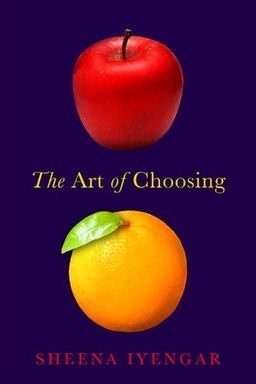
Why do choices matter so much to you? Because every act of choosing—whether trivial or life-altering—reveals your sense of control, identity, and value. In The Art of Choosing, Sheena Iyengar argues that choice is not simply freedom; it’s the psychological and cultural engine through which you construct meaning. But it’s also easily misunderstood. More options often appear liberating but can overwhelm, mislead, or erode satisfaction. The real art lies in knowing when and how to choose, and what to let go.
Choice as the foundation of agency
Iyengar begins with survival tales—Steven Callahan adrift for seventy-six days and Joe Simpson crawling miles with a shattered leg. Both reframed despair as the question: “Do I want to live?” Their will to act, to exercise agency, sustained them. The psychological insight: agency itself is oxygen. Studies from Curt Richter and Martin Seligman show that perceived control—not control itself—dictates persistence. Rats, dogs, and humans act more boldly when they believe effort matters. Learned helplessness arises when previous outcomes taught powerlessness, ensuring passivity even when opportunities reappear.
Health and well-being through control
Perceived autonomy profoundly affects health. The Whitehall Studies of British civil servants identified a gradient: lower-status employees, deprived of control over tasks, suffered higher heart mortality. Ellen Langer’s nursing-home experiment revealed that residents given simple choices—a plant to care for, a movie schedule—thrived, while those stripped of decision-making declined. Choice strengthens both mind and body because it reduces chronic stress and promotes engagement. You don’t need absolute freedom; symbolic agency restores vigor.
Culture defines what choice means
Iyengar reveals that cultures disagree on who should choose and why. Western individualism prizes self-expression (“freedom from” constraint), while collectivism prizes harmony and duty (“freedom to” fulfill shared responsibilities). In experiments, Anglo-American children worked harder when making their own choices, whereas Asian-American children performed best when choices reflected family preference. The same action—salient independence—can feel isolating in one society and empowering in another. You inherit a cultural script that tells you what choice represents: autonomy or belonging.
Identity and authenticity in an age of options
The modern abundance of options fuels an identity paradox: you are told to “be yourself,” but with infinite expressions of uniqueness, you lose clarity about which self to choose. Iyengar’s studies show that people prefer moderate distinctiveness—unique enough to feel individual, familiar enough to be accepted. Your choices communicate identity to others; social mirrors influence how you construct authenticity. Cognitive dissonance ensures you later rewrite memories to fit chosen narratives, maintaining consistency over time.
Psychological biases in decision-making
Across everyday judgments, heuristics steer you: availability bias (vivid stories outweigh statistics), framing effects (gain vs. loss wording changes preferences), and confirmation bias (favoring evidence that agrees with you). These shortcuts simplify complexity but can distort reason. Choices anchored in stories, frames, and expectations are rarely purely rational. Iyengar pushes you to treat preferences as hypotheses, actively seeking disconfirming evidence before committing to major decisions.
Hidden influences: priming and marketing
Priming and marketing surround you with cues that quietly alter perception. The Coke versus Pepsi comparison reveals how branding, colors, and cultural associations reshape taste itself. Iyengar’s blind nail-polish test and fMRI beverage results demonstrate that labels and imagery activate reward circuits—turning psychology into sensory reality. Choice becomes partly manufactured. Awareness of these influences lets you shape environments that prime for health, productivity, and authenticity instead of manipulation.
Attention and invisible influences
Your reflective mind sees little at a time. The “Invisible Gorilla” experiment reveals how intense focus blinds you to the obvious. Context—where you vote, how tasks are framed—affects decisions beyond awareness. Automatic and reflective systems coexist: the fast, intuitive mind absorbs signals the deliberate cannot. Designing decisions means broadening focus and using external aids—checklists, peer review—to catch what your consciousness misses.
The limits and overload of choice
Contrary to modern faith, more choice isn’t always better. Iyengar’s jam experiment proved that too many options decrease action and satisfaction. Working memory can handle only about seven items; beyond this, noise exceeds signal. Paradoxically, curated sets and defaults (as in Sweden’s pension plan) produce better outcomes. Expertise transforms quantity into quality, but novices benefit from restraint. Companies found that trimming assortments boosts sales—humans crave simplicity more than they admit.
Designing better decisions
Choice architecture allows freedom without chaos. Defaults, delegation, categorization, and precommitment devices (like SMarT retirement programs or stickK contracts) convert weak will into sustained action. You can preserve autonomy by designing constraints intelligently—choosing the rules you bind yourself to. Experts and algorithms lighten cognitive load, turning complex environments into manageable ones.
The burden of choice and the wisdom of limits
In medicine, autonomy can wound. Families forced to “decide” life-or-death matters suffer guilt because choice implies causality. French protocols that let doctors decide spare emotional trauma; people prefer guidance when stakes are existential. More broadly, Ariely’s “disappearing doors” and artistic constraint lessons reveal that limits liberate—too many open doors breed regret, while structure fosters creativity. The art of choosing isn’t limitless freedom but using limits to live deliberately.
In essence, the book argues that wise choosing merges awareness with design. It’s about knowing when choice empowers and when it burdens, about framing freedom as a means to purposeful living rather than endless comparison.