
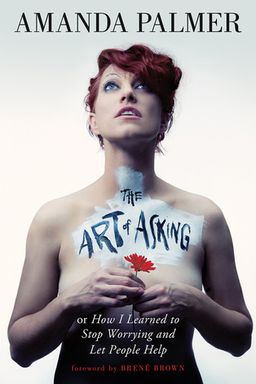
The Art of Asking cover

The Art of Asking

by Amanda Palmer

In ''The Art of Asking,'' Amanda Palmer shares her personal journey of embracing vulnerability and connection through asking for help. Discover how accepting assistance, offering empathy, and building a supportive community can lead to success and fulfillment. This insightful read inspires readers to unlock the power of human connection.

The Art of Asking and the Power of Connection

How can you build a creative life that depends not on gatekeepers or luck, but on trust? In The Art of Asking, Amanda Palmer presents a radical yet simple answer: learn to ask. She argues that asking is not a technical transaction—it is a vulnerable act of connection that transforms isolation into collaboration. The book weaves memoir, philosophy, and field notes from her career as a street performer, musician, and crowdfunded artist into a new model for creative work grounded in reciprocity and human exchange.

Amanda’s central claim is that asking sits at the heart of all art, community, and survival. You cannot create without asking for attention, you cannot live without asking for help, and you cannot lead without asking for trust. But to ask well, you must dismantle the armor of self-sufficiency and invite others into your process.

From Street Corners to Crowds

Amanda’s transformation begins as a living statue called The Bride on the streets of Cambridge. Dressed in white and offering flowers in exchange for coins, she learns firsthand that the transaction between artist and audience is not about money—it’s about being seen. Each coin dropped into her vase is both a gift and a conversation: “I see you.” Through this ritual, Amanda discovers that gratitude and visibility form the emotional engine of sustained artmaking.

Years later, this insight carries her through the rise of crowdfunding. Her record-breaking Kickstarter for Theatre Is Evil raised over a million dollars not through advertising, but through thousands of small acts of trust cultivated over years of presence—emails, hugs, house shows, and handwritten notes. She calls this Maximal DIY: using every available relationship and resource to build with your community instead of around it.

Why Asking Feels So Hard

Beneath Amanda’s street rituals lies a psychology of shame. In American culture, asking often feels like failure; you fear appearing needy, weak, or unworthy. Palmer connects this fear to gender norms and the inner critic she calls the Fraud Police—the voice that tells you you’re not legitimate enough to deserve help. Drawing on Brené Brown’s research into vulnerability, she reframes asking as an act of trust: when you allow others to give, you also let them belong.

Amanda’s personal turning point comes when she resists asking her husband, author Neil Gaiman, for a small loan to cover recording bills. The shame lasts until Neil reframes it: they are a team, and asking is part of love. In learning to “take the donuts”—accept small gifts without guilt—Amanda models how receiving is as essential as giving.

The Ethics of Trust

Trust, for Palmer, is both a spiritual and practical discipline. Every busking session, house concert, or Kickstarter update tests whether people will honor the exchange. Sometimes they don’t—her red ukulele gets stolen after a show, or a Berlin audience member crosses a boundary. But Amanda’s commitment to respond with empathy and transparency rather than punishment shows a different ethic: relationship over retribution. The goal is to keep the circle of trust intact so that art remains a shared act rather than a commodity.

Core principle

Crowdfunding, busking, and performance all rest on the same principle: you ask not because you’re powerless, but because asking gives others the chance to participate in something meaningful.

Art as Communion

Palmer’s most striking metaphor compares art to Eucharist: every exchange—a flower on the street, a lyric shared online, a crowdfunded record—is a sacrament of being seen. She extends this idea into the signing lines after shows, where fans confess their stories of trauma and loss. Listening becomes a form of healing, turning the artist into what her friend Anthony calls a “sin-eater”: someone who absorbs pain and returns it transformed.

The arc of The Art of Asking moves from personal vulnerability to global reciprocity. Each story—The Bride’s stare, the Kickstarter video, the quiet hours beside Anthony’s hospital bed—reinforces a truth: connection, not perfection, sustains both art and life. To ask is to trust others enough to meet you halfway, and to create is to continually ask the world to see you. That, Amanda insists, is the real art.

(Note: Palmer’s philosophy echoes older concepts like Lewis Hyde’s The Gift and the peer-support frameworks of mutual aid, but she applies them vividly to digital-era creativity. The result is a manifesto for anyone building community through transparency, gratitude, and courage.)


Busking and the Practice of Human Exchange

As The Bride, Amanda Palmer becomes her own teacher. On Boston’s sidewalks she learns commerce, performance, and spirituality all at once. Painted white and silent, she exchanges flowers for coins—transforming strangers’ curiosity into a ritual of mutual recognition. Busking, she discovers, is not begging; it’s an exchange built on dignity. You give beauty and presence, others give attention and a token offering.

Learning Through the Street

The street is an unforgiving classroom. Amanda confronts cold, harassment, and rejection. Yet each day she perfects micro-skills—eye contact, micro-expressions, gratitude—that later anchor her broader art and leadership. She realizes people crave being seen more than entertainment itself. One father’s tears as his child accepts a flower reveals a simple truth: the smallest acts of acknowledgement can heal loneliness. That insight underpins every later project she leads, from Couchsurfing tours to Kickstarter video updates.

Emotional Labor and Resilience

Street performance requires relentless gratitude. Instead of resenting stingy passersby or catcalls, she cultivates thankfulness for each connection. This gratitude-driven perspective lets her redefine success away from numbers toward encounters. It also builds emotional armor that later protects her from online criticism and fame’s volatility. Rather than closing off, she keeps her chest open—trusting the next interaction will restore balance.

Lesson from the Sidewalk

If you offer real presence, people will meet you with generosity. Transactions become ceremonies, and you discover that money is often shorthand for mutual care.

By the end of her busking years, Amanda has already built the foundation for her creative career: treat every exchange—whether one dollar, a couch to crash on, or a song request—as a sacred conversation. The street was her first crowdfunding platform; the lesson never left her.


Building Community and Maximal DIY

After the streets, Amanda transfers her people-first model into music culture. At The Cloud Club and in The Dresden Dolls, she replaces corporate hierarchy with collaboration. Fans are no longer passive consumers—they decorate venues, host shows, and lend couches. This philosophy becomes her version of Maximal DIY: use every available connection, resource, or favor to create art collectively rather than alone.

From DIY to Maximal DIY

Traditional “Do It Yourself” culture romanticizes independence: recording with cheap gear and endless self-reliance. Amanda’s improved version embraces dependence as strength. “Do It Together” means admitting need—borrowing a van, asking fans to sing, or crowdsourcing photos—then returning gratitude publicly. That honesty fosters trust much faster than polish ever could. It’s not less professional; it’s more human.

Sustaining the Network

Amanda treats fan contact like water and sunlight. Regular emails, social posts, and open-door rituals maintain the living ecosystem. Signing tables become therapy sessions. Couchsurf hosts turn into lifelong allies. When she finally launches her Kickstarter, those relationships—tended for years—burst upward like bamboo that’s been quietly growing roots underground. The campaign’s million-dollar result isn’t an anomaly; it’s compound trust.

Practical takeaway

You can’t crowdfund strangers. You must first give freely, listen, and allow shared identity to form. Asking is merely the visible tip of years of reciprocal care.

By redefining DIY as networked interdependence, Amanda predicts the Patreon era and offers a blueprint for sustainable independence. Freedom doesn’t come from isolation—it emerges from mutual investment.


Crowdfunding as Trust and Transparency

Amanda Palmer’s Kickstarter campaign for Theatre Is Evil marks the moment her philosophy encounters scale. Her lesson: crowdfunding is not charity—it’s trust in motion. The difference lies in clarity. Backers don’t donate from pity; they purchase belief in a relationship already proven through years of giving and gratitude.

Designing the Ask

Amanda builds her campaign tiers like a spectrum of intimacy: $1 downloads let anyone join; higher levels offer art books, painted record players, and house parties. Clear explanations, transparent budgets, and continuous communication frame the exchange as honest commerce. Her transparency—explaining that paying artists, printing vinyl, and shipping cost specific amounts—turns skeptics into partners. It’s an education in radical openness, showing that good crowdfunding is part logistics, part empathy.

Critique and Backlash

After surpassing $1 million, Palmer faces public shaming from media accusing her of “begging.” She responds by clarifying the distinction: people are not forced, they choose to pay. The backlash exposes cultural discomfort with artists who succeed through communal models rather than corporate validation. Instead of shrinking, Amanda doubles down on explaining value, maintaining updates, and eventually paying volunteer musicians who wanted to join her tour for free—proof that transparency, even under fire, reinforces trust.

Core insight

Any ask that honors dignity, choice, and clarity—while accepting No as an answer—builds stronger communities than a thousand ads ever could.

Palmer’s campaign proves that crowdfunding success is not luck but a visible reflection of invisible relationship work. Money merely crystallizes years of trust, gratitude, and consistent presence.


Authenticity, Art, and Commerce

Amanda Palmer’s experiences with record labels show how artistic authenticity can clash with commercial demands. While Warner expected quick returns and chart metrics, Palmer valued slow, personal connection. When the label canceled her promotions for The Dresden Dolls after lower first-week sales, Amanda turned back to her mailing lists and fans—choosing relationship over reach.

Defending Authenticity

Authenticity becomes both her weapon and shield. When criticized for being overweight in a video, she refused edits and encouraged fans to post unfiltered belly photos—a movement dubbed the ReBellyon. The public act of defiance demonstrated that vulnerability can be a marketing advantage if embodied sincerely. Compassion, not polish, generates loyalty.

Redefining Success

In Palmer’s worldview, success equals “enough.” Drawing from Brené Brown’s ideas on scarcity versus abundance, she argues that the artist’s goal isn’t endless expansion but sustainable intimacy: a life where you can keep making, keep connecting, and rest in adequacy. This recalibration disrupts consumer metrics, reminding you that thriving communities often form around authenticity more than aspiration.

Guideline

Protect direct channels—email, Patreon, blogs—because they are lifelines to real people, not mere analytics.

Art and commerce can coexist when transparency and empathy stay at the core. Palmer’s story proves that you can earn while remaining honest, provided money serves connection rather than replaces it.


Vulnerability, Empathy, and Healing Through Art

Throughout her book, Amanda Palmer insists that art’s highest purpose is helping people feel seen. Every gesture—from her silent Bride’s gaze to late-night road-trip confessions—becomes an act of witnessing. Artist and therapist Anthony Martignetti teaches her that “artists eat the pain,” absorbing communal suffering and transforming it into song, story, and laughter. The artist, like the sin-eater of myth, liberates others by receiving their truth without judgment.

Practicing Presence

Amanda’s hospital scenes with Anthony’s cancer care reveal that being helpful isn’t always about solving; it’s about showing up. Her presence—riding along to chemo, lying beside him while he sleeps—embodies empathy without control. She learns to witness rather than fix, to give space instead of instructions. You can emulate this by offering people your time, attention, and quiet instead of instant advice.

Small Rituals of Care

Amanda’s exchanges—sharing donuts, trading art for stories, or performing for hospital staff—reveal that care circulates best in small, specific gestures. Empathy works like crowdfunding: distributed, voluntary, and personal. The call to action is simple: accept help when offered; it lets others complete the circle of care.

Essential reminder

“If you love people enough, they’ll give you everything.” Giving and receiving aren’t opposites—they’re different expressions of trust.

Palmer ends her journey not in triumph but in communion. Vulnerability becomes the stable ground for art, love, and community resilience. To ask and to be seen are, in the end, the same act.


Gratitude and the Gift Economy

Amanda Palmer closes her argument where she began: on the street, with a flower. Her life’s philosophy turns on one conviction—that gifts gain power as they move. Gratitude isn’t a polite afterthought but the engine that keeps art sustainable. When someone throws a dollar in your hat and you hand them a flower, you both become part of a circuit of generosity.

Keeping the Gift in Motion

Palmer advocates turning every thank-you into a public, ongoing ritual: daily acknowledgments, backer updates, and shared posts that remind your community they matter. Instead of hoarding goodwill, she redistributes it. Her “yellow pages party,” with thousands of backer names printed in giant phone books, made abstraction human again—transforming digital pledges into tactile gratitude.

Receiving Without Guilt

Ben Folds once joked about the “free coffee paradox”: people offer you free things once you’ve made it. Palmer’s answer: accept, then pass it on. You honor generosity by extending it, not rejecting it. Take the donuts today; bring donuts tomorrow. Gratitude, practiced consistently, turns spectators into participants and success into continuity.

Final reflection

Art that thanks its audience creates an economy of attention, not extraction. The gift keeps moving, and with each movement, community grows stronger.

In her flower, her song, her handshake, Amanda Palmer demonstrates that gratitude isn’t performative—it’s creative. To keep giving thanks is to keep making art.

Dig Deeper

Get personalized prompts to apply these lessons to your life and deepen your understanding.

Go Deeper

Get the Full Experience

Download Insight Books for AI-powered reflections, quizzes, and more.