
Idea 1
The Rise of the Corporate Conqueror
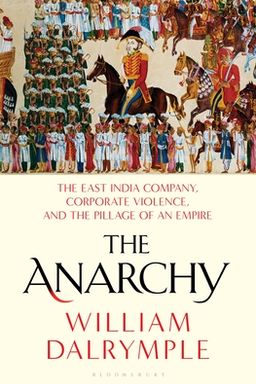
Imagine a private corporation acting like a sovereign—minting coins, raising armies, collecting taxes, and waging wars. That is the radical story William Dalrymple tells about the East India Company (EIC): a joint-stock trading venture that morphed, over two centuries, into an imperial power governing millions. In telling this story, Dalrymple reveals a world in which finance, military innovation, betrayal, and fragile legitimacy merged into one unparalleled corporate empire.
The book opens with the Mughal Empire’s long decline, showing how imperium dissolves into anarchy. Out of this vacuum, European trading companies—armed with gunpowder, disciplined troops, and capital—enter as opportunists. By the time the dust settles, a board of directors seated in London commands sovereignty in Bengal and beyond. Dalrymple invites you to observe a political experiment without parallel: the fusion of private profit and public power.
The Mughal Unraveling and European Entry
Dalrymple traces the Mughal collapse from Aurangzeb’s overextension in the Deccan to Nader Shah’s 1739 sack of Delhi, when elephants and camels carried away imperial treasure. India fractures into contending states—Marathas, Awadh, Bengal—leaving the field open to foreign corporations. These companies exploit disorder through diplomacy and force. To you as a reader, this is the moment when commerce moves into the vacuum left by empire; a power defined by ledgers, not lineage, rises.
Corporate Sovereignty Emerges
The EIC’s royal charter of 1600 plants the seed of this transformation. It grants the Company monopoly trade rights but also the power to fortify, judge, and wage war. Over the next century, under Parliament’s protection and driven by shareholder ambition, soldiers and clerks combine accounting with armaments. By 1765, after the Battle of Buxar and the Treaty of Allahabad, the Company holds the Diwani—the Mughal right to collect revenue in Bengal, Bihar, and Orissa. A corporate entity thus gains fiscal sovereignty. (Dalrymple calls it “an empire within an empire.”)
The Mechanisms of Empire: Finance and Force
The Company’s success rests on two intertwined mechanisms: financial acumen and military modernization. It borrows from Indian bankers like the Jagat Seths and channels India’s own wealth into its military machine. The tactical revolution—disciplined infantry, volley fire, and artillery coordination—lets small European-led armies defeat far larger but disorganized forces. At Plassey (1757), intrigue joins technology: Mir Jafar’s betrayal and Clive’s audacity fuse money with musketry to create empire.
Mir Qasim’s later resistance (1763–64) shows the fragile balance: he modernizes armies and revenues but is crushed by the superior financial and logistical powers of the Company. By Buxar (1764), the last organized coalition—Mughal, Awadh, and Bengal—falls, cementing the Company’s ascendancy.
Famine and Moral Consequence
By the 1770s, the contradictions of corporate conquest become monstrous. The Bengal famine (1769–70) kills perhaps a fifth of the population—1.2 million lives lost under a regime that keeps up tax collections and allows profiteering on grain. The famine exposes the ethical void at the center of Company rule. Parliament intervenes with the Regulating Act (1773) and later reforms, beginning the slow transition from private despotism to state-controlled empire.
From Clive to Wellesley: The Institutional Empire
Dalrymple uses figures like Robert Clive and Richard Wellesley to personify transformation. Clive, the gambler turned empire-builder, makes individual daring a system: he turns Bengal’s revenues into corporate dividends. Wellesley systematizes that conquest—raising professional armies, financing wars through Indian credit networks, and consolidating alliances (e.g., the Treaty of Bassein, 1802). The Company becomes self-sustaining, militarized, and territorially ambitious. It defeats Tipu Sultan, shatters the Maratha Confederacy, and extends a British-controlled order over most of India by 1805.
The Irony of Legitimacy
Throughout, the Company cleverly cloaks power in Mughal legitimacy. Shah Alam II’s name adorns documents; British officers bow before a blind emperor whose authority they have hollowed out. Ritual masks real rule. The hybrid Anglo-Mughal order softens conquest into “restoration.” Yet it also fuels future illusions of partnership, even as sovereignty shifts irreversibly westwards.
Legacy and Modern Parallels
The epilogue widens perspective: the EIC is not an anomaly but a prototype of multinational capitalism. It shows how corporations, unrestrained by moral accountability, can overwhelm states and distort politics (Dalrymple draws parallels to the 2008 banking crisis and global financial giants). For you, this narrative is both history and warning: when profit divorces stewardship, power collapses into exploitation. The East India Company’s story—its rise, its crimes, and its absorption by the Crown—remains a mirror to the dilemmas of corporate globalism today.