
Idea 1
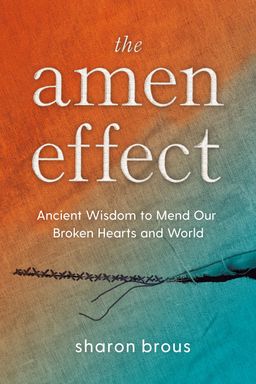
The Amen Effect: Healing Through Sacred Connection
Have you ever felt the ache of loneliness—the longing for someone simply to see you, to stand beside you in joy or grief? In The Amen Effect, Rabbi Sharon Brous argues that human beings are fundamentally relational creatures. We are wired not only to love, but also to be witnessed in our pain and wonder. Her central claim: the remedy to our fractured, polarized, and lonely world lies in rediscovering sacred connection—the act of saying “Amen” to one another’s lives with our presence, our empathy, and our courage.
What the Amen Effect Means
At its core, the Amen Effect is an ancient spiritual practice reframed for modern times. “Amen,” from the Hebrew word emunah (trust or faith), embodies not passive agreement but an active affirmation of another person’s reality. When you say “Amen” to someone’s grief or joy, you’re communicating, “I see you. I believe you. You are not alone.” Brous uses this archetype to describe a broader way of being—a moral and emotional posture of showing up for one another even when we don’t have the right words or solutions.
Drawing on Jewish tradition, psychology, and lived experience, Brous contends that reclaiming connection must become a spiritual and social mandate. Through encounters in her community, IKAR in Los Angeles, she has seen how presence transforms despair into healing. Whether it’s standing beside mourners at a graveside or celebrating milestones together, community becomes sacred precisely because it allows people to hold one another through life’s unpredictable mix of sorrow and sweetness.
Why Sacred Companionship Matters
Brous opens with a vivid parable: a lost child in a forest who meets another lost child. Their salvation isn’t in one finding the way out—it’s in taking each other’s hand and journeying together. This image encapsulates her ministry and the thesis of this book: our brokenness becomes bearable only when shared. Over twenty years of pastoral work, she realized that presence in both crisis and everyday life—hospital bedside, protest lines, weddings, grief counseling—is what sustains the human spirit.
She argues that we’ve built institutions obsessed with perfection and success, but in doing so, we’ve neglected the ordinary power of showing up. Communities thrive not because of charisma or ceremony but because of consistent compassion. For Brous, faith is not certainty—it’s courage in uncertainty, refusing to detach when the world feels too painful.
The Ancient Roots of Human Connection
Brous grounds her vision in a striking text from the Mishnah, a third-century rabbinic teaching about ancient pilgrims to Jerusalem. The text describes crowds moving clockwise around the Temple Courtyard, but those grieving or suffering were instructed to walk in the opposite direction. Every passerby would stop and ask, “What happened to you?” and offer the blessing, “May the One who dwells in this house comfort you.” Through this ritual of turning toward suffering—literally walking against the current—ancient Judaism made compassion a communal discipline. This is the original Amen Effect: to face, not flee, another’s pain.
In this practice, the brokenhearted were not marginalized but honored. Suffering became visible, and empathy became liturgy. Brous interprets this as psychological and spiritual wisdom: healing begins when we’re recognized. It’s a lesson for a world that renders pain private and hides vulnerability behind curated screens.
Why Our Age Needs This Message
The author situates her argument within the modern challenges of loneliness, disconnection, and polarization. The “epidemic of isolation,” as described by U.S. Surgeon General Vivek Murthy (see Together), has left people feeling unseen and unsafe. Brous believes this crisis is not only psychological but also spiritual—the plague of disconnection is a modern “plague of darkness” where people can no longer see one another. Her aim is to reawaken communal empathy through ritual, story, and moral imagination.
From the founding of IKAR—a space for justice, joy, and radical community—to her interactions with people facing loss and renewal, Brous illustrates how sacred encounter changes lives. She contrasts religion “that is deadly” with religion “already dead,” urging us to build spiritual spaces that are both morally courageous and spiritually alive.
Where the Book Will Take You
Over eight chapters and a final practice section, Brous invites you to learn how showing up, holding on, seeing no stranger, coming alive, grieving and living, holding the healers, bearing with-ness, and cultivating wonder can transform you and your community. Each chapter blends ancient Jewish insight and modern science—from neuroscience’s mirror neurons to Brené Brown’s research on vulnerability and belonging.
Ultimately, Brous calls you to reimagine connection as a revolutionary act: to acknowledge the fragility of life, to open your heart in dark times, and to say “Amen” to the sacred stories that unite us. By practicing compassion and curiosity, she believes we can mend not only our personal relationships but also the torn fabric of our society. The Amen Effect is not a lament—it’s a manifesto of hope for how human presence can heal a wounded world.