
Idea 1
Cooking as Memory and Identity
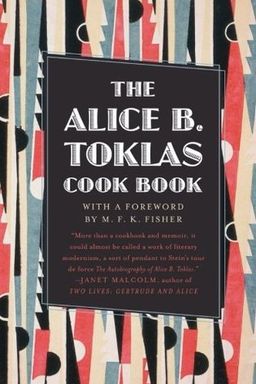
How do recipes become stories and storytelling become nourishment? In The Alice B. Toklas Cook Book, Alice B. Toklas presents a work that transcends cuisine—it is a memoir told through food. Written as she recovered from illness, the book became both a therapeutic exercise and a record of the life she shared with Gertrude Stein and their artistic circle in Paris. You are invited not merely to follow recipes but to journey through decades of taste, history and creative camaraderie.
More than a cookbook: a portrait of life through the kitchen
The book began pragmatically—as a means for Toklas, then living in postwar France, to qualify for American commissary privileges—but evolved into something far richer. Her sentences blur culinary method and memory, mixing recipes with anecdotes about Picasso, Picabia, and Matisse. In her Rue de Fleurus kitchen, art and food were intertwined; cooking served as social language among avant-garde peers. (In contrast to Stein’s Autobiography of Alice B. Toklas, this cookbook recovers Toklas’s own voice—the domestic complement to Stein’s literary public self.)
Toklas’s hybrid composition—half culinary guide, half memoir—creates a rhythm between the practical and the poetic. You encounter mischievous chapter titles like “Murder in the Kitchen” and tiny sensory descriptions such as custards having “the colour of their flavour.” These phrases mark her lyrical wit and reveal how intimacy and appetite run together: to cook is to remember.
Food as historical record and social document
Toklas’s recipes map an era shaped by cultural exchange, war and friendship. You learn how French culinary principles—respect for ingredients, balance, and sauce technique—became the backbone of her formulations. Her Boeuf Bourguignon or Quenelles are less recipes than lessons in craft: an ethic of precision and restraint. The book also testifies to wartime resilience: preserved hams, ration improvisations, black-market exchanges. “Murder in the Kitchen” reads as metaphor for survival—a moral calculus of feeding others when resources vanish.
Even domestic scenes convey social commentary. Chapters like “Servants and Kitchens” record how French household structures defined culinary labour—how cooks, maids and concierges embodied the values of professionalism, pride and creativity. Toklas’s storytelling restores dignity to those figures, from Maria Lasgourges’s comic Christmas crawfish to Hélène’s minimalist menus. You realize that the cuisine she loved depended on the hands and temperaments of invisible artisans.
Cooking as connection—across cultures and friendships
The later chapters widen this private focus into global movement. “Beautiful Soup” traces gazpacho’s migrations from Spain to Poland to Turkey, revealing recipes as cultural travellers. “Indo‑Chinese and International Cooks” celebrates Trac and Nguyen, whose intuitive cooking styles brought Asian balance and improvisation to Parisian households. Toklas teaches you that food respects no borders—it moves through trade, colonization, friendship and creativity. (The inclusion of Brion Gysin’s infamous Haschich Fudge shows another frontier—the libertine and experimental spirit of postwar salons.)
Memory and place: gardens, seasons, preservation
Toklas ends her journey in the Bilignin gardens, where seasonality becomes philosophy. You feel her joy in cultivating soil, preserving fruits, and respecting local lore—the same mindfulness that structures her recipes. Gardening, for her, is culinary meditation; harvesting strawberries or storing tomatoes is not domestic labour but artful continuation of taste and selfhood. She demonstrates how food anchors identity even in exile or old age: through recollection, innovation and sensory care.
A guiding insight
Toklas’s cookbook teaches that to cook is to remember—and that recipes are the architecture of lived experience, capable of preserving love, survival and aesthetic joy in a single dish.
Ultimately, The Alice B. Toklas Cook Book is not about executing instructions; it is about cultivating taste as culture. You learn that sauces, hospitality and preservation techniques are expressions of ethics and memory. Through its blend of anecdote and artistry, Toklas gives you more than recipes—she offers a way to see the kitchen as life’s most eloquent archive.