
Idea 1
The Algebra of Happiness: Success, Love, Meaning, and Mortality
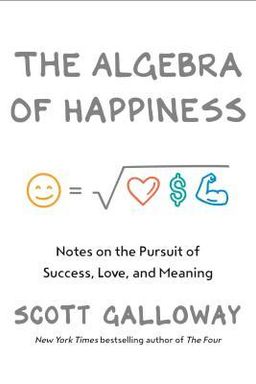
What really makes life meaningful—is it wealth, fame, or simply loving well? In The Algebra of Happiness, Scott Galloway, a business professor and serial entrepreneur, transforms his wildly popular NYU lecture on success and fulfillment into a deeply personal guide to living a life of substance. He argues that happiness is not something you find at the end of a career or a relationship, but something you can calculate each day through choices around work, love, relationships, health, and gratitude.
Galloway’s thesis is deceptively simple: there is a formula—a kind of algebra—for a well-lived life. The variables include ambition and risk, but also compassion, forgiveness, and service. Through candid stories of his own failures and triumphs as a businessman, father, and son, Galloway reveals that the pursuit of happiness often lies in what we subtract rather than what we add: less ego, less fear, and fewer unrealistic expectations.
Happiness as a Lifelong Equation
Galloway treats happiness like a math problem. Each stage of life has its own variables—the exuberance of youth, the ambition of midlife, and the gratitude of older age. Early adulthood (your twenties and thirties) is all about pouring energy into your career and building the foundation for financial stability; middle age is the grind of maintenance and stress; later years, ideally, unlock perspective and appreciation. If you feel anxious or unfulfilled now, that’s normal, he reassures—you’re simply in one part of the life equation.
Success vs. Meaning
The book’s core argument challenges what most business students (and professionals) believe: that success equals happiness. Galloway admits he spent decades chasing money and status only to discover that joy is not found in professional ‘wins’ but in connection. He reflects on his failed marriage, lost friends, and depression despite entrepreneurial triumphs to show that “more” isn’t always “better.” True success means waking up feeling useful and loved, not admired or envied.
The Three Pillars of a Fulfilling Life
1. Success and Economics: Work hard while you’re young, as the slope of your career trajectory is set early. Galloway warns against balance in your twenties—it’s a myth. You must hustle and sweat to gain skills and economic independence.
2. Love and Relationships: The most important decision isn’t where you work, but whom you choose to share your life with. Loving someone kind and competent creates exponential happiness—1 + 1 > 2.
3. Health and Mortality: Aging and death bring clarity. Caring for others—parents, children, partners—provides deep fulfillment. Physical strength and emotional resilience are forms of prosperity that last longer than wealth.
A Blueprint for Purpose
Throughout the book, Galloway weaves humor, data, and hard truths. He encourages practical investments: get an education, save early, find a partner who’s your teammate, and be generous. But equally, he urges you to remember mortality. Life’s algebra resolves with one outcome—relationships. Everything else is just coefficients in your personal equation.
“In the end,” Galloway writes, “relationships are all that matter.”
Across stories of entrepreneurial highs, fatherhood, loss, and aging, Galloway reminds you that happiness is earned through the interplay of effort and empathy. His algebra isn’t an abstract formula—it’s a lived practice, combining ambition with affection and courage with care. This book isn’t about choosing joy; it’s about calculating it every day by solving for what really counts.