
Idea 1
Reprogramming Your Mind: The 30-Day Path to Freedom from Alcohol
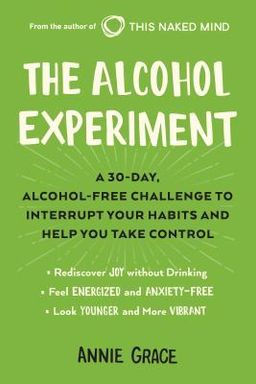
Have you ever wondered why you keep pouring a glass of wine after promising yourself you’ll stop? Or why your willpower melts the moment you walk past a bar? In The Alcohol Experiment: Expanded Edition, Annie Grace contends that your struggle with alcohol has less to do with weakness and everything to do with subconscious programming. She argues that by understanding your beliefs, emotions, and brain chemistry, you can end your reliance on alcohol—not by gritting your teeth, but by changing the way you think.
Grace’s central idea is revolutionary: alcohol isn’t merely a bad habit, it’s a culturally supported illusion. The key to freedom is not discipline, but awareness. Her 30-day experiment is designed to help you observe what alcohol really does to your body and mind, reshape the beliefs that keep you drinking, and discover how joyful, confident, and fulfilled life can feel alcohol-free. Unlike traditional recovery programs framed around addiction and shame, Grace invites you to explore your relationship with alcohol with curiosity, compassion, and data-driven insight.
The Root of the Struggle: Cognitive Dissonance
Grace explains that what keeps people trapped is cognitive dissonance—that uncomfortable mental tug-of-war between what you consciously want and what your subconscious believes. You may know that alcohol causes hangovers, anxiety, and regret, yet deep inside, your subconscious thinks it helps you relax, connect socially, or cope with stress. Each drink temporarily silences the conflict, but it reinforces the false belief that you need alcohol to feel better. The cycle continues until you consciously expose these beliefs, examine them, and choose something new.
The ACT Technique: Awareness, Clarity, Turnaround
To dismantle these subconscious beliefs, Grace introduces her ACT method, a cognitive and emotional reprogramming tool inspired by Byron Katie’s The Work and Dave Gray’s Liminal Thinking. The three stages are:
- Awareness: Identify the core belief driving your drinking (“Alcohol relaxes me”).
- Clarity: Investigate whether that belief is truly valid. Ask yourself how it feels, what evidence supports it, and what evidence disproves it.
- Turnaround: Flip the belief into its opposite (“Alcohol actually makes me more stressed”) and find as many truths to support that new statement as possible.
Once your conscious and subconscious minds agree, drinking loses its allure naturally. Grace calls this spontaneous sobriety—a state where you no longer crave alcohol because your brain finally sees it for what it is.
A Compassionate Experiment, Not a Punishment
What separates this program from most detoxes or abstinence challenges is its curiosity-driven mindset. Grace doesn’t demand perfection. If you drink on day five, you haven’t failed—you’ve simply collected more data about your triggers. Each lesson acts like a mirror, helping you observe what beliefs are working in the background. Many readers describe this process as both “science and soul”—a mix of neuroscience, emotional introspection, and self-forgiveness.
Science Meets Self-Awareness
Throughout the 30 days, Grace integrates brain science simply and elegantly. You learn how dopamine drives cravings, how cortisol (the stress hormone) spikes after alcohol wears off, and why sleep deprivation, irritability, and anxiety often worsen with drinking. She explains tolerance, the body’s chemical effort to maintain balance, which eventually makes alcohol feel less euphoric and more numbing. Understanding these processes helps you see that what you thought was an emotional weakness is actually a predictable neurochemical reaction.
Beyond Alcohol: A Mirror for Self-Discovery
Although the experiment focuses on alcohol, Grace insists this is really a journey into self-awareness. The lessons about self-talk, unmet emotional needs, and negative conditioning apply to nearly every habit that distracts us from discomfort—whether that’s scrolling social media, overeating, or overspending. Alcohol becomes a “lens” through which to study how human beings avoid pain, seek pleasure, and define freedom.
Hope and Human Stories
Interspersed with neuroscience and journaling prompts are dozens of reflections from ordinary people. A mother who stopped drinking because her daughter asked her to. A nurse who realized she’d been using wine to cope with night-shift stress. A widowed parent who chose life over numbness after losing her daughter to cancer. These testimonials make the book deeply human; they show that transformation is not only possible—it’s contagious.
Freedom, Not Forever Rules
Grace ends with her favorite phrase: “I drink as much as I want, whenever I want—and I just haven’t wanted to in years.” Her philosophy isn’t abstinence or moderation; it’s liberation. By replacing fear with understanding, deprivation with empowerment, and guilt with curiosity, you create a new relationship with alcohol—one where you choose clarity over coping. In short, The Alcohol Experiment invites you to find freedom not by fighting alcohol, but by reclaiming your mind.