
Idea 1
Following Your Personal Legend: The Journey to Meaning
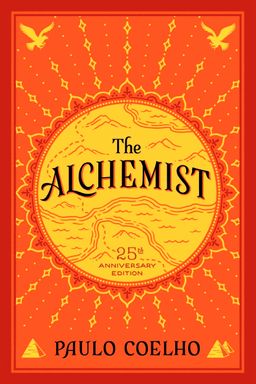
Have you ever wondered what your life might look like if you truly followed your dreams—if you took the risk to pursue something that felt destined for you? In The Alchemist, Paulo Coelho invites you to explore that very question through the journey of Santiago, a young shepherd who leaves everything familiar behind to chase a vision of treasure buried near the Egyptian pyramids. But what begins as a search for gold becomes something much richer: an exploration of purpose, faith, and the mysterious forces that guide us when we commit to our Personal Legend.
Coelho contends that every person is born with a unique destiny—a dream that reflects the deepest truth of who they are. Yet most people allow fear, habit, or what he calls “mysterious forces” to silence that calling. Through Santiago’s story, Coelho offers a modern fable that blends spirituality, adventure, and self-discovery, suggesting that the real treasure isn’t the destination itself, but the transformation that occurs on the way.
A Fable About Finding Purpose
At its heart, The Alchemist is a story of purpose. We meet Santiago as a simple shepherd, content but dreaming of a child who tells him to seek treasure in the desert. Choosing adventure over comfort, he embarks on a journey that mirrors the spiritual pilgrimage of anyone searching for meaning. Along the way, he meets mentors who teach him lessons about faith, persistence, and the nature of destiny—King Melchizedek, the crystal merchant, the Englishman, and finally, the Alchemist himself.
Each figure serves as an archetypal teacher, helping Santiago—and, by proxy, you—understand the essential wisdom that transformation requires change, risk, and often, loss. Like in The Odyssey or Hermann Hesse’s Siddhartha, Coelho uses travel as a metaphor for inner awakening. Santiago’s trek through the desert becomes an initiation into the art of seeing meaning everywhere, in what Coelho calls the “Language of the World.”
Faith, Fate, and Free Will
One of Coelho’s most enduring insights is that destiny and choice are not opposites but partners. The novel introduces the Arabic concept of Maktub—“it is written”—as a reminder that our path may be divinely scripted, yet it still demands our participation. Santiago learns that fate will only help those who act on their dreams. “When you want something, all the universe conspires to help you achieve it,” Melchizedek tells him, summarizing the book’s hopeful philosophy.
This notion challenges the modern tendency to view life as pure chance or fatalism. Coelho proposes instead that the universe speaks in omens and synchronicities (a concept borrowed from psychologist Carl Jung), but you must be awake enough to notice them. Santiago’s gift is his willingness to listen—to his heart, to the world, and to silence itself. That ability to pay attention is the essence of spiritual intelligence.
The Symbolism of Alchemy
Alchemy—the medieval art of turning base metals into gold—becomes a potent symbol in the story. Coelho uses it to describe the soul’s transformation. Just as alchemists sought physical gold, Santiago’s quest represents the transmutation of ordinary life into spiritual enlightenment. By learning to follow his heart and trust the process, he undergoes his own alchemical change, discovering that the treasure he sought was within him all along. The journey outward leads him inward.
Coelho’s use of religious and mystical imagery—an abandoned church with a sycamore tree, a desert that mirrors the soul’s vastness, and wise figures that echo prophets—gives the story mythic resonance. Yet he strips traditional faith of dogma, instead framing spirituality as a personal, experiential truth. Santiago doesn’t find truth in a temple or book; he finds it in the wind, the sand, and his own dreams.
Returning Home Changed
The novel’s circular structure—beginning and ending at the same church where Santiago first dreamed—reminds you that growth often leads back to the familiar, but with new eyes. The treasure was buried not far from where he started; everything he needed was with him all along. Still, he had to journey across the world to understand it. The lesson is clear: the purpose of the journey isn’t finding new landscapes, but discovering new depth within yourself.
“Where your treasure is, there also will be your heart.” Coelho’s refrain captures the essence of the book: when you have the courage to follow your calling, you align your heart with life’s greater flow, and the world, in turn, aligns with you.
In the pages that follow, you’ll explore the key teachings of The Alchemist: how to interpret signs, trust your instinct, seek transformation, embrace love without losing purpose, and ultimately, turn your everyday experience into gold. You’ll see how each step in Santiago’s journey reflects choices you face—between fear and faith, comfort and risk, routine and destiny. Coelho’s fable may be simple, but its message is timeless: to find your treasure, you must dare to dream, and to trust the dream enough to step into the unknown.