
Idea 1
Disrupting Hospitality: The Airbnb Revolution
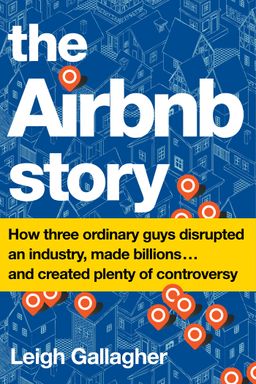
What happens when an unconventional idea—letting strangers sleep in your home—reshapes not only travel but also cities, politics, and our sense of belonging? Leigh Gallagher’s “The Airbnb Story” tells how a scrappy start-up created by three designers disrupted the global hospitality industry, surviving public outrage, political fights, and ethical crises while still trying to make the world feel smaller and more connected.
At its heart, Gallagher’s book isn’t just about business success. It’s about how Brian Chesky, Joe Gebbia, and Nathan Blecharczyk took a seemingly naive idea—renting air mattresses in a San Francisco apartment—and transformed it into a global platform that challenged what it means to trust strangers. The story embodies modern entrepreneurship, the rise of the sharing economy, and the messy collision between innovation and regulation. It explores how Airbnb’s ascent redefined housing, hospitality, and human relationships in a digital age.
The Core Argument: Technology Built on Trust
Gallagher argues that Airbnb’s success rests on one radical idea—technology can be used to restore something that modern life had lost: human connection. Airbnb emerged during the Great Recession, when financial desperation met growing digital comfort. Millennials needed money and affordable travel; cities had empty rooms. Airbnb combined all that into a sleek, human-centered platform blending trust, design, and storytelling. Chesky’s mantra was that “our product is real life,” a concept that turned hospitality from corporate efficiency into human exchange.
But as Gallagher quickly reveals, human nature isn’t always kind. When hosts faced vandalism, discrimination, and legal crackdowns, Airbnb had to wrestle with the dark side of its idealism. The company’s journey became a test of how far innovation can go before it collides with the world’s messy realities.
Design Thinking Meets Silicon Valley Growth
Unlike most tech giants born in code, Airbnb was conceived by designers who believed the look, feel, and emotional resonance of a product mattered more than algorithms. Their famous three-click booking rule mirrored Steve Jobs’s obsession with simplicity. Gallagher details how this “design DNA” turned a simple interface into an instrument of empathy: beautiful photos, personal profiles, and stories humanized the act of renting space. This design-first approach not only differentiated Airbnb from Craigslist and VRBO but also made users want to belong.
Yet growth soon meant scaling something deeply personal—a design and emotional experience—to millions. Gallagher frames this as Airbnb’s paradox: how to maintain “hostiness” and trust while achieving billion-dollar speed. This tension between intimacy and scale underlies every chapter, from the company’s reinvention after crises to its relentless expansion into experiences and political activism.
Innovation Meets Resistance
Gallagher situates Airbnb within a broader pattern of how innovation provokes institutional backlash. Like Uber or PayPal before it, Airbnb ran headlong into laws that weren’t built for digital-age sharing. The book’s dramatic middle chapters, especially “Air Rage,” describe brutal fights in New York and other cities where politicians, unions, and housing advocates saw the platform as a threat to affordable housing. Chesky learned that revolutionizing hospitality required mastering politics as well as product design. Gallagher paints him as an idealistic reformer learning the gritty realities of lobbying, compromise, and public image.
Belonging, Humanity, and the Dark Side
Beyond economics, Gallagher argues Airbnb tapped a psychological need—the yearning to belong. The “Belong Anywhere” campaign became Airbnb’s spiritual core, repositioning the brand as a social movement rather than a rental platform. But the book also exposes the company’s moral contradictions: guests assaulted by hosts, homes trashed by parties, and racial discrimination that clashed directly with its feel-good mission. Gallagher uses these crises to explore how ideals must evolve when scaled globally. She shows how Airbnb, while imperfect, kept trying to balance its utopian vision with hard reforms—insurance guarantees, safety systems, and anti-discrimination pledges guided by figures like former attorney general Eric Holder.
Why It Matters
Airbnb’s story illuminates how modern entrepreneurship blends technology, storytelling, and community into economic power. Gallagher’s accessible narrative lets you see how startup courage—creatively paying rent during a recession—turns into global influence. The lessons go far beyond hospitality: every disruptor must navigate trust, scale human experiences, and design with empathy. If you’re building something new, this book shows the power—and peril—of believing your product can change how people see each other.
Ultimately, Gallagher contends that Airbnb’s saga reflects our era’s biggest challenge: how to use technology not just to connect devices, but to connect people. The company may not have perfected belonging, but it proved that even in a cynical world, design and empathy can spark a global movement.