
Idea 1
Reason, Revelation, and the Moral Revolution of Faith
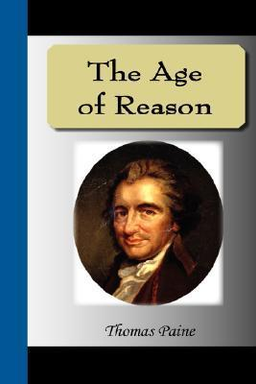
Thomas Paine’s The Age of Reason was written in confinement during one of the most dangerous moments of the French Revolution, yet its message speaks far beyond its era. Paine’s purpose is simple but revolutionary: to liberate religion from priestcraft, politics, and superstition, and to ground it in reason, morality, and the observation of nature. He declares belief in a single benevolent Creator but rejects all organized religions that claim divine authority through revelation or miracle. To him, you are endowed with reason to discern truth directly from the world, not through secondhand claims of inspiration.
A Crisis of Faith and Politics
Paine wrote Part I of his book in late 1793, finishing it only hours before being arrested and thrown into the Luxembourg prison. The turbulence of revolution—where monarchy and church were intertwined in oppression—made his argument urgent. He saw church power as the twin of political tyranny: both demanded obedience without evidence. This context shapes the book’s polemic edge and explains the intense prosecutions and censorship it provoked in England, where printers such as Thomas Williams were tried for simply selling copies.
Paine’s imprisonment also explains the roughness of the text—some sentences truncated, unrevised, and later mishandled by pirated editions. Figures like Joel Barlow and James Monroe helped publish and preserve the work, ensuring that Paine’s call for rational religion survived persecution. These publication battles became a microcosm of the struggle for freedom of thought itself.
From Creed to Conscience
At the book’s core lies Paine’s personal creed: belief in one God, reverence for his creation, and commitment to moral duty. He argues that religion’s essence is not belief in mysteries but the practice of justice, mercy, and benevolence. He calls sectarian creeds dangerous fictions that corrupt conscience and breed hypocrisy. The declaration “my own mind is my own church” captures his central claim: moral truth must be accessible to every individual without priestly mediation. This conviction echoes his Quaker upbringing, where the “inner light” of reason parallels divine guidance and affirms universal moral equality.
The Aim: True Religion Without Mystery
Throughout The Age of Reason, Paine works systematically to dismantle three illusions that sustain priestly power—mystery, miracle, and prophecy. These are, in his view, rhetorical tricks that suppress rational inquiry. He wants you to judge religion by the same standards as any truth-claim: evidence, internal consistency, and moral consequence. Revelation is valid only for the one who directly receives it; to everyone else, it is mere hearsay. Because sacred texts depend on transmission and translation, they cannot qualify as immutable divine communication.
Paine’s goal isn’t to destroy faith but to separate what is divinely real from what is humanly fabricated. He respects Jesus as a moral teacher but denounces the supernatural mythmaking that turned him into a deity. The same critical lens applies to prophets, visions, and sacred books: what begins as local poetry or coded political commentary becomes, over centuries, institutional dogma wielded for control.
Revelation Replaced by Creation
Paine’s alternative to revealed religion is what he calls the “Word of God” written in the universe. Creation itself, he says, “speaks an universal language.” Every person, regardless of nation or era, can read its divine order in the stars, the structure of matter, and the moral capacities of the human heart. Unlike scriptures subject to error or forgery, nature’s design is incorruptible and self-renewing. Studying the sciences—astronomy, mechanics, mathematics—becomes for him the truest theology, a pursuit that unites knowledge and reverence rather than separating them.
(Note: This natural theology anticipates later thought by Enlightenment deists and humanists like Jefferson and Voltaire, but Paine’s emphasis on observation and moral imitation of God’s beneficence makes his version deeply ethical, not merely intellectual.)
Morality and Human Freedom
The practical outcome of Paine’s reasoning is moral independence. If the world itself reveals divine law, then your religious duty becomes moral action—doing justice and extending happiness. Clerical systems that preach fear or impose authority over conscience violate that duty. His appeal is both spiritual and civic: a republic of reason requires citizens whose minds are free from superstition. Thus, the defense of free inquiry and the critique of biblical authority merge into a single project—the moral liberation of humankind.
A Book That Cost Its Author Freedom
By the time of his release in November 1794, Paine had nearly died in prison, yet the book survived to ignite global debates about religion, education, and liberty. It became a weapon against censorship and a manifesto for secular ethics. From the prosecutions in London to the freethinking presses of America, The Age of Reason inspired both outrage and admiration. Its legacy is a new expectation of religion: that it must justify itself to reason and morality, not the other way around. That expectation still defines modern debates about faith today.