
Idea 1
Living in the Age of Grievance
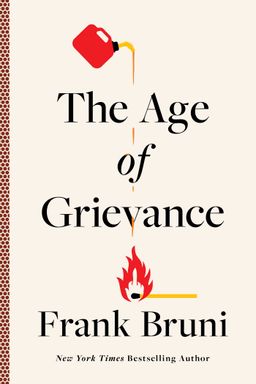
When was the last time you felt more aggrieved than persuaded—more eager to point a finger than to solve a problem? In The Age of Grievance, Frank Bruni argues that modern American life has been captured by a powerful, bipartisan temptation: framing disappointments as injuries and politics as a contest of victims. He contends that grievance—once the moral spark for reform—has metastasized into a lifestyle and a business model, distorting our media, corroding our institutions, and turning neighbors into enemies. It fuels the dopamine of constant outrage while starving the civic muscles required for compromise, curiosity, and repair.
Bruni doesn’t claim grievance is inherently bad. America was born of it, and the First Amendment protects petitions for redress. But in a nation awash with performative slights and algorithmically amplified fury, authentic wrongs are flattened into a never-ending “oppression Olympics.” The result is a culture adept at blame and brittle about responsibility—one in which we swap motion for commotion and mistake catharsis for change. (Compare David French’s Divided We Fall and Ezra Klein’s Why We’re Polarized for converging diagnoses.)
What Bruni Argues
Bruni’s core claim is twofold. First, grievance has become the organizing emotion of our politics, supercharged by media incentives (from Fox News to Twitter/X) and by structural trends (rising inequality, social isolation, and institutional distrust). Second, this grievance regime is dangerous: it rewards demagoguery, normalizes political violence, and makes pluralistic self-government feel impossible. The very habits that could save us—intellectual humility, institutional rebuilding, and cross-cutting civic ties—are precisely what grievance discourages.
Why This Matters Now
This book lands in an era of doomscrolling, “rage clicks,” and rising threats against public officials. Bruni shows how Donald Trump perfected a politics of aggrieved omnipotence (“I alone can fix it”)—a paradox he calls “grudge made flesh.” But he also looks left, chronicling moments when virtue curdles into performative fragility: Jane Campion’s tone-deaf awards speech, Will Smith’s self-justifying Oscars outburst, ill-conceived language policing (like redefining “lesbian” as “non-man”), and campus meltdowns that punish curiosity as heresy. You see how easily the language of justice becomes a cudgel and how quickly “calling out” turns to public excommunication. (For a parallel critique from the academy, see John McWhorter’s Woke Racism.)
How We Got Here
Bruni traces grievance’s recent acceleration to three intertwined engines. First, media economics reward extremity. Dominion’s defamation settlement exposed how election fantasies kept Fox viewers outraged; meanwhile, social platforms supercharge content that evokes “anger” and “wow.” (Max Fisher’s The Chaos Machine details how these algorithms rewrite our brains.) Second, a fog of national pessimism has settled in—about inequality, social mobility, and American exceptionalism. Drawing on Pew, Gallup, and Raj Chetty’s work, Bruni shows how belief in better tomorrows has waned as people feel sorted, surveilled, and priced apart in everyday life (airport security tiers, Disney’s Lightning Lanes, even Ironman’s “Executive Challenge”). Third, grievance is adhesive: it escalates; it spreads organizationally and emotionally; and it privileges purity tests over persuasion. That’s how we get school-board bomb threats, performative congressional brawls, and “weaponization” panels that chase specters while real oversight withers.
What You’ll Learn in This Summary
You’ll see the anatomy of grievance and how it operates on both right and left—with specific stories: Fox’s baby-formula panic, J. D. Vance’s fentanyl conspiracy framing, the Covington Catholic rush to judgment, and university cases (Hamline’s Prophet Muhammad painting and Johns Hopkins’s “non-man” kerfuffle) where institutional overreaction backfired. You’ll map the deeper forces—platform incentives, elite-driven inequality, and declining civic infrastructure—that make grievance so sticky. And you’ll encounter the tipping point from grievance to violence: January 6, threats against judges, domestic-terror incidents linked to Great Replacement rhetoric, and the mainstreaming of “retribution” talk.
A Sounding Board, Not a Screed
Bruni doesn’t scold from a distance. He writes as a participant-observer: a journalist who covered grievance’s rise, a patient who refused to organize his life around self-pity after losing vision in one eye, and a teacher trying to model curiosity over certainty. His remedy is practical and principled: reduce distance (physical, social, digital); rebuild institutional guardrails; reward good conflict over high conflict (see Amanda Ripley’s High Conflict); teach media literacy and civics as obligations, not just rights (Richard Haass’s The Bill of Obligations); reform primaries and gerrymanders; re-tether opportunity to work and skill (Pennsylvania’s degree-requirement rollback); and embrace humility as a civic virtue (Jonathan Rauch’s “fallibilism” in The Constitution of Knowledge).
This matters to you because grievance is viral. It shapes the feeds you scroll, the words your kids learn, the lines you stand in, the bosses you work for, and the senators who set the rules of your life. If you’ve ever wondered why public debate feels like a shouting match with moving goalposts, Bruni’s answer is sobering: too many of us are chasing the short, sweet hit of righteousness instead of the slow work of repair. This summary offers a map out—less a kumbaya than a rigorous toolkit for resisting the seductions of resentment and choosing the harder path of rebuilding together.