
Idea 1
Empathy as the Engine of Social Life
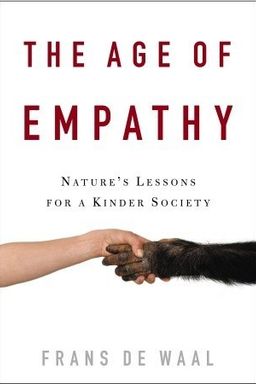
What if evolution’s most powerful invention wasn’t competition, but compassion? Frans de Waal challenges the story you may have been told — that survival hinges on selfish struggle. In his comparative research across primates and other animals, de Waal argues that empathy and cooperation are as deeply rooted in our biology as aggression and rivalry. Rather than painting nature as a brutal marketplace, he reveals it as a social network bound by care, fairness, and trust.
Rethinking evolution’s moral message
You’re accustomed to hearing that natural selection rewards ruthless advantage. But de Waal draws on evidence from field and laboratory studies to show that empathy, reconciliation, and fairness regularly emerge wherever animals depend on one another. From chimpanzees who console distressed peers to elephants mourning a dead herd member, he demonstrates that the social glue of empathy precedes morality and culture. Evolution, he says, armed us not only with fangs and competitive drive, but with emotional circuitry that makes group life sustainable.
He contrasts this view with the ideological legacy of Social Darwinism. Thinkers like Herbert Spencer or executives inspired by the “selfish gene” metaphor often used biology to justify corporate or political cruelty. De Waal warns that such readings commit the naturalistic fallacy — confusing what nature is with what society ought to be. Understanding our empathic roots allows you to design institutions that reflect the full range of human motivation, balancing incentive with belonging.
Evidence written in fur, feathers, and flesh
De Waal’s argument rests on decades of meticulous observation. In Taï National Park, chimpanzees slow their travel to aid injured companions; at Yerkes Primate Center, colony members share food and reconcile after fights. Jessica Flack’s “knockout” experiment with macaques showed how the removal of peacekeeping males quickly frayed social order, proving that cooperation requires both empathy and enforcement. Such cases build a biological foundation for morality rather than reducing it to human invention.
Empathy’s reach extends even farther: mice infected by a cagemate’s pain, dolphins synchronizing behavior to comfort allies, or elephants working together to rescue a drowning calf. These examples bridge species lines, showing that fairness, sympathy, and trust have independent evolutionary origins wherever social interdependence exists.
Layers and limits
De Waal’s “Russian-doll” model clarifies that empathy isn’t a single feeling but a set of nested processes. At its core lies bodily contagion — the automatic mirroring of emotion through facial muscles and nervous-system synchrony. Around that core evolve higher layers: concern for another’s welfare, perspective-taking, and eventually moral reasoning. This structure appears not only in development (as infants grow into moral agents) but in phylogeny (as species evolve richer social cognition). Yet empathy has sharp edges. It’s often biased toward kin and allies, and can invert into cruelty when tribal boundaries harden. Recognizing these limits is essential for applying empathy wisely in law, policy, and culture.
What you should take away
Empathy is not sentimental decoration. It’s an evolved strategy for survival in groups — a biological design for managing risk, forging trust, and distributing resources fairly. If you accept evolution’s broader story, you must also accept that humans are as wired for kindness as for competition. The right question isn’t whether empathy is natural, but how societies can nurture it. De Waal calls this the real lesson of evolution: you thrive best not by outcompeting everyone else, but by learning how to live well together.