
Idea 1
Decentralizing Trust and Rewriting Money
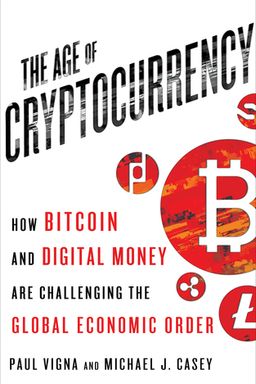
How can you trust a currency when you no longer trust the institutions behind it? In The Age of Cryptocurrency, Paul Vigna and Michael Casey argue that our financial system runs on layers of mediated trust—banks, governments, and clearinghouses—that both grease the wheels of commerce and expose us to failure. Bitcoin emerges as a radical proposition: to replace institutional trust with mathematical verification, to decentralize not just money but the architecture of confidence itself.
The book traces how bitcoin’s invention sits at the intersection of technology, history, and politics. From Mesopotamian ledgers to the 2008 crisis, every monetary era has balanced two forces—trust and control. Bitcoin reshuffles that equation. It turns code into law, enabling strangers to transact without intermediaries, anchoring value to open consensus rather than decree.
From Crisis to Code
Vigna and Casey open with a problem familiar to anyone watching modern finance: when centralized trust collapses, chaos follows. Argentina’s bank freezes and America’s 2008 bailouts revealed how the public’s savings and faith rest on frail political scaffolding. For people like journalist Michael Casey, who lived through capital controls in Buenos Aires, this fragility was personal. Bitcoin was born as an antidote—Satoshi Nakamoto’s eight-page white paper appeared mere weeks after the peak of the financial meltdown, a proposal for “peer-to-peer electronic cash” that could outlast institutional betrayal.
The Historical Arc: From Ledgers to Blockchains
The authors remind you that money’s story is really a story of ledgers. Ancient scribes etched obligations in clay; Renaissance bankers recorded bills of exchange; central banks managed global clearinghouses. Each step created new power centers. Bitcoin’s blockchain flips that logic by distributing the ledger to thousands of nodes. Instead of a trusted middleman reconciling accounts, you let the network itself verify every transaction.
The mechanism is elegantly simple: miners compete to seal transaction blocks using proof-of-work, converting computational labor into economic security. The system rewards honesty because falsifying history would require controlling most of the world’s computing power. Trust moves from human institutions to cryptography. For the first time, value can move online like email—without needing someone to approve the send button.
Currency and Protocol
To grasp bitcoin’s double nature, you must split it in two. bitcoin (lowercase) is the volatile digital asset that speculators trade; Bitcoin (uppercase) is the underlying open-source protocol that powers the global ledger. Evaluate only the first and you fixate on price charts; study the second and you start seeing a potential operating system for trust itself—one that could support financial contracts, ID systems, and governance models.
But even here lies tension. As a currency, bitcoin struggles with volatility and limited merchant use. As a protocol, it sparks experiments well beyond finance, from land registries to smart contracts. Its genius is architectural: it lets developers imagine decentralized systems that can outlive their founders.
Power, Politics, and the Stakes of Decentralization
Cryptocurrency is not politically neutral. If you cut out banks, you cut out fee collectors, regulators, and economic gatekeepers. Bitcoin thus represents a redistribution of power—away from centralized rent-seekers and toward users who verify by code. A story like Parisa Ahmadi’s in Afghanistan makes this concrete: paid in bitcoin for her online writing, she could receive income without a male intermediary or local bank, achieving financial autonomy unimaginable under traditional finance.
Yet disruption invites resistance. Governments draft “BitLicenses”; the IRS categorizes bitcoin as property; lobbyists push to preserve control. The book argues that each regulatory skirmish reveals a broader battle: whether digital trust will be a public utility shaped by open protocols or an innovation absorbed into legacy financial power.
The Vision and Its Contradictions
The authors never romanticize bitcoin as pure utopia. They see both the liberation and the limits. Mining centralizes; volatility discourages commerce; human error recurs. But they also show how this decentralized infrastructure might be the most ambitious social experiment since the invention of the internet. It challenges not just banks but the very notion that trust must be vertical, instituted rather than mutual.
Core idea
Bitcoin’s deeper message is that trust can be rewritten—not by eliminating it, but by decentralizing it. You no longer ask a bank to vouch for a payment; you verify it through transparent consensus.
In short, Vigna and Casey invite you to read the cryptocurrency revolution as more than a financial fad. It is a redesign of trust itself—a clash between institutional authority and mathematical assurance, between centuries of central control and a future of distributed confidence.