
Idea 1
Escaping the Advice Trap and Leading with Curiosity
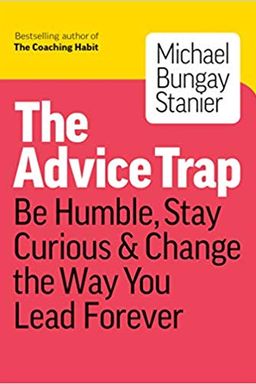
Ever find yourself in a conversation where you’re halfway through solving someone’s problem—before realizing they never asked you to? That instinct to jump in with guidance or solutions, however well-intentioned, is what Michael Bungay Stanier calls your “Advice Monster.” In his book, The Advice Trap: Be Humble, Stay Curious & Change the Way You Lead Forever, he challenges readers to rethink leadership entirely. The central claim is disarmingly simple yet radical: the best leaders don’t give more advice—they ask better questions. The path to unlocking better results and stronger teams lies in curiosity, humility, and presence, not control or constant direction.
Building on his bestseller The Coaching Habit, Bungay Stanier dives deeper into the surprisingly difficult task of being more coach-like. He argues that taming your Advice Monster—this inner compulsion to tell, save, and control—is the key to unlocking the next level of personal and organizational growth. But it’s not easy. This is a book about Hard Change, the kind of transformation that rewires your identity, not just your daily behavior.
Why We Can’t Stop Giving Advice
We give advice because it feels good. It reassures us that we’re valuable, useful, even indispensable. But Bungay Stanier argues that behind this lies an insidious assumption: we think we’re better than the other person. The Advice Monster has three main personas that thrive on this belief:
- Tell-It believes your worth depends on having the right answer.
- Save-It is convinced that if you don’t step in, everything will fall apart.
- Control-It insists that staying in charge is the only way to prevent chaos.
Each variant convinces you that giving advice equals success and that curiosity is weakness. The result? You overload yourself, disempower others, and entrench dysfunctional patterns in organizations. People become dependent on you rather than empowered by you. Teams stagnate, and creativity dies in the shadow of your expertise.
From Easy Change to Hard Change
The leap from advice-giver to coach-like leader seems simple in theory—ask more questions and talk less. But Bungay Stanier draws a crucial distinction between what he calls Easy Change and Hard Change. Easy Change is what happens when you upgrade your phone or learn a new procedure: the old system stays, and you just bolt something on. Hard Change, by contrast, involves rewriting your mental operating system—it’s transforming who you are, not just what you do.
This is where the dichotomy of Present You vs. Future You comes in. Present You wants instant gratification, validation, and control—the sweet hit of giving an answer now. Future You is patient, humble, and willing to invest in others’ autonomy. Choosing curiosity means disappointing Present You in favor of building a better Future You. It demands embracing discomfort and giving up short-term wins to gain long-term growth—for yourself and your team.
How to Tame the Advice Monster
Bungay Stanier proposes a four-step process to start shifting these deep behavioral grooves:
- 1. Identify triggers: Recognize who or what brings out your inner know-it-all. Maybe it’s your boss, your team, or your partner.
- 2. Confess your patterns: Name what happens when the Monster takes over—interrupting, overexplaining, rescuing others.
- 3. Weigh prizes and punishments: Understand the short-term wins and long-term costs of this habit.
- 4. Commit to Future You: Define who you want to be instead—the leader who empowers, not overpowers.
Each step helps uncover the unconscious bargains you’ve been making with yourself—small emotional #WinsNotWins that feel good now but sabotage long-term growth. Overcoming them isn’t about eliminating the Advice Monster altogether (it’s part of being human), but taming it so you lead from curiosity rather than command.
A Simpler Way to Lead
The second half of the book is a practical guide to this transformation. Bungay Stanier reintroduces his famous seven coaching questions, from the Kickstart Question (“What’s on your mind?”) to the Learning Question (“What was most useful here for you?”), backed by neuroscience, behavioral economics, and organizational psychology. He builds new habits around these tools—what he calls “staying curious longer”—to reduce overwhelm, increase team ownership, and spark innovation.
Leadership rooted in curiosity isn’t soft or hands-off. It’s actually the harder, braver path. It means embracing empathy (seeing reality from others’ perspective), mindfulness (choosing how you respond rather than reacting automatically), and humility (acknowledging your limits). These aren’t just virtues; they’re tactical advantages in a fast-changing world.
Core Message
The goal isn’t to never give advice—it’s to stop doing it automatically. When you stay curious a little longer and rush to action a little slower, you empower people to think for themselves. That’s how you change not just your leadership, but your culture, your relationships, and even your sense of self.
Ultimately, The Advice Trap isn’t another leadership manual—it’s a mirror. It invites you to notice how much your habits of telling, saving, and controlling cost you. By practicing curiosity, you can work less hard and have more impact. As Bungay Stanier puts it, it’s time to trade the comfort of always being right for the freedom of being curious.