
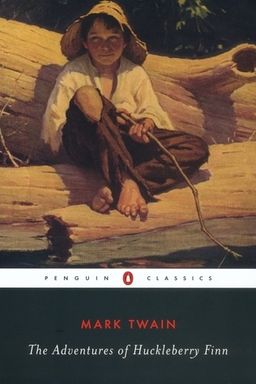
The Adventures of Huckleberry Finn cover

The Adventures of Huckleberry Finn

by Mark Twain

The Adventures of Huckleberry Finn by Mark Twain is a groundbreaking exploration of freedom and moral growth. Following Huck''s escape from an abusive father and Jim''s quest for liberation, the novel critiques societal norms through a vivid narrative that remains relevant today.

Freedom, Morality, and the Making of a Conscience

How can a person discover moral freedom when every institution insists on obedience? In The Adventures of Huckleberry Finn, Mark Twain argues that conscience and freedom grow through experience, not inheritance. The novel follows Huck—an uneducated boy adrift in a world of hypocrisy—and shows how his encounters with religion, violence, deceit, and friendship form a living moral education. Twain’s point is provocative: true civilization cannot be imposed; it must be discovered through action, trial, and empathy.

Civilization, Constraint, and the Hunger for Freedom

At the start, you meet Huck in conflict. Widow Douglas and Miss Watson attempt to "sivilize" him with new clothes, school lessons, prayer, and rules. Civilization here means control: bells for supper, rituals for grace, and money placed under guardianship with Judge Thatcher. Huck chafes under their attention because order feels like captivity. Twain uses this scene to personify the central tension—society’s discipline versus nature’s flux. Huck’s rebellion against clothes and spelling lessons isn’t mere childishness; it is a rejection of moral forms that feel hollow and coercive.

The river, by contrast, becomes a living metaphor for self-direction. Huck’s later flight down the Mississippi isn’t just an escape from his father or the Widow—it’s an escape from artificial order into the possibility of defining morality on his own terms.

From Play to Experience: Tom Sawyer’s Bookish Morality

When you look at Tom Sawyer’s influence, you see another kind of constraint—this time born of imagination. Tom rules his gang with oaths based on pirate novels and bandit tales, demanding rituals of blood and vengeance. His fantasy world, all script and ceremony, contrasts sharply with Huck’s unprinted realism. Huck initially admires Tom’s daring but gradually learns to distrust the romance that confuses literature with life. This disillusionment—realizing that no genies will rise from tin lamps—marks his first step toward independent moral reasoning.

Escape and Ethical Awakening

The arrival of Pap Finn forces Huck’s practical and emotional intelligence to the forefront. Pap’s violence turns the moral language of civilization inside out: he rails at schooling and equality, preaches racism and self-pity, and uses religion as justification for cruelty. When Huck fakes his own death with animal blood and flees to Jackson’s Island, he literally stages his rebirth. Twain makes the violence visceral—showing how fear sharpens ingenuity—and transforms the escape into a symbolic act of self-authorship.

Jim and the Humanization of Freedom

Huck’s partnership with Jim, Miss Watson’s enslaved man, introduces moral complexity. Jim’s flight is practical and familial—he runs to avoid being sold further South—but it is also a declaration of personhood. On the raft, separated from societal noise, the two build a fragile democracy of mutual care. Jim’s superstition—his hair-ball oracle, his talk of signs and dreams—offers both humor and cultural depth. His loyalty gives moral meaning to freedom. Through Jim, Huck learns that affection and respect can override the “laws” that call his friend property.

Moral Growth Along the River

Each episode deepens Huck’s moral development. He rescues criminals from a wreck out of pity, lies to protect Jim near Cairo, and gradually realizes that empathy can outweigh legality. When Huck declares that he’ll "go to hell" rather than betray Jim (later in the novel), it synthesizes everything: he has translated moral feeling into action, even if it defies his culture’s concept of virtue. The journey on the river thus mirrors his inward voyage toward ethical maturity.

Society as Performance and Hypocrisy

Twain broadens this moral critique through figures like the Grangerfords and the con men Duke and Dauphin. Southern gentility hides murder; frontier religion hides gullibility; mob justice hides cowardice. The Grangerford feud bathes manners in blood, showing civilization’s veneer; the Duke and Dauphin invent noble titles to defraud the poor, exposing social greed. Even the mob that tries to lynch Sherburn turns out to be theater—brave only under collective anonymity. Civilization, Twain suggests, is another costume party: hollow ceremony masking moral confusion.

The Core Message

By taking you down the river, Twain invites you to see moral growth not as education or etiquette but as awakening. Huck’s conscience evolves through contradiction, mistake, and empathy. In a way, each episode rewrites civilization’s promises: freedom is not isolation but ethical companionship; religion is not dogma but compassion; morality is not rules but response to another’s humanity. (In this sense, Twain anticipates modernist moral philosophy that values individual perception over prescriptive virtue.) Through Huck and Jim, you encounter a moral revolution staged on a raft—a floating republic of two souls against the world.


Civilization and Its Discontents

Civilization in Twain’s world means refinement, property, and control—but it often breeds hypocrisy. Through the Widow Douglas, Miss Watson, and later the genteel Grangerfords, you see systems built on good manners and bad faith. The Widow’s bell and grace prayers are meant to uplift Huck; they instead restrict his spirit. Miss Watson’s sermons about the "good place" and "bad place" teach fear more than love. Civilization, then, becomes a form of moral colonization.

Symbols of Confinement

Twain reinforces confinement through everyday symbols: new clothes that make Huck "sweat," schoolbooks that feel like shackles, and money turned into bank interest under an adult’s control. These details expose how progress and possession can imprison. The contrast between the Widow’s polished table and Huck’s comfort in a hogshead dramatizes two moral temperatures—one governed by decorum, the other by instinct.

Genteel Violence and Moral Blindness

The Grangerford episode pushes this critique to its peak. You see a family surrounded by books, paintings, and sentimental art, yet trapped in an absurd blood feud. They pray for love on Sunday and kill neighbors by Monday. The tragedy of Buck’s death, framed against Emmeline’s tragic scrapbooks, shows how art and piety can coexist with cruelty when reflection is absent. Civilization without empathy, Twain implies, is simply barbarity in good clothes.

Key idea

Through irony and satire, Twain reveals that social virtue can conceal moral emptiness. Civilization must answer not to manners but to mercy.

As Huck drifts further from these social spaces, he drifts closer to moral clarity. The raft becomes the only place where civility matches sincerity—a small democracy afloat amid a corrupt nation.


Violence, Hypocrisy, and Survival

When Pap Finn returns, Twain exposes how paternal authority can turn uglier than the superstition of any child. Pap drinks, rants about government, and rails against equality while beating Huck. His speech about a free Black voter in Ohio reveals the violent racism beneath American liberty. Even the new judge’s attempt to reform Pap through prayer and patience fails spectacularly. Civilization’s institutions—law, religion, family—stand powerless in the face of individual corruption.

The Art of Escape

Huck’s response is resourcefulness. Trapped in a cabin and surrounded by menace, he crafts a phony murder scene using pig’s blood. The plan is both grotesque and brilliant, showing childlike imagination fused with adult desperation. His fake death severs every institutional tie: no more father, no more guardianship, no more rules. Twain balances horror and liberation in the same breath—a survival act that also symbolizes creative authorship. Huck writes his own exit story.

Insight

Freedom in this novel is never pure or simple—it costs blood, loneliness, and deception. Yet it produces moral clarity by forcing characters to rely on ingenuity rather than status.

When Huck lands on Jackson’s Island, he enters a liminal world—neither child nor adult, neither captive nor free. There he meets Jim, and the novel’s true moral education begins.


Jim and the Ethics of Companionship

Jim’s character enlarges the novel’s emotional world. As Miss Watson’s enslaved man turned fugitive, he brings both vulnerability and grace. You see him navigate fear, family longing, and the need for survival. When Jim tells Huck that he ran away to avoid being sold south, his escape stops being a crime and becomes a quest for dignity. His humanity, expressed through humor, superstition, and quiet affection, challenges every racist idea embedded in Huck’s upbringing.

Folk Wisdom and Superstition

Jim’s superstitions—snake-skin omens, dream reading, hair-ball prophecy—appear quaint but reveal deep intelligence. They are survival codes passed through oral tradition. Twain uses these rituals to dignify folk belief as a form of psychological navigation. While Huck occasionally doubts or teases Jim, he also recognizes the wisdom hidden in these customs. On the raft, this belief system replaces formal religion with an ethic rooted in care.

Moral Education Through Relationship

Jim’s love for Huck—protecting him from trauma (such as covering Pap’s corpse), cooking food first, giving up his watch at night—teaches by example. Huck’s language shifts from racial bias to relational respect. Friendship becomes Huck’s new scripture. Through their partnership, Twain shows moral truth emerging not from sermons but from shared labor and listening.

Lesson

Ethics grounded in empathy transcends any law justified by status or scripture. Jim’s simple compassion accomplishes more than any theology in the novel.

By recognizing Jim’s equal humanity, Huck begins to liberate himself from inherited moral blindness. The river carries not just two travelers but the possibility of a more humane America.


Conscience in Conflict

Huck’s moral awakening occurs through conflict between law and love. You see this in the episodes of the wrecked steamboat and the near-Cairo decision. When Huck risks himself to save a doomed murderer, pity competes with fear—a rehearsal for larger decisions. Later, as Cairo nears and Jim’s freedom becomes tangible, Huck’s doubts intensify. He knows what society expects: to turn Jim in for reward money and moral approval. Yet his heart insists otherwise.

Choosing Wrong to Do Right

When challenged by slave-hunters, Huck lies—saying his companion is white—to save Jim. The action is small, but the guilt enormous. He worries that helping Jim will damn his soul. Twain makes that torment central: conscience doesn’t come cleanly; it must struggle. Moral growth unfolds as hesitation, panic, and self-reproach before clarity. (In this way, Twain resembles Dostoevsky’s interest in guilt as the crucible of selfhood.)

The Birth of Individual Ethics

Huck decides that friendship outweighs doctrine. The transformation begins privately and painfully: he stops measuring sin by others’ categories and begins measuring right by what preserves love. Twain thereby redefines conscience as internal, flexible, and experiential rather than imposed. This evolution turns Huck into one of literature’s earliest modern moral protagonists—a boy who acts first, reasons later, and discovers truth in feeling rather than law.

Core takeaway

Moral maturation lies in daring to reject cultural righteousness when it violates compassion. Huck’s struggle is the soul’s apprenticeship in freedom.

His conscience doesn’t harden into a rulebook—it remains alive, as shifting as the river that carries him onward.


Performance and the Masks of Society

When the Duke and Dauphin climb aboard the raft, they bring the novel’s satire to full theatrical bloom. Pretending to be European nobles, they manipulate audiences through pious speeches, Shakespearean farce, and fraudulent schemes. Their revivals, phoniness, and fake handbills reveal how easily people crave illusion. Twain uses them to indict performance culture—the way society rewards lies wrapped in ceremony.

Showmanship as Society’s Mirror

From fake "Shakespearean Revivals" to duping townspeople with revival tears, the con men turn deceit into art. People flock to the spectacle because it flatters their vanity or feeds their moral appetite. The Duke and Dauphin’s runaway-slave poster commodifies Jim’s life for profit, exposing the ultimate cynicism: transforming a person into a paycheck. Twain’s satire cuts deep—the same social instincts that make neighbors attend church also make them attend a scam show.

Mob Psychology and Public Cowardice

The Sherburn episode offers the natural endpoint of these performances. A mob seeking justice for a killing collapses under Sherburn’s contemptuous stare. His speech—declaring that mobs are cowards who borrow courage from numbers—unmasks public virtue as theater. Civilization, Twain suggests, thrives on empty show: bravo crowds, fake sermons, staged indignation. True moral courage, like Huck’s, must be solitary.

Central message

In a society of masks, honesty itself becomes a rebellion. Twain’s irony invites you to see every public virtue as a potential disguise.

The raft, by contrast, remains unscripted—a stage for reality rather than performance. By surviving among liars, Huck earns the right to define truth by lived compassion instead of applause.

Dig Deeper

Get personalized prompts to apply these lessons to your life and deepen your understanding.

Go Deeper

Get the Full Experience

Download Insight Books for AI-powered reflections, quizzes, and more.