
Idea 1
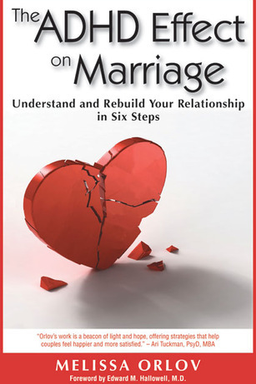
The ADHD Effect on Marriage: Understanding and Rebuilding Love in Six Steps
Have you ever loved someone deeply but found yourself fighting the same battles over and over—wondering why your marriage feels like a cycle of misunderstanding, frustration, and loneliness? In The ADHD Effect on Marriage, Melissa Orlov offers an answer that transforms pain into understanding: many marriages are not broken because partners don’t care, but because one or both live under the invisible influence of ADHD. The condition reshapes how attention, communication, and love are expressed. When its effects go unrecognized, they spin two caring individuals into repeating patterns of resentment and distance.
Orlov contends that ADHD is not just a medical label but a relational force—a subtle psychological current that disrupts connection by distorting focus, timing, and emotional interpretation. She explains that untreated ADHD can make one partner seem distracted, forgetful, impulsive, or inconsistent, while the other feels neglected, ignored, or forced into the role of a parent. Through compassionate storytelling and clear frameworks, Orlov builds a roadmap of six steps that allow couples to understand the problem, treat its core, and revive genuine love.
The Invisible Patterns Shaping Love
Orlov begins by unraveling what she calls the “ADHD Effect” — a cycle of symptom, reaction, and counterreaction. Picture one spouse forgetting an important task or retreating into hyperfocus. The other, feeling ignored, reacts through anger or control. The ADHD partner withdraws further to escape shame or conflict, reinforcing the initial problem. This repeating dance—a symptom triggering a response, sparking another response—is what silently erodes affection in many households. Her book helps both partners break this cycle by seeing how neurological differences create emotional misinterpretations.
Why ADHD is a Relationship Issue
Drawing on current brain science (based on researchers like Russell Barkley and Edward Hallowell), Orlov explains that ADHD stems from irregular dopamine regulation. This affects planning, time awareness, and reward sensitivity. In daily life, that means one partner may chase novelty or delay chores not because of laziness but because their brain craves stimulation. The non-ADHD spouse often interprets this as irresponsibility or lack of love, which births resentment. Understanding the biology behind these behaviors reframes blame as compassion—a theme Orlov calls “cultivating empathy.”
The Six-Step Roadmap: From Chaos to Connection
The heart of Orlov’s work lies in a structured six-step reconstruction process. Step 1 begins with empathy—seeing your partner’s behavior through the lens of difference, not defect. Step 2 addresses “obstacle emotions” like fear, anger, denial, and hopelessness that trap couples in old pain. Step 3 brings real treatment for both partners, combining medication, habit changes, and relational strategies (a “three-legged stool”). Step 4 rebuilds communication using tools like intentional cueing, learning conversations, and validation. Step 5 introduces boundaries and personal voice, freeing each spouse to live authentically rather than as caretaker or dependent. Step 6 reignites romance by reintroducing fun, novelty, and mindful attention—the antidote to distraction.
A Personal Journey Turned Universal
One of the striking aspects of The ADHD Effect on Marriage is how deeply personal it is. Orlov writes from the ashes of her own near-divorce, openly describing years when her husband’s undiagnosed ADHD left her exhausted and angry. Their story becomes the emotional center of the book—a case study in how awareness and treatment transformed dysfunction into happiness. Orlov and her husband, George, moved from resentment to partnership through understanding, not blame. Their recovery gives the book both authority and hope. As Dr. Edward Hallowell notes in the foreword, their triumph “defied the odds and rebuilt love better than before.”
Why This Book Matters
The significance of Orlov’s work extends beyond ADHD. It models how couples can thrive when biology meets empathy and structure. Her approach is nonjudgmental—never demonizing either partner—and reframes success not as curing ADHD but as managing it together. In many ways, this book is about modern relationships in general: how to accept one another’s wiring, cultivate true empathy, and turn friction into growth. Reading it feels like learning to decode love itself through the language of understanding and patience.
You’ll finish with practical tools—like chore systems, weekly conversations, and emotional boundaries—but also with something intangible yet essential: belief that no marriage is doomed by difference. As Orlov insists, “Don’t try harder, try differently.” The message is simple yet revolutionary: difference doesn’t destroy love; misunderstanding does. And once you learn the patterns, you can rewrite the dance.