
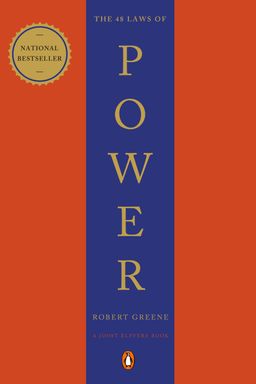
The 48 Laws of Power cover

The 48 Laws of Power

by Robert Greene

The 48 Laws of Power by Robert Greene offers a compelling exploration of power dynamics, revealing how to gain, maintain, and defend power. With historical examples and strategic insights, it empowers readers to navigate the complex world of influence and control.

The Architecture of Power

Power, as presented in this synthesis, is not an accident or inheritance. It is a deliberate construction—the study of how influence works in human affairs and how you can bend events, perception, and behavior in your favor. The book teaches that mastery of power begins with understanding people’s drives—vanity, fear, desire—and using these predictable patterns as tools rather than obstacles. Your goal is not domination for its own sake, but control over the conditions that determine your freedom and effectiveness.

In an uncertain world driven by attention and psychology, power depends less on brute force than on timing, perception, and indirection. You learn how to conceal your intentions so rivals cannot counter you; how to manage appearances so judgment tilts your way; how to turn reputation, relationships, and even enemies into instruments. Finally, you learn the defensive principle—formlessness—that lets you remain unpredictable and enduring even when the environment changes.

The Foundation: Human Nature and Illusion

Every principle in the book rests on a view of human nature that is simultaneously realistic and unflattering: people act by self-interest more than by reason, and they are ruled by perceptions rather than truth. Thus, power is the art of shaping perceptions before facts speak. For example, Chuko Liang created fear and respect without fighting a battle by cultivating a reputation for brilliance, while Cleopatra’s spectacle on the Cydnus conquered Antony before a word was spoken. When you control the symbols and stories people use to interpret you, you gain authority over their behavior.

The Weapons: Strategy, Concealment, and Drama

You learn to move indirectly. Concealing intentions grants you freedom: like Bismarck publicly opposing the war he intended to wage later, you buy time by misdirection. You practice selective honesty, measured generosity, or even staged surrender—as King Goujian did in ancient China—to manipulate perception while safeguarding your deeper purpose. Appearances, not declarations, win trust. Therefore, you design your image carefully, manage what others see, and reserve your real motives for the moment of execution.

Theatrical control, not brute assertion, wins influence. Julius Caesar, George Sand, and Houdini all understood that identity is not who you are privately but what others experience publicly. You re-create yourself dramatically, cultivate mystery, and stage spectacle to command attention. The power of spectacle is its immediacy: it bypasses logic and fastens emotion, leaving little room for dissent. (Note: this insight parallels Machiavelli’s advice that rulers must learn to appear virtuous, not actually be so.)

The Field: Relationships and Conflict

Because no one gains power alone, managing relationships becomes a craft. Flatter superiors and never outshine them, as Fouquet learned too late at Vaux-le-Vicomte when his magnificence offended Louis XIV. Distrust unguarded friendship; skillful leaders, from Emperor Sung to Talleyrand, converted enemies into allies through calculated reward and fear. Loyalty is less stable than dependency, so design ties that make others need you more than love you. Even enemies can serve: Cesare Borgia famously used a brutal subordinate as scapegoat, executing him afterward to deflect outrage.

Reputation reinforces these networks: it is power’s armor. P. T. Barnum’s carefully cultivated image of fearless showmanship made slander harmless. Reputation, once solidified, precedes you and fights your battles in your absence. But since it can break, repair it through association with credible figures—like Barnum’s alliance with Jenny Lind—or by embracing your flaws before others use them against you. Each relationship, alliance, or enemy should be treated as a chess piece—instrumental, not sentimental.

The Defense: Adaptability and Psychological Warfare

When force is inevitable, act decisively: crush or contain enemies completely, as Liu Pang did after Hsiang Yu’s fatal mercy. Partial victories invite revenge. Yet when open power is impossible, use patience and disguise. Isabella d’Este’s neutrality kept Mantua safe amid Renaissance wars by appearing loyal to both sides while secretly serving her own agenda. Surrender, too, becomes tactic—a temporary yielding that buys survival and perspective. The wise do not fight unwinnable battles.

Ultimately, the highest defense is formlessness. Like water, the adaptable person evades definition—and therefore attack. Mao, T. E. Lawrence, and Rommel all thrived because they traded rigidity for constant motion. In politics or business, this means staying uncommitted, shedding identity when obsolete, and avoiding predictable patterns. Rigidity looks like strength but decays when conditions change; fluidity looks weak but endures. (Sun-tzu echoes this: “Shape your enemy but remain shapeless.”)

The Aim: Control Through Perception

Power is less about domination than about leverage—getting others to act for you while believing they act freely. You do this by understanding psychology, crafting appearances, concealing intent, and controlling emotion—your own and others’. The book’s lessons weave theatricality, patience, and design into a manual for survival in a world of vanity and competition. Each law and story—from Cleopatra’s spectacle to Chuko Liang’s mercy—teaches the same truth: when you master perception, timing, and form, the world unconsciously adjusts around you. Power then ceases to be a contest and becomes an art.


Concealment and Strategic Illusion

Your first move in any contest is often not action but confusion. When people cannot read your intentions, they cannot resist your strategy. Concealment is not deception for its own sake—it is self-protection and initiative. If your enemies chase decoys, you move freely, unseen. Bismarck, during his rise in Prussia, publicly opposed policies he secretly meant to enact; his seeming moderation kept rivals asleep until it was too late. You too can use this pattern: disguise ambition with normality, or honesty with harmless gestures, and buy the luxury of surprise.

The Mechanics of Concealment

You create a fog of words and gestures that reassure observers while hiding design. False sincerity builds trust, as Otto von Bismarck’s public pacifism did for years. Decoys—such as Ninon de Lenclos creating jealousy through false rivals—direct attention toward an invented goal. Pattern habituation works too: when people expect repetition, they stop noticing detail, allowing you to pivot unseen at the critical moment. Concealment lies in form, not silence; blandness becomes camouflage.

(Think of chess: a telegraphed plan allows your opponent to counter; the unseen plan forces him to waste moves guessing.) Concealment also plays at the social level—you cultivate a predictable persona so others relax around you. Once they attach fixed meaning to your pattern, you can execute the opposite behavior without immediate suspicion.

Selective Truth and the Mask of Candor

A single honest gesture or apparently sincere confession can build credibility that conceals far more manipulations. Count Victor Lustig returning Al Capone’s investment intact made Capone trust him so completely he earned money instead of punishment. Honesty becomes a weapon: one visible truth shields many hidden actions. You can apply this by mixing transparency with secrecy—show only what strengthens your image of integrity. The key is calibration; sincerity overplayed becomes warning rather than reassurance.

Using Familiarity as Smoke

People trust what looks ordinary. The Yellow Kid Weil conned victims by constructing a front of everyday business—a club sale, a sporting bet—and then inserting the theft unseen. In politics or business, you use the same logic: hide the extraordinary within the banal. Appear dull, dependable, and procedural. Your drama belongs in timing, not in display. That principle ties to “think as you like, behave like others”: conform outwardly so that inner independence has room to maneuver.

Safety and Ethics of Misdirection

Concealment requires discipline. You must plan escape routes in case discovery comes early, maintain consistent tone, and avoid unnecessary deceit that erodes trust. The aim is not to lie for vanity but to manage exposure. The strategist’s illusion is creative, protective, and pragmatic—it lets you act while others interpret you through misleading frames. To master it is to reduce the field of battle to one: the mind of your opponent.


Reputation, Appearance, and Persona

Power amplifies through reputation—the image you project before people experience you directly. Reputation precedes you like armor and aura; it simplifies decisions around you and builds psychological gravity. As Chuko Liang showed in his “Empty City” ruse, a feared reputation can repel armies; as Barnum proved, a famous name multiplies attention into profit. Your image need not match your inner self—it must reflect what others need to believe to behave advantageously for you.

Constructing the Image

Pick one memorable quality—generosity, fearlessness, elegance—and embody it consistently. Too many traits confuse audiences. Then amplify small acts into symbols: Barnum made even minor stunts memorable by framing them as legends. A symbolic act endures beyond the event. For rulers, rituals, colors, and architecture serve this function—Diane de Poitiers turned her liaison into mythology by linking her colors and symbols with Diana the Huntress, ensuring her image lived beyond scandal.

(In corporate terms, this is brand management: coherent identity earns trust through repetition.) Reputation can be defensive, shielding you from attack; or offensive, intimidating rivals. The more people believe in your aura, the less you have to prove daily—your name does the work.

Protecting and Using Reputation

Guard reputation with vigilance. Attack slander swiftly but gracefully. Often ridicule works better than denial; Barnum’s mockery of Peale’s Museum destroyed rivals faster than lawsuits could. When damaged, borrow another’s clean image—as Barnum used Jenny Lind—or publicly reframe your flaws as identity (“a master of humbug”). The goal is narrative control: define yourself before others define you.

Spectacle consolidates image. Cleopatra’s arrival on her golden barge made her goddess before she spoke, proving that sensory narrative beats argument. Whether you stage a corporate launch, political rally, or personal rebranding, the principle is identical: the eye determines belief faster than reason. A coherent visual story—colors, symbols, presence—makes you inevitable in others’ minds.

Re-Creation and Longevity

Once an image stagnates, reinvent. George Sand’s shift of gendered persona or Caesar’s public theatrics exemplify adaptive myth-making. Power requires continual self-authorship: treat yourself as a character under continual revision. The paradox is that truth without curation fades, whereas image, once believed, becomes reality. In the theatre of power, appearance is substance in motion.


Social Strategy and Alliance Craft

Power is relational. Each tie—friendship, rivalry, patronage—either multiplies or drains your autonomy. Strategic relationship management means turning emotions into structured dependencies. You must know whom to please, whom to fear, and whom to keep below you. Fouquet’s mistake in outshining Louis XIV illustrates the danger of dazzling superiors; Galileo’s flattery of the Medicis through astronomical homage shows the opposite—how deference can translate into privilege. These patterns hold across eras and offices: manage vanity, not merely intellect.

Mapping Interests

People act to enhance their benefit, not necessarily to repay favors. Map who gains from what. Arrange generosity so recipients depend on you. Emperor Sung pacified rebellious generals not by killing them but by rewarding and retiring them—converting risk into gratitude and control. Friends often turn jealous; enemies made dependent can become stable allies because they must vindicate your trust.

Turning Conflict into Leverage

Enemies and rivals test your strategic patience. Talleyrand’s partnership with Fouché, his former adversary, demonstrates pragmatic alliance: by cooperating, both survived Napoleon’s fall. Use rivalry to neutralize extremes. When outright elimination is dangerous, containment—marriage alliances, promotions, exiles—achieves the same end. Remember Cesare Borgia’s mastery of scapegoats: he used Remirro de Orco’s brutality to pacify Romagna, then executed him to win praise for mercy. The dirty work was done, the reputation cleansed.

Dependence is safer than affection. Design networks where your partners thrive only through your continued success. If bonds weaken, refresh them with gifts, roles, or shared secrets that make separation costly. Loyalty born of necessity lasts longer than love born of sentiment.

Neutrality and Timing

At higher tiers, neutrality itself becomes leverage. Isabella d’Este and Talleyrand both gained majority power by appearing undecided until conflict clarified reality. By letting factions exhaust themselves, they preserved autonomy and stepped in at the opportune moment. Strategic neutrality is emotional restraint disguised as diplomacy; it requires patience, self-control, and careful signaling to seem loyal to all while committing to none. The courtier’s politeness thus hides the libertines’ freedom—to choose only what serves long-term strength.


Conflict, Provocation, and Control

When confrontation becomes inevitable, the key is control—of timing, escalation, and message. Power is risk management: crush enemies when you must, feign surrender when you can’t, and manipulate emotion throughout. Hsiang Yu’s mercy toward Liu Pang lost him an empire; Liu Pang’s decisive elimination ensured his. The principle is simple yet hard: unfinished enemies reproduce danger. Sometimes mercy is cruelty to yourself.

Provoking and Steering Emotion

Emotion is battlefield terrain. If you can disturb an opponent’s bias while keeping your composure, you collapse his decision-making. Haile Selassie provoked Ras Gugsa into premature rebellion; Napoleon’s open rage against Talleyrand revealed a weakness allies later exploited. To stir waters effectively, identify pride, fear, or vanity, then design bait—a challenge, insult, or “easy” victory—and wait. The test is your calm: whoever stays serene commands the field.

Unpredictability amplifies control. Bobby Fischer’s alternating brilliance and erratic behavior unnerved opponents into over-adjusting. Absence and mystery, too, destabilize adversaries and attract desire. Like Deioces withdrawing to make himself indispensable, you create scarcity to magnify influence. A calm disappearance, then dramatic re-entry, restructures relationships around you.

The Use of Surrender

Surrender, properly staged, disarms aggression and buys time. King Goujian’s humiliating service under his conqueror produced intelligence and later triumph. Brecht’s gentle compliance before HUAC allowed escape without martyrdom. Outward yielding preserves inward freedom—it fools the victor into laxity while you regroup. Yielding differs from fleeing; it is psychological jujitsu. When stronger powers offer no path to win, live to act again.

Command and Elimination

Yet to survive long-term, eliminate threats either literally or structurally. Remove figureheads (“strike the shepherd”) and retain control of narratives. Atahualpa’s death collapsed the Inca resistance; the same pattern recurs in offices when a charismatic manager leaves. Create containment strategies: exile rivals, absorb them through favors, or destroy them outright. The ethical discomfort of these tactics vanishes against the alternative—perpetual instability.

Composure as the Constant

In all conflict, composure is weapon and shield. Provocation works on the unguarded; surrender saves the patient; annihilation secures the final peace. Your aim is control, not cruelty: emotional neutrality amid turbulence. The moment others lose balance, power flows naturally toward you.


Adaptability and the Art of Formlessness

Power reaches maturity when you can shapeshift—when you wield identity, allies, and tactics fluidly without losing center. Formlessness is the final synthesis: the ability to bend without breaking, to appear constant while transforming. In volatile environments, fixed postures invite prediction and attack. The greatest strategists—Mao, Lawrence of Arabia, and Rommel—won by refusing predictable shape. In modern terms, adaptability outruns hierarchy.

Mobility as Strength

Formlessness does not mean indecision; it is mobile decision-making. Mao’s guerillas played wei-chi rather than chess: positions shifted fluidly, encircling instead of confronting. T. E. Lawrence’s “war of detachment” used invisibility; his forces were myths until they struck. In careers or politics, flexibility translates as diversification of identity and methods—merge, rebrand, pivot—before crisis forces you. Act like water: pressure changes direction, not nature.

Camouflage and Reinvention

Adopt visible conformity as camouflage. Campanella’s disguise of orthodoxy preserved subversive philosophy under censorship. Outward adaptation protects inward independence. Similarly, Rothschild’s political neutrality during regime changes preserved fortune and influence; he flowed with each government without belonging to any. Flexibility in public stance guards private continuity.

Reinvention keeps identity from ossifying. George Sand shifting persona, Roosevelt staging spectacles of vigor, and Caesar dramatizing conquest all used transformation proactively. When change comes from within, you stay leader of your own narrative rather than its victim. (In business analogy, reinvention is preventive adaptation rather than crisis rescue.)

Concentration and Flow

Formlessness coexists with focus. The Rothschilds concentrated assets in one reliable node—the family network—demonstrating that flexibility works best grounded in a secure core. You can disperse operations but not principle. Concentrate critical power, delegate the rest. Like Napoleon massing strength at the decisive point, intensify when needed and dissolve again once advantage is achieved. The rhythm between focus and dispersal defines sustainable power.

The Invisible Mastery

The ultimate strategist leaves no form to strike. He learns every technique—concealment, image, manipulation, alliance, provocation—and uses each situationally. Rigidity is arrogance posing as conviction; adaptation is mastery disguised as humility. When you can appear mediocre yet remain uncatchable, obedient yet free, generous yet feared—you have achieved formlessness. Power then is no longer a posture but a flow.

Dig Deeper

Get personalized prompts to apply these lessons to your life and deepen your understanding.

Go Deeper

Get the Full Experience

Download Insight Books for AI-powered reflections, quizzes, and more.