
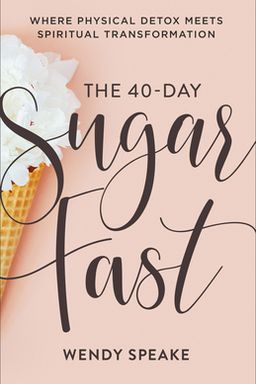
The 40-Day Sugar Fast cover

The 40-Day Sugar Fast

by Wendy Speake

The 40-Day Sugar Fast by Wendy Speake invites readers to embark on a transformative journey by distancing themselves from sugar. Through biblical insights and personal stories, discover how this fast can lead to spiritual clarity, a healthier relationship with food, and a closer connection to God.

Fasting from Sugar to Feast on God

Have you ever wondered why breaking habits—especially ones around food—feels impossible, even when your heart longs for lasting change? In The 40-Day Sugar Fast, Wendy Speake transforms this simple question into a deeply spiritual journey: what if the sweetness you crave could only be truly satisfied by God? Instead of yet another diet plan or detox challenge, Speake positions sugar-fasting as a gateway to spiritual renewal—a way to exchange fleeting physical pleasure for enduring soul satisfaction in Christ.

Rediscovering True Satisfaction

Speake begins with candor: she, too, was a self-professed sugar addict whose body and emotions were wrecked by dependence on sweets. But dieting never transformed her spirit. It's here that her argument crystallizes—the real craving isn’t for sugar at all, but for God. Physical hunger and emotional emptiness reveal our misplaced dependence on treats rather than trust. Her approach combines personal testimony, biblical teaching, and practical fasting principles to show how denying sugar leads to feasting on divine goodness. This message mirrors John Piper’s insight in A Hunger for God: we often suffer from soul malnutrition, nibbling at the world’s table until we lose appetite for the glory of God.

Fast to Feast: The Core Idea

At its core, The 40-Day Sugar Fast reframes fasting as relational rather than ritualistic. It’s not about denying yourself sweets—it’s about discovering sweetness itself in the presence of Christ. Each of the forty daily reflections turns sugar cravings into spiritual encounters: lessons on trust, surrender, joy, clarity, and emotional healing. Speake organizes this journey around biblical stories—Joshua’s victory at Jericho becomes a metaphor for breaking strongholds; King Jehoshaphat’s battle shows how worship defeats fear; and Jesus’s forty days in the wilderness teaches holy dependence. The fast becomes a spiritual training ground where the reader learns to taste and see that the Lord is good (Psalm 34:8).

From Addiction to Abundance

Speake’s process doesn’t shy away from the physical realities—withdrawal, emotional detox, and daily temptations—but she reframes them through faith. Every craving becomes an invitation to prayer: the pangs that once led to the pantry now lead to the presence of God. As readers advance from Day 1 (“Taste and See”) to Day 40 (“Live Like It’s True”), the book gradually widens its scope beyond sugar. It asks, “What else are you craving?”—turning attention to other idols like technology, alcohol, shopping, and self-sufficiency. The goal isn’t perfection, but transformation: learning to substitute all lesser satisfactions for divine fullness.

A Spiritual Lifestyle, Not a Temporary Fix

Unlike conventional fasting guides, Speake roots discipline in grace rather than guilt. She insists this isn’t a “diet” or religious performance—it’s discipleship. Every chapter moves between Scripture, story, and daily prayer, blending accessible theology with emotional honesty. This makes the book both practical and pastoral, guiding readers to replace appetite-driven living with Spirit-led abundance. In the end, The 40-Day Sugar Fast argues that freedom begins when God’s presence becomes sweeter than any sugar high. By the final chapters, readers are invited not merely to finish a fast, but to form a lifelong habit of feasting on God.

Why It Matters

Speake’s message resonates in a culture saturated by consumption. The book speaks to weary hearts seeking not better diets, but deeper meaning. It reminds us that emotional eating is often a spiritual longing in disguise, and that fasting unveils the God-shaped hunger underneath every craving. Ultimately, Speake contends that transformation is not found in willpower, but in worship. When we fast from what temporarily fills us, we make room to be filled, sustained, and satisfied by the only sweetness that lasts—the presence of Jesus Himself.


The Spiritual Science of Craving

Wendy Speake connects the psychology of addiction with the theology of desire. Sugar, she asserts, is not evil—but the way we use it often mirrors deeper issues: stress, boredom, loneliness, and grief. When we repeatedly run to sweets rather than to God, we train our minds to crave temporary relief instead of eternal restoration. Speake calls this the shift from satisfaction to substitution: every sweet treat becomes a stand-in for the sweetness of God’s presence.

Physiology Meets Spirituality

Drawing from everyday experience and scientific insight (such as dopamine release and the addictive engineering of modern foods), Speake explains how sugar manipulates both body and soul. Just as the body can depend on glucose highs, so the spirit seeks emotional spikes of comfort. The detox process, therefore, isn’t only metabolic—it’s spiritual. She likens the irritability, fatigue, and emotional crash of sugar withdrawal to the early stage of spiritual repentance, when false dependencies are exposed. This blending of biology and belief gives the book a multidimensional approach similar to Lysa TerKeurst’s Made to Crave, which links physical cravings to spiritual ones.

The Real Stronghold

One of Speake’s most striking metaphors compares sugar addiction to the fortified city of Jericho (Joshua 6). Just as Israel’s entrance into God’s promised land depended on obedience and faith, breaking personal strongholds requires shouting God’s victory before walls fall. Speake writes that cravings are not the enemy but the battleground. Freed from shame, you can now identify deeper strongholds—fear, insecurity, self-reliance—and replace them with faith. Through daily obedience and worship, the chemical and emotional walls crumble.

From Pleasure to Presence

Speake teaches that every biological craving can become a spiritual conversation. Hunger pangs remind you to pray; fatigue invites surrender; even irritation becomes awareness that transformation is taking root. This “holy hunger” doesn’t reject food but reorders it—allowing meals to remind you of God’s sustaining sweetness rather than replacing it. Ultimately, Speake argues, healing begins when we stop mistaking dopamine for divine joy. When obsession gives way to abiding, the body and soul align under God’s original design for wholeness.

Key Insight:

Addiction is misplaced worship; fasting trains the heart to replace the idols of comfort with the intimacy of communion.


Turning Cravings into Communion

For Speake, fasting from sugar is not a punishment—it's a doorway to communion. Each craving is a call from God: an invitation to turn to Him instead of treats. In her chapter “Taste and See,” she remembers childhood candy rituals and contrasts them with the joy of tasting God’s goodness through prayer. By redirecting appetite toward the divine, fasting rewrites spiritual reflexes—teaching the heart to respond to hunger with worship instead of indulgence.

The Practice of Substitution

Speake’s daily practice involves immediate substitution: whenever the body says “I want sugar,” the spirit answers, “I want Jesus.” She challenges readers to consciously replace each physical stimulus with a spiritual act—reading Scripture, praying Psalm 34:8, or journaling gratitude. These replacements form a new rhythm: fast and feast. As Ezekiel and Jeremiah symbolized by eating God’s word “as sweet as honey,” so readers learn to ingest divine nourishment to counter worldly cravings. This dynamic interplay of fasting and feasting makes the process sustainable and sacred.

Fasting as Conversation

Unlike conventional fasting regimens focused on silence or self-denial, Speake portrays fasting as dialogue—a living conversation with God. Hunger opens ears; emptiness makes room for His whisper. This transforms dieting into discipleship. She writes, “Every growl is an invitation. Every craving is a conversation.” You begin to associate physical cravings not with failure but with fellowship. In biblical context (Joel 2:12, Matthew 6), fasting has always been relational—it is returning, not restraint.

The Joy of Feasting

As the days progress, the reader practices “holy substitution.” A beautiful anecdote describes Speake stacking Bibles on a cake stand at home, calling it her “Word cake.” Whenever she felt tempted, she feasted on Scripture instead. This symbolic act reframes fasting not as scarcity but abundance—the discovery that spiritual nourishment tastes sweeter than sugar itself. Similar sentiments echo Richard Foster’s Celebration of Discipline, where fasting from food makes space to feast on God’s presence.

Core Reminder:

You aren’t giving up sweetness; you’re rediscovering it at its divine source. Fasting from sugar teaches you to feast on the eternal sweetness of Christ.


From Physical Detox to Spiritual Transformation

By the mid-point of the forty days, Speake moves beyond physical detox into emotional and spiritual transformation. Once the body stabilizes, deeper issues emerge—patterns of fear, shame, and self-reliance that have been masked by comfort eating. Speake interprets these revelations as God’s refining process, a spiritual “crucible” where impurities rise to the surface. Detoxing sugar becomes detoxing sin.

The Refining Process

Speake borrows imagery from Zechariah’s refiner’s fire, reminding readers that transformation requires heat. Early withdrawals symbolize spiritual confrontation: irritability reveals lack of patience; fatigue exposes dependence on stimulants instead of strength from Christ. When we respond by surrendering instead of escaping, this discomfort becomes purification rather than punishment. As Beth Moore and other spiritual writers note, fasting clarifies motives—it’s not about empowerment but exposure.

Holy Hunger as Healing

In chapters like “A Holy Hunger” and “Healing Past Hurts,” Speake leads readers to see hunger as a healing agent. When sweets no longer numb emotional pain, buried wounds surface. One reader’s testimony describes finding self-love after fasting—a survivor of abuse finally feeling freed from shame through surrender. This reveals Speake’s subtle theology of embodiment: our physical disciplines can become divine therapy when offered in faith.

The Reward of His Presence

As sugar walls crumble, God's presence fills the empty spaces. Speake contrasts worldly comfort with divine companionship: “His presence is our present.” Fasting becomes revelation—a reminder that divine love, not self-control, sustains transformation. Echoing Isaiah 58, she warns against fasting as self-righteous ritual; true fasting aligns our hearts with God’s compassion and turns personal freedom into service for others.

Takeaway:

Detox isn’t just what happens to the body—it’s what happens to the heart when disordered desires meet divine grace.


Breaking Idols Beyond Sugar

Speake repeatedly insists that God wants your life, not just your sugar. Midway through the fast, she asks, “What else are you craving?”—inviting readers to expand their inventory of idols. Phones, shopping, alcohol, social media, food, and control all compete for affection. Sugar becomes symbolic of every substitute we run to instead of the Savior.

Identifying Hidden Idols

Speake describes the process of locating hidden strongholds as a spiritual renovation. The Holy Spirit steps through the “doorway of sugar” into the deeper rooms of your heart. What begins as a dietary discipline unfolds into complete life surrender. Quoting Hudson Taylor—“Christ is either Lord of all, or not Lord at all”—she emphasizes holiness as wholeness. When false comforts crumble, room appears for divine peace to dwell.

The Exchange Principle

Each idol is replaced through exchange: abstain so that He might sustain. Speake calls this “fasting from fillers to experience the Filler.” Whether offering your smartphone schedule or your nightly glass of wine, the principle remains: surrender temporal pleasure for eternal presence. She encourages practical boundaries—charging phones away from the bed, fasting from social media, or redirecting spending toward generosity. This structure echoes modern habits like digital detox, but anchors them in scriptural surrender.

Freedom and Fruit

Speake concludes that liberation from idols naturally bears fruit. Galatians 5’s fruits of the Spirit—love, joy, peace, self-control—flourish when the roots of addiction are uprooted. True fasting cultivates freedom for obedience. The ultimate transformation isn’t dietary—it’s devotional. When Christ occupies the throne, all other masters lose power.

Core Message:

God’s desire isn’t your sugar abstinence—it’s your wholehearted surrender. Fasting dismantles idols so faith can flourish.


Turning Freedom into Service

Spiritual freedom, Speake insists, is never self-contained. True fasting must extend beyond your mirror to your mission. In later chapters inspired by Isaiah 58 and John 21—“The Kind of Fasting God Wants” and “Feed My Sheep”—she calls readers to transform personal renewal into compassion. As God liberates you, He appoints you to liberate others.

From Self-Focus to God’s Heart

In biblical terms, fasting isn’t merely abstinence—it’s alignment. Ancient Israel’s frustration in Isaiah 58 stemmed from fasting without love; they bowed but ignored the poor. Speake contrasts this with Christ’s command to Peter: “Do you love me? Feed my sheep.” Love authenticated through service becomes the mark of genuine transformation. When fasting transitions from self-improvement to outward compassion, salvation becomes communal rather than solitary.

Practical Compassion

Speake’s community practice extends to giving saved money from sweets to ministries such as The Lulu Tree and Compassion International. The result is multiplication—literally, in one outreach, resources for 500 expectant mothers miraculously expanded to feed 800. This modern retelling of the loaves-and-fishes miracle reflects Jesus’ pattern: fasting leads to feeding. When we taste divine abundance, generosity overflows naturally.

Freedom That Multiplies

Ultimately, freedom isn’t permission—it’s power. Set free from sugar, you’re free to share Christ. Speake’s theology of fasting ripples outward: personal healing leads to communal healing. The sweetness of Jesus doesn’t diminish when shared; it multiplies. As with early disciples in Acts 13, fasting commissions believers to mission. Through worship and abstinence, the Holy Spirit whispers new callings—serve, write, intercede, comfort, lead. The fast, then, doesn’t end at Day 40; it begins at Day 41 as a life-long feast on purpose.

Key Reminder:

Freedom that stops with yourself is imitation, not transformation. True fasting sets you free to serve.


Living the Feasting Life

In the final stretch, Speake exhorts readers to “Live like it’s true.” You’ve tasted God’s sweetness—now live satisfied. Psalm 90:14 becomes her closing prayer: “Satisfy us in the morning with your unfailing love, that we may sing for joy and be glad all our days.” This is no mere verse; it’s a rhythm for daily life. The fast might end, but the feast continues.

Living Free

Speake explains that long-term hunger leaves long-term habits. To avoid spiritual relapse, you must keep feasting daily—through Scripture, prayer, gratitude, and service. Remain vigilant against spiritual complacency; yesterday’s freedom can become tomorrow’s captivity if neglected. The call is to keep in step with the Spirit (Galatians 5:25). Transformation isn’t achieved by forty days—it’s maintained by ongoing communion.

The Lifestyle Beyond the Fast

Speake encourages practical habits for “life beyond the fast”: live sugar-free most of the time, never eat alone, give leftovers away, and integrate fasting as regular intimacy with God. But the deeper goal is not nutrition—it’s nurturing spiritual maturity. Drawing parallels with Peter’s exhortation to “crave pure spiritual milk,” she reminds readers that growth requires daily nourishment. Day 41 marks maturity; you’re learning to grow up in salvation.

Feasting Forward

Ultimately, to live the feasting life is to believe every morning that God’s love truly satisfies. This faith translates into behavior: acting as if fullness is real, choosing gratitude over grasping, worship over worry. Speake positions this as both final truth and ongoing invitation: the fast isn’t a finish line but a doorway into daily delight. As John Piper once wrote, “God is most glorified in us when we are most satisfied in Him.” Speake turns that theology into lived practice—simple, sweet, and sustaining.

Final Insight:

Your fast may end, but the feast of God’s presence begins. Living free means living full—daily, joyfully, and sweetly satisfied in His love.

Dig Deeper

Get personalized prompts to apply these lessons to your life and deepen your understanding.

Go Deeper

Get the Full Experience

Download Insight Books for AI-powered reflections, quizzes, and more.