
Idea 1
Reframing the American Story Through 1619
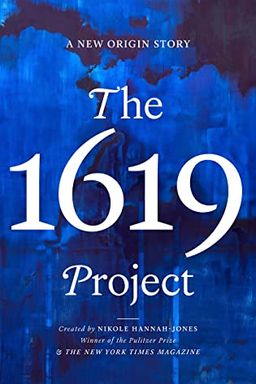
What happens when you shift the nation's founding date from 1776 to 1619? That’s the central provocation of The 1619 Project, the collection launched by Nikole Hannah-Jones and expanded into a book-length exploration of how slavery and Black resistance shaped every major institution in American life. It argues that the arrival of captive Africans aboard the White Lion in 1619 is not a footnote but a foundational event—a lens through which you can reinterpret the nation’s economy, politics, culture, and sense of self.
By recognizing slavery and anti-Blackness as structural forces rather than moral aberrations, the project reframes American democracy as something built through struggle, not bestowed at founding. Its contributors—historians, writers, poets, and journalists—trace lines from plantations to capitalism, from slave patrols to police departments, from the denial of citizenship to the Fourteenth Amendment. Their insistence is simple but radical: you cannot understand America without understanding how Black people have been both the backbone of its labor and the engine of its freedom.
Rewriting Origins and Remembering Power
The opening essays invite you to picture 1619 as a beginning. The landing at Point Comfort introduces names—Anthony, Isabella, William—and humanizes what textbooks reduce to cargo lists. Hannah-Jones recounts her own revelation reading Lerone Bennett Jr., realizing that Black people arrived on the continent before the Mayflower. That realization inverts the traditional narrative: freedom itself must be seen through the people denied it. As historian Michel-Rolph Trouillot once wrote, “history is the fruit of power.” Deciding which moments count as origins is therefore a political act.
The project sparked public hunger and controversy. Classrooms and prisons organized reading circles; politicians sought to ban its teaching; the Trump administration assembled the short-lived 1776 Commission to reassert a more patriotic narrative. Yet the intensity of the debate confirmed the Project’s premise: what a society chooses to remember or forget reveals power and fear. To honor 1619 as one founding date—alongside 1776—means confronting how slavery shaped the Constitution, the economy, and the nation’s racial hierarchy.
From Enslavement to Structural Inequality
Each subsequent chapter follows those threads through different institutions. Some trace the economic systems born on plantations—the first corporations that measured, organized, and disciplined labor with modern efficiency. Others uncover the legal codes that turned race into a category of property, defining people through motherhood’s status or racial purity laws that persisted into the twentieth century. Still others show how fears of revolt produced the policing apparatus, how sexual violence structured gendered domination, and how faith, music, and political organizing turned that suffering into art and power.
Across the essays runs a repeated contradiction: a republic founded on liberty that codified slavery, a democracy built through exclusion. When Jefferson wrote that all men are created equal, Robert Hemings—enslaved by Jefferson—stood nearby. The same Congress that proclaimed rights inscribed protections for slaveholders. This tension between ideals and realities defines the American experiment. The Project’s claim is that Black Americans, in pressing to resolve those tensions, have been democracy’s most consistent innovators.
Resistance, Democracy, and the Ongoing Struggle
The narrative that emerges isn’t one of linear progress but of recurring struggle. From self-emancipation and Reconstruction to the civil-rights and Black Lives Matter movements, every expansion of freedom meets backlash—political, legal, or violent. Reconstruction’s promise gave way to Jim Crow; the Voting Rights Act was weakened by the Supreme Court’s Shelby County decision a century later. As Ibram X. Kendi observes, “racist progress” often shadows racial progress itself.
Yet this history also documents agency and endurance: the creation of schools and churches under slavery; the organizing of workers and soldiers; the literary and musical revolutions from spirituals to Motown. Black people transformed the nation not only by resisting oppression but by redefining what it means to be American. Hannah-Jones ends where she began: her father flying the U.S. flag despite the country’s betrayals—a symbol, she writes, of claiming the nation that Black labor built and Black struggle has continually remade.
Core Message
To face the full history of 1619 is to see that American freedom did not grow despite slavery but through a fight against it—and that every generation’s task is to finish, again, what the founders left undone.