
Idea 1
The 12 Week Year: Redefining Time to Redefine Success
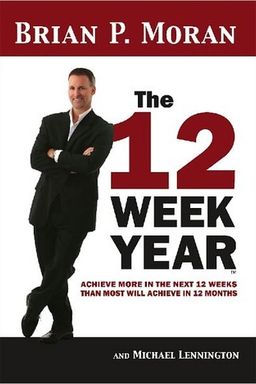
What if you could accomplish more in 12 weeks than most people do in 12 months? That’s the bold question driving The 12 Week Year by Brian P. Moran and Michael Lennington. The authors argue that the secret to extraordinary productivity and fulfillment isn’t working harder—it’s fundamentally changing how you think about time, goals, and execution.
At its core, the book challenges our default mode of annualized thinking—the widespread belief that success happens on a yearly cycle. Instead of giving ourselves 12 months to achieve goals (and usually procrastinating until the last few weeks), the authors propose treating every 12 weeks as a full year. In doing so, we reclaim focus, urgency, and discipline, compressing our priorities and intensifying our performance.
Why Traditional Goal Setting Fails
Most people, the authors contend, don’t fail because they lack good ideas or intelligence—they fail because they don’t execute consistently. We learn, plan, and strategize, but struggle to implement over time. Traditional annual goals reinforce this execution gap by creating the illusion of plenty of time. In January, December feels far away, so we put off the hard work until later. Then, as deadlines approach, we rush to make up for lost time.
This cyclical procrastination is what Moran and Lennington call annualized thinking. By resetting your year to only 12 weeks, you strip away the illusion of abundance. Every week suddenly matters. Every day counts. The deadline is always close, forcing a constant sense of urgency and accountability that drives action. As they put it, meaningful progress is made daily, not yearly.
Execution Is the Ultimate Differentiator
According to the authors, the difference between high performers and everyone else isn’t intelligence, opportunity, or luck—it’s execution. Using examples from sales, leadership, fitness, and personal growth, Moran and Lennington demonstrate that consistent execution on a few key priorities drastically outperforms sporadic bursts of activity across many goals.
For instance, they share the story of Ann Laufman, a financial advisor who increased her performance by 400% simply by mastering execution. She didn’t expand her market or work longer hours; she just became laser-focused on completing the few high-impact activities already in her plan. This case demonstrates one of the book’s central truths: when you work in shorter cycles with sharper focus, you don’t just get more done—you get the right things done.
The Emotional and Mental Shift
Adopting the 12 Week Year isn’t merely a productivity tactic; it’s a psychological reprogramming. It reframes your relationship to time, forcing you to live with intention rather than inertia. The shorter cycle heightens focus, clarity, and motivation—similar to the surge of effort most people experience in the final weeks of a calendar year. By replicating that year-end mentality four times a year, you achieve the same urgency without burnout.
“You can be smart, hardworking, and talented, but if you don’t execute, you won’t succeed. Execution is the single greatest market differentiator.”
The emotional connection is also a major theme. The authors argue that your drive to act must be emotionally charged—rooted in a compelling personal vision that matters more to you than comfort or convenience. Without an inspiring “why,” you’ll revert to old habits, choosing the path of least resistance. The 12 Week Year helps translate long-term aspirations into actionable daily steps that keep motivation alive through visible progress.
From Vision to Execution: A Complete System
The rest of the book unpacks a full framework for executing at your best through a blend of three principles and five disciplines. The principles—Accountability, Commitment, and Greatness in the Moment—shape mindset, while the disciplines—Vision, Planning, Process Control, Measurement, and Time Use—shape behavior. Together, they form an integrated system for translating ambition into tangible results, whether in business, health, or life goals.
This system isn’t theoretical. It includes practical elements like writing a 12 week plan (instead of an annual one), using a weekly plan and scorecard to track your execution, and setting up Weekly Accountability Meetings (WAMs) with peers for support. Each component reinforces the others, turning intention into habit and habit into achievement.
By the end of the book, Moran and Lennington emphasize that greatness is built moment by moment. Every action you take or skip determines your trajectory. The 12 Week Year, then, is not just a calendar system—it’s a philosophy of intentional execution. It asks you to stop waiting for the perfect time, stop dreaming in years, and start acting in weeks. Because the truth, as they remind us, is liberating: the life you want is created one disciplined day at a time.