
Idea 1
The Fastest Path to the Money
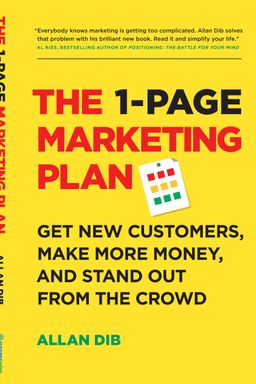
What if you could condense the complexity of marketing strategy into a single page—a plan so simple you could implement it immediately, yet powerful enough to transform your business? In The 1-Page Marketing Plan, entrepreneur Allan Dib argues that marketing is the master skill of business—the fastest path to cash flow, growth, and freedom. His core message is bold and unapologetic: small businesses fail not because they lack good products or hard work, but because they lack a structured, actionable marketing system. He contends that mastering marketing—not invention or passion—is the greatest leverage point for business success.
Dib’s solution is deceptively simple: the 1-Page Marketing Plan (1PMP) divides marketing into nine core areas spread across three phases: Before (attracting prospects), During (converting leads into customers), and After (delivering and multiplying customer value). Each phase contains the practical steps for building a predictable, automated marketing engine. The book reads like a conversation with a mentor—equal parts practical guidance and motivational push.
Why Small Businesses Fail
Dib begins with the brutal reality: most businesses plateau or die not from bad products but from bad marketing. He contrasts “Pete the plumber,” who works sixteen-hour days to barely get by, with “Joe the plumber,” who built a thriving company and enjoys freedom. The difference isn’t talent—it’s understanding the business of business. Drawing from Michael Gerber’s The E-Myth Revisited, Dib reminds readers that technical skill doesn’t equal business skill. You may be an excellent hairdresser, dentist, or consultant, but that doesn’t make you a good marketer of your craft.
Money as Oxygen
To make this point visceral, Dib borrows Zig Ziglar’s analogy: “Money isn’t everything, but it ranks right up there with oxygen.” Without money, business suffocates. Dib advocates viewing marketing as a survival system—it’s not artistic fluff but the mechanism that brings oxygen (cash) into your enterprise. His tone is ruthless but practical: don’t chase passion clichés; chase results.
The Power of Having a Plan
Professionals, Dib argues, always work from plans. Doctors have treatment plans, pilots have flight plans, and soldiers have mission plans—so why should entrepreneurs wing it in business? The difference between amateurs and professionals lies in structure. This insight led Dib to create the 1-Page Marketing Plan after suffering the frustration of traditional hundred-page business plans that no one used. The one-page format forces clarity and implementation. It’s focused on execution, not theory—a living document that evolves.
The Leverage of Marketing
The author emphasizes one principle above all: leverage. He cites the Pareto Principle (80/20 rule) and its extension (64/4 rule)—that most results come from a small fraction of actions. Marketing is that fraction. A 10% improvement in marketing can yield exponential profit growth compared to any operational tweak. Whereas most entrepreneurs obsess over saving pennies or improving processes by small margins, Dib insists that success lies in mastering marketing—the single activity with the highest multiplier effect.
The Big Shift: Direct Response Marketing
Dib introduces