
Idea 1
The Visionary Architecture of Nikola Tesla
Why does Nikola Tesla remain one of the most polarizing figures in science—seen as both prophet and eccentric? This book argues that Tesla’s life reveals the costs and possibilities of visionary innovation. His career moves between imagination and engineering, solitude and spectacle, genius and ruin. At its heart, the narrative explores how Tesla sought to build a world electrified and interconnected through resonance—technically by alternating currents and symbolically by human progress.
From childhood mental visualizations to high‑voltage experiments at Colorado Springs and the monumental Wardenclyffe Tower, Tesla consistently tried to merge theory, invention, and moral idealism. His story becomes a parable about technology’s relationship with imagination and the pressures of industrial capitalism. Each phase of his life shows that invention is not only a set of patents, but a mental discipline intertwined with psychology, artistry, and risk.
From Inner Imagination to Public Power
Tesla begins as a boy who could visualize machines so vividly that he could run them mentally. This eidetic discipline—his ability to build, adjust, and perfect entire devices in his head—allows him to create the rotating magnetic field and induction motor without traditional prototyping. In this sense, Tesla anticipates cognitive design processes you now see in modeling software: the machine existed as a virtual object before it existed physically. He believed that imagination, when trained as a lab, could surpass material iteration.
At Budapest, while reciting Goethe, he conceives the rotating magnetic field “like a flash of lightning.” That moment fuels the polyphase AC system—the architecture of modern electrical grids. Westinghouse’s later adoption of Tesla’s patents transforms these abstract visions into a new infrastructure for civilization. Yet this partnership also shows the industrial tension between creative and financial logic, which remains central in every innovator’s story.
Spectacle, Conflict, and the War of Currents
As alternating current begins to rival Edison’s direct current, Tesla becomes a symbol in the “War of the Currents”—a propaganda battle involving electrocutions, newspaper wars, and Morgan‑driven consolidation. Edison’s camp stages animal electrocutions to brand AC as deadly; Tesla counters by demonstrating its beauty and safety through spectacular electrical exhibitions. Technical triumph and media myth become one in his hands. Out of this struggle comes not only long‑distance power but also the public persona of Tesla as a magician‑scientist.
Wireless Experiments and Expanding the Electrosphere
Tesla’s New York demonstrations—the lighting of vacuum tubes without wires, experiments with X‑rays, and the 1898 radio‑controlled boat—extend his reach. These acts blend theatre and research, introducing concepts of high‑frequency resonance, radiation hazards, remote control, and tuned communication. Later, in Colorado Springs, his resonant coils magnify these ideas to planetary scale. There he detects stationary waves in the Earth and imagines global wireless transmission of power and communication—an audacious belief in the unity of physical and social systems through resonance.
Financial Fractures and the Fall of Wardenclyffe
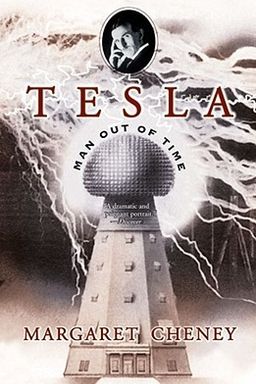
Wardenclyffe becomes his attempt to fuse science and architecture into a world center of wireless power and broadcasting. Yet Morgan’s funds dry up once Tesla reveals the plan to transmit energy freely—a threat to established utilities. The tower rises but never fulfills its promise. Its collapse, both physical and financial, mirrors the fate of the solitary visionary in a corporate age: grand in scope, poor in backing, and undone by misaligned expectations between genius and capital.
Legacy, Solitude, and the Future That Echoes
Late in life Tesla lives in hotel rooms, feeding pigeons and drafting imaginary machines. Yet his influence endures. His turbines, valvular conduits, radar concepts, and later teleforce speculations all anticipate 20th‑century technologies. His posthumous legal vindication in the 1943 Supreme Court ruling on radio patents reclaims him as a founder of modern communication. And the classified handling of his papers after death—examined by John G. Trump and military agencies—cements the aura of mystery around him.
You finish the book recognizing Tesla as neither saint nor recluse, but as a case study in how imagination creates whole industries and yet isolates the imaginer. His life suggests that the modern world’s electricity, wireless communication, and vision of global interconnection sprang not only from laboratories but from the disciplined imagination of one man who insisted that energy—like human thought—could be transmitted anywhere if you found the right frequency.