
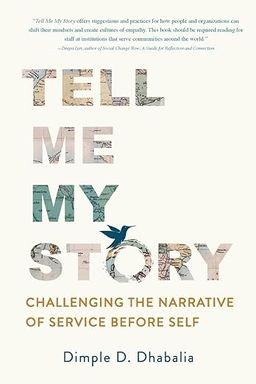
Tell Me My Story cover

Tell Me My Story

by Dimple D Dhabalia

Tell Me My Story challenges the traditional narrative of self-sacrifice in humanitarian work, advocating for a balance between personal well-being and service. Drawing from her extensive experience, Dimple Dhabalia offers a transformative approach to self-care, leadership, and organizational culture, promoting sustainable and effective humanitarian efforts.

Identity, Loss, and the Power of Story

What happens when one letter unravels everything you thought you knew about yourself? In Archie Roach’s memoir, that question defines a lifelong journey through foster homes, streets, boxing tents, and concert stages. The book is not just a personal history—it is a collective chronicle of the Australian Stolen Generations, of children taken, cultures fractured, and the slow, patient rebuilding of a life with truth at its centre. Roach shows how identity can be reclaimed through love, community, music, and the courage to tell painful stories publicly.

A letter that opens history

At twelve years old, Archie receives a letter announcing his mother’s death and the existence of siblings he never knew. That small envelope detonates an identity he had been living under—Archie Cox, foster child of Dulcie and Alex Cox—revealing that he was actually Archibald Roach, a stolen child. The letter becomes both invitation and rupture: from this moment onward, the memoir maps a double existence between two worlds—the foster family who loved him and the biological family lost to history.

Growing up between care and absence

Life with the Coxes gives him music, discipline, and affection. Dad Alex’s Scottish songs and Mum Dulcie’s gentle rituals contrast with earlier memories of missions—barns, hunger, and punishment. The book offers that contrast as moral testimony: you can experience real love within a system built on dispossession. When Dad Alex explains that Archie is “Aboriginal,” not “black,” you see how race awareness emerges amid kindness. That moment plants the first seed of cultural understanding in a home far from his people.

Survival through the street and stage

The next chapters trace Archie’s years on the street after leaving the Coxes to search for his family. Sydney and Melbourne become classrooms of survival—Belmore Park teaches him to “bite” (begging), hostels teach camaraderie among drifters, and bars teach him pain and self-medication. Through these experiences he learns the moral code of the marginalised: look after your mates, share what you have, and survive one day at a time. Music gradually replaces biting; singing at the Civic Hotel gives him dignity and a path out of chaos.

Music as medicine and memory

Songs arise organically throughout the memoir—from Scottish hymns to Hank Williams ballads, from Civic Hotel contests to recovery programs. Music becomes the thread that binds every stage of his life. Later, as sobriety returns through Aboriginal-run centres like Galiamble and Winja Ulupna, songs become therapeutic acts rooted in community. “Took the Children Away” crystallizes that power—transforming personal anguish into collective truth. Through songwriting, Roach reclaims voice, heals others, and asserts that pain can be reworked into shared testimony.

Family, community, and return

When Archie reunites with siblings Alma, Myrtle and Lawrence in Fitzroy, the story moves from private longing to communal reclamation. Their reconnection reveals both generational trauma and deep resilience, tracing roots to the Gunditjmara people and Framlingham Mission. Later, mentors like Uncle Banjo and Jock Austin guide Archie toward activism and youth programs. These elders represent cultural endurance: boxing gyms, meetings and songs reclaim dignity long after state removal.

Collapse and resurrection

Addiction, prison, and illness mark repeated falls. But each descent yields transformation through recovery centres and community work. In the hospital after a suicide attempt, Archie begins a process of inner repair grounded in fellowship and daily service. Sobriety restores not only his relationship with Ruby and their sons but also his purpose as counsellor, singer, and advocate. These moments deconstruct the myth of solitary recovery—heals through community, not isolation.

From private art to public witness

The bicentenary protest of 1988 becomes the turning point from personal healing to national storytelling. When Archie sings “Took the Children Away” before thousands at La Perouse, the act transcends artistry—it is testimony. The crowd’s response proves that truth, sung sincerely, can unify. Later, collaborations with Paul Kelly, Ruby Hunter, Bangarra Dance Theatre, and Rolf de Heer extend that testimony across media—from stage to orchestra to film.

Illness and creative renewal

Heart surgery, stroke, and cancer challenge his body, yet lead to new albums like Into the Bloodstream and Let Love Rule. Music becomes spiritual rehabilitation—a breath made audible. These later works gather choirs, gospel rhythms and gratitude, demonstrating how recovery evolves into creative resurrection. What begins with a letter ends with national stages, but loyalty to truth and kinship remains constant. Archie’s memoir teaches how reclaiming self is inseparable from reclaiming story—and that telling the truth is both medicine and revolution.

In short, this is a life reassembled piece by piece: a foster child becomes an artist, a survivor becomes a teacher, and pain becomes song. Through history, music and resilience, Roach reveals that identity is not lost—it waits to be sung back into being.


Between Two Worlds

Archie’s early years illustrate what happens when love exists inside injustice. Removed from his biological family, he grows up with Dulcie and Alex Cox, whose household is full of kindness and music but shaped by state power. Their Scottish hymns, weekly church, and tea rituals teach belonging; yet the shadow of his Aboriginal heritage hangs silently until a classmate asks why his parents are white. That moment pulls culture into consciousness.

Foster care and paradox

The Coxes demonstrate authentic affection, blurring boundaries between foster and biological children. At the same time, Archie recalls earlier placements marked by hunger and punishment: sleeping under sacks, grain sheds, and locked barns. These memories coexist uneasily with later comfort. You learn through his eyes that gratitude and grief can live together, and that a child’s love for caregivers doesn’t erase longing for lost parents.

Institution and affection

The Cox home represents private tenderness; government missions represent systemic control. When a state official visits the house, Archie learns that returning to his family must be negotiated by permission. The memoir insists that care can be sincere while still embedded in domination—a nuance often absent in political debates. (Note: This mirrors ideas in Alexis Wright’s Tracker, which also shows how bureaucratic systems can entangle genuine relationships.)

Music as bridge

Songs provide temporary peace between these two worlds. Dad Alex’s ballads and church hymns form a shared language that transcends race. When Archie later hears Hank Williams and Charley Pride, he recognizes loneliness as universal—music becomes his first cultural reconciliation. In listening, he learns empathy across divide. Those melodies plant the foundation for his artistic calling decades later.

Through these domestic scenes, the memoir reveals a deeper argument: identity is forged not only by roots lost but also by love received. Understanding that complexity is essential to grasping how Roach turned survival into song.


Street Lessons and Hidden Kinships

When Archie leaves Lilydale and heads for Sydney, the story shifts from domestic warmth to social wilderness. Belmore Park becomes his real classroom—he learns not from teachers but from outcasts. His mentor, Albert, teaches him how to “bite” (beg), how to craft believable stories, and how to share earnings among mates. Those ethics of the street—reciprocity, humour, endurance—form their own kind of curriculum.

Learning survival and trust

Archie’s street community, including Jasper and Ivan, creates kinship out of scarcity. Alcohol both binds and harms them, offering relief from loneliness while exposing them to police raids and exploitation. You see how institutions criminalize poverty: vagrancy laws send Archie back to Melbourne and teach him to use aliases for protection. The “Phillip Brown” persona illustrates how self can be reshaped as shield.

Work, stage, and dignity

Performance becomes survival’s higher form. When Archie watches Ivan sing at the Civic Hotel and later buys his own guitar from a pawn shop, he finds an alternative economy where skill and art replace pity. Every contest won is repayment for humiliation. Song turns the street into stage and transforms shame into performance—foreshadowing national fame years later.

Fighting and family discovery

Boxing tents extend the metaphor of contest and self-making. Under Billy Leach, Archie fights farm boys and discovers kinship in the ring—a cousin nicknamed Geronimo is literally family found through combat. Boxing mirrors the memoir’s ethos: you fight to survive but also to recognize your own lineage. These pugilistic episodes teach discipline and spectacle, skills later transposed into performance art.

In this period you realize that poverty, performance, and kinship overlap. Archie learns that even the harshest environments hold their own order, and that survival itself can be a creative act.


Music, Healing and Testimony

Music runs through every corner of Roach’s life—it is the constant that transforms pain into purpose. From Dad Alex’s hymns to Hank Williams, from Civic Hotel stages to rehabilitation centres, songs mark passages of identity. For Archie, melodies become medicine, shared history, and spiritual language. When speaking fails, singing restores connection.

Origins of sound and meaning

Growing up, Archie absorbs rhythm and emotional honesty through family music. Later, in Pentecostal services, he hears Williams’s sorrowful ballads and feels understood for the first time. That revelation—recognizing his own feelings mirrored in song—explains why music becomes his primary method of storytelling and therapy.

Songs as communal memory

During sobriety at Galiamble, songwriting takes root. Observing others’ pain leads to works like “Summer of My Life” and “Hungover.” Listening to elders like Uncle Banjo produces anthems such as “Took the Children Away.” Each piece is built on real names—Myrtle, Beverley Whyman, Louis St John—making his catalogue a public archive of lived trauma. Through song, individual wounds become national mirror.

Healing as shared practice

Archie and Ruby embed music in recovery spaces like the Freeway Club and Winja Ulupna. Sobriety meetings double as rehearsals; storytelling becomes therapy. For readers, these scenes reveal that art can be active care—it restores both performer and audience. (Note: Comparable practices appear in Maya Angelou’s poetry circles, where voice reaffirms humanity after trauma.)

In Roach’s world, music is not backdrop—it is the heart’s operating system, translating experience into communal survival.


Family Reunion and Community Roots

Archie’s search culminates in Fitzroy, where family recognition transforms isolation into belonging. Meeting Alma, Myrtle and Lawrence rewrites his inner map. Their embrace shows that family recovery is possible even after decades of separation. Through them, Archie reconnects to country, clan and mission history, learning that personal identity extends into cultural geography.

Rediscovering kin

The Fitzroy reunion fuses emotion and activism. Alma’s tears, Myrtle’s recognition, Lawrence’s collapse remove abstraction from genealogy. Framlingham Mission and Gunditjmara ties anchor the memoir in real land and names, replacing bureaucratic categories with spiritual mapping. This recovery of place mirrors the self-reclamation that began with the letter decades earlier.

From grief to organization

Community elders like Uncle Banjo and Pop Daley convert sorrow into social programs—youth gyms, music spaces, and the Fitzroy All Stars. They embody continuity and resistance. Archie’s involvement shows that cultural restoration is not nostalgia but practical rebuilding. Community action becomes the political form of love.

In these pages, you see healing in motion: family embraces lead to social renewal. Belonging expands from bloodline to collective purpose.


Descent, Recovery and Responsibility

Addiction nearly ends Archie’s story, but collapse becomes portal to maturity. The description of his suicide attempt and hospital restraint is frank, unfiltered, and essential: facing death becomes the precondition for rebirth. Galiamble, an Aboriginal-run recovery centre, introduces him to a new philosophy—change must serve self before others. Ruby’s presence, Lester’s mentorship, and AA rituals reframe alcohol dependence as a disease rather than moral failure.

Learning to help by healing

Archie’s job at Gresswell Rehabilitation Centre marks the transition from patient to counsellor. His empathy leads him to assist all who suffer, not just those assigned by racial category. When reprimanded for helping a white patient, he refuses limitation: addiction cuts across race. The scene becomes emblematic of his worldview—human need precedes institutional labels.

Recovery as communal labour

Ruby’s work at the George Wright Hostel and their shared parenting turn sobriety into daily practice. Music returns as complement to counselling, performed at AA meetings and community clubs. Recovery thus extends beyond abstinence—it generates service, structure and renewed dignity. Through these vignettes you see that rebuilding self also rebuilds social fabric.

This stage of the memoir distills the moral core: healing must be relational, and service to others completes the circle of survival.


Songs and Protest Become Nation

The 1988 Bicentenary protests frame Archie’s transformation from singer to voice of a people. Against the government’s celebration of “200 years of nationhood,” Aboriginal communities proclaim “Survival Day.” The La Perouse camp becomes symbolic space—thousands gather, argue, share stories, and demand recognition. Amid division, Ruby urges Archie to sing. When he performs “Took the Children Away,” the moment fuses protest and revelation; the crowd cries because the song names their shared history.

Art as political instrument

That performance demonstrates that authentic storytelling can achieve what speeches cannot. Music bypasses defensiveness, creating empathy. After 1988, Roach becomes national symbol of truth-telling—his songs circulate on community radio, and Paul Kelly helps him record Charcoal Lane. Public recognition (ARIA awards, national tours) transforms grassroots testimony into cultural memory.

When representation becomes collective

Ruby reminds Archie “When one of us shines, we all shine.” Fame becomes shared platform. You see how art’s personal power translates into political urgency: the demand for apologies, justice, and inclusion. Years later, during Kevin Rudd’s apology, Archie sings again—his voice trembling yet vital—connecting policy acknowledgment to human emotion. Protest evolves into reconciliation through song.

This section reveals the transformative capacity of art: lived experience becomes national mirror, and empathy becomes activism.


Collaboration, Illness and Creative Renewal

In his later years, Archie widens artistic practice while confronting fragile health. Work with Ruby, Bangarra Dance Theatre, Rolf de Heer’s film The Tracker, and the Australian Art Orchestra expands his storytelling across mediums. Each collaboration translates Indigenous experience for new audiences without dilution. Dancers, composers and filmmakers become partners in truth.

Cross-artistic translation

Collaborating with Bangarra’s Stephen Page, Archie learns how rhythm and movement tell the same story as lyrics. With Ruby’s Story, orchestral composition elevates Aboriginal narrative into symphonic beauty. The Black Arm Band later gathers multiple artists to archive protest songs as national art—Murundak and Hidden Republic turn community theatre into history lesson.

Illness and resurrection

A stroke in Warmun and subsequent lung cancer test his endurance. With help from manager Jill Shelton, he survives surgery and produces Into the Bloodstream—an album that celebrates life and joy. Choir tours become spiritual gatherings, affirming his message that breath and song are sacred twins. Later illnesses restrict movement but deepen insight: fragility amplifies faith.

The closing arc of the memoir portrays resilience as creative rebirth. Physical limitation redirects energy into wisdom, reminding you that storytelling persists even when voice falters. For Archie, singing is survival—until the final breath, every note renews the covenant between truth and healing.

Dig Deeper

Get personalized prompts to apply these lessons to your life and deepen your understanding.

Go Deeper

Get the Full Experience

Download Insight Books for AI-powered reflections, quizzes, and more.