
Idea 1
Two Paths to Leadership: Grit Meets Privilege
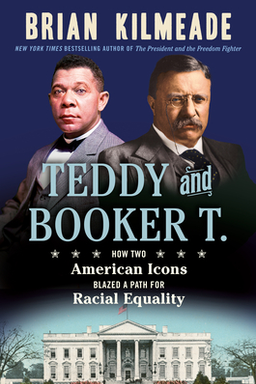
How do two men born into opposite worlds both rise to become national leaders shaping social progress? That question drives the heart of Contrasting Journeys from Slavery and Privilege to Leadership, which explores the intertwined legacies of Booker T. Washington and Theodore Roosevelt. The book contends that personal adversity and privilege can both forge strong leaders—if transformed through purposeful action and moral conviction. It invites you to see how resilience, intelligence, and strategic empathy can transcend both poverty and entitlement.
Authoritatively written and rich in historical texture, this narrative juxtaposes Washington, born enslaved in Virginia, and Roosevelt, raised in Gilded Age comfort in New York. Though their beginnings could not have been more different, both found themselves battling internal and external obstacles—Washington against racial oppression and systemic poverty, Roosevelt against poor health and personal tragedy. In the process, each forged a form of leadership that defined an era.
Freedom and Self-Mastery: The Seeds of Leadership
For Washington, emancipation at nine opened the door to a life of toil but also possibility. His burning desire to learn carried him from salt furnaces and coal mines to Hampton Institute, where mentors like General Samuel Chapman Armstrong and Nathalie Lord taught him not just literacy but the deeper virtues of self-sufficiency. For Roosevelt, early privilege came entwined with weakness—fragile lungs and asthma threatened his dreams until he decided to remake his own body. These formative years show how each man confronted limitation to cultivate mastery, discipline, and grit.
Turning Pain into Purpose
The book’s second major theme is tragedy as a crucible for growth. Washington’s first wife, Fanny Smith, died shortly after childbirth, leaving him alone with their daughter Portia. Roosevelt’s story runs eerily parallel—both his wife and mother died on the same day. These devastations didn’t crush them; they redirected their energy. Washington built Tuskegee into a model of self-made education, while Roosevelt poured himself into relentless public service and reform. Through grief, both discovered an enduring mission larger than themselves.
Building Influence Against Resistance
From the 1890s onward, the book shows how Washington and Roosevelt carved influence through pragmatic yet idealistic strategies. Washington used diplomacy and education to advance Black empowerment under the shadow of Jim Crow; Roosevelt used government reform to battle corruption and champion meritocracy against entrenched elites. Both men learned that leadership often demands compromise without surrendering one’s core mission.
Race, Honor, and Public Courage
Perhaps the book’s most riveting episode comes in 1901, when President Roosevelt invited Washington to dine at the White House—the first time an African American had received such an honor. That simple act sparked national outrage in a racially segregated era but also cracked open the door for future progress. Their conversation, about citizenship and equality, symbolized quiet revolution: two men unwilling to accept the boundaries of their birth.
Collaboration Behind Closed Doors
Over the next eight years, Washington and Roosevelt built a discreet partnership, exchanging counsel on appointments, race relations, and social reforms. They weren’t ideological twins—Washington remained pragmatic and restrained, Roosevelt bold and confrontational—but their private cooperation led to incremental reforms in education and civil rights. The book argues that progress often comes not from fiery public clashes but from quiet persistence.
Why It Matters to You
Ultimately, this story isn’t just history—it’s a mirror. Washington’s and Roosevelt’s journeys remind you that your origins don’t dictate your destiny, and neither privilege nor oppression guarantees moral leadership. What defines you is how you transform pain into purpose and advantage into service. Whether you’re confronting personal setbacks or societal injustice, their lives urge you to combine resilience with empathy, pragmatism with vision, and action with belief.
Key Message
Through contrasting paths—one from slavery, one from privilege—Booker T. Washington and Theodore Roosevelt demonstrate that leadership isn’t about where you begin but how far you’re willing to push beyond expectation to serve others.